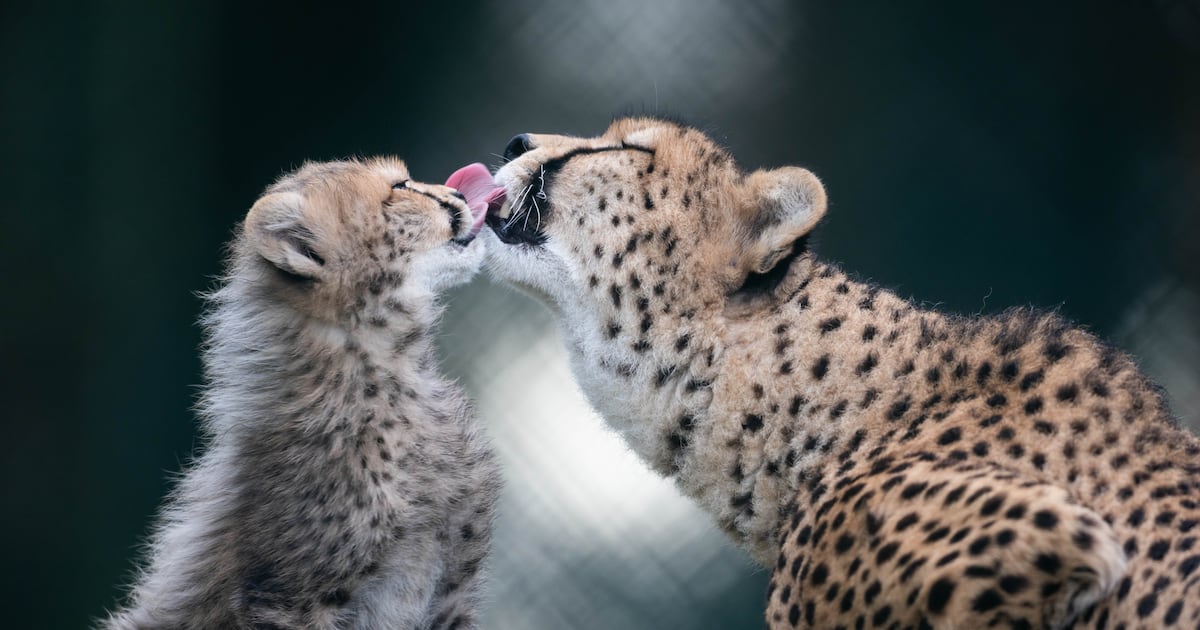
Two endangered Northern cheetah cubs, of which just hundreds remain in the wild, have been born at Fota Wildlife Park in Co Cork.
The Carrigtwohill park announced the birth of the male and female cubs on Wednesday, saying they represent a “significant contribution” to the European Endangered Breeding Programme (EEP).
The two new cubs, born at the end of November and yet to be named, follow more than 240 born at the Cork-based tourist attraction since 1984.
The Northern cheetah is listed as an endangered species by the International Union for Conservation of Nature.
Native to the savannahs and grasslands of north and east Africa, it is estimated that just 600 remain in the wild due to habitat loss and illegal wildlife trade, Fota said.
Noting that the animal is “synonymous with Fota Wildlife Park”, which has the animal as its logo, Fota said it played a “crucial role” in the conservation of the species.
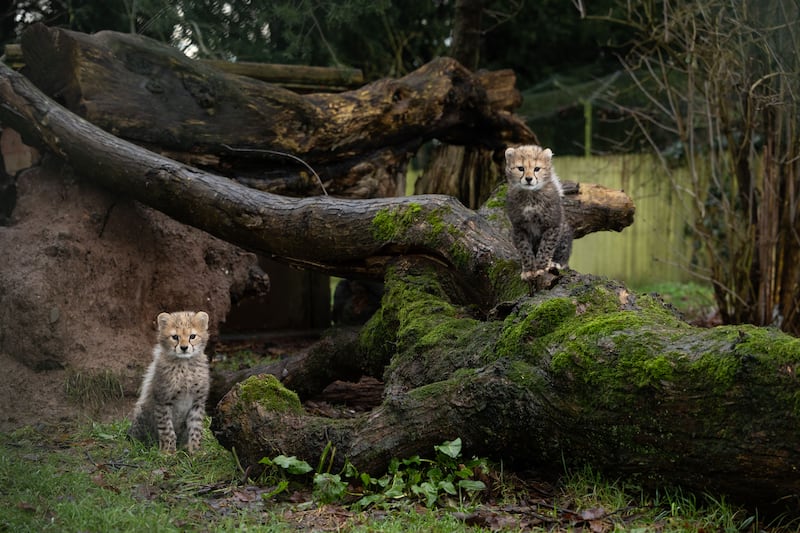 The two endangered Northern cheetah cubs at Fota Wildlife in Cork. Photograph: Darragh Kane
[ Baby colobus monkey born at FotaOpens in new window ]
The cubs’ mother, Florence, was also born at the park five years ago, while their father, Nawab, was transferred to Fota from Wadi Al Safa Wildlife Centre in Dubai as part of the EEP.
John Leahy, senior ranger at Fota, said the two cubs were an “important example” of international collaboration between zoos and wildlife parks.
Mr Leahy said Florence, a first-time mother, appeared to be adapting “extremely well to her new role”.
The cubs have begun eating small amounts of meat shared by their mother, while still nursing, and have been exploring their habitat outside the den, he said, adding that they were “developing really well”.
The cubs and their mother will continue to be monitored remotely, using cameras in their den to avoid causing stress, Mr Leahy said.
“In the wild, the mothers are solely responsible for raising their cubs, and this natural situation is reflected here at Fota Wildlife Park,” he said.
Mr Leahy said the births showed the “vital conservation work and high standards of animal care” at the facility in “helping to protect endangered species”.
The cubs’ ruffled grey coat and black stripe, thought to be a survival adaptation to imitate more dangerous species to deter predators in the wild, will gradually change to their distinctive spotted coat as they mature.
Fota Wildlife Park is inviting the public to help name the cubs.