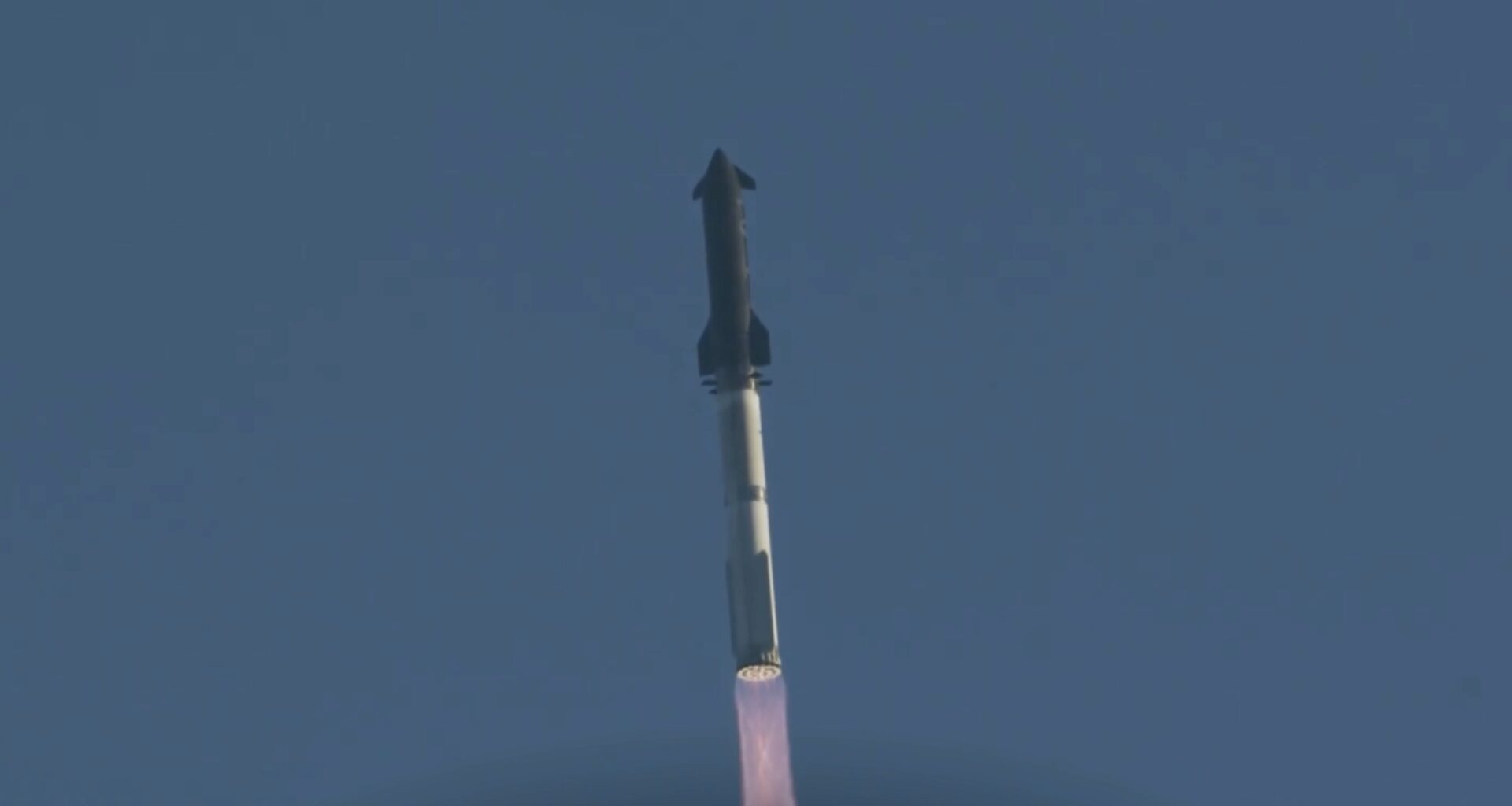
ORLANDO, Fla. — The first Starship test flight of 2026 is scheduled for as soon as early March as SpaceX enters a critical year in the vehicle’s development.
In a social media post Jan. 26, Elon Musk, founder and chief executive of SpaceX, wrote, “Starship launch in 6 weeks.” He did not elaborate, but that timeline would place the launch around March 9.
The company had previously hoped to launch sooner. At a conference in early November, Kiko Dontchev, SpaceX vice president of launch, said he expected the next flight early in the year. “I’m very hopeful we’re going to fly early next year, maybe as early as January,” he said at the time.
Later that month, SpaceX suffered a setback when the Super Heavy booster built for that launch, designated Booster 18, was damaged during testing and later scrapped. SpaceX said after the incident that it would not slow work on the program. “Starship’s 12th flight test remains targeted for the first quarter of 2026,” the company said.
The upcoming mission will be the 12th test flight of the Starship-Super Heavy system and the first using version 3 hardware, which includes upgrades to both the booster and the Starship upper stage. “That’s really going to be our production rocket,” Dontchev said of the version 3 vehicle.
That version will be used for Starship’s first orbital flights. All previous test flights followed suborbital trajectories, with the Starship upper stage splashing down, or intended to splash down, in the Indian Ocean. The orbital missions are expected initially to carry larger Starlink satellites and to test in-space propellant transfer, a critical capability for the lunar lander version of Starship being developed for NASA’s Artemis 3 mission.
“We really need their version 3 to demonstrate some of the core capabilities that we’ll need for Artemis 3 and beyond for that lander,” Lori Glaze, NASA’s acting associate administrator for exploration, said at a meeting of the Lunar Exploration Analysis Group on Jan. 6. At the time, she said the first version 3 launch was expected in the “early part” of 2026.
“I know they’ve had a couple of bumps in the road recently, but we are looking forward to that first version 3 launch,” she added.
SpaceX also aims to demonstrate the ability to land and reuse the Starship upper stage. While several Super Heavy boosters have returned to the launch site and been reflown, the company has yet to attempt recovery and reuse of the upper stage.
“The major breakthrough that SpaceX is hoping to achieve this year is full reusability,” Musk said in a Jan. 22 on-stage interview at the World Economic Forum. “No one has achieved full reusability of a rocket, which is very important for the cost of access to space.”
Achieving full reusability, he said, could reduce the cost of access to space to less than $100 per pound ($220 per kilogram). “It makes putting large satellites into space very cheap,” he said, including satellites SpaceX has proposed for orbital data centers.
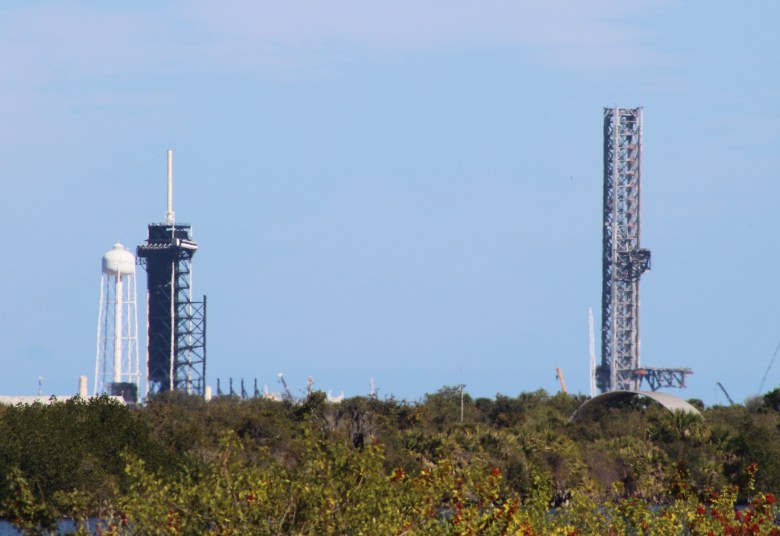 The Starship launch tower (right) at Launch Complex 39A at the Kennedy Space Center. Credit: SpaceNews/Jeff Foust
All Starship test flights to date have launched from Starbase, SpaceX’s production and launch site in South Texas. The company is also building a Starship launch pad at Kennedy Space Center’s Launch Complex 39A and received approval in November to convert Space Launch Complex 37 at Cape Canaveral Space Force Station, previously used by the Delta 4 rocket, into a Starship complex with two launch pads.
“This is the year of the giants. This is what we’re calling it on the Space Coast. We’re bringing Starship out to the Space Coast,” Col. Brian Chatman, commander of Space Launch Delta 45, said during a panel at the Space Mobility conference here Jan. 28.
The pad at LC-39A will be the first on the Eastern Range to host a Starship launch, he said. “They’re looking to be able to launch later this summer, this fall timeframe, with Starship off the Eastern Range.”
Related