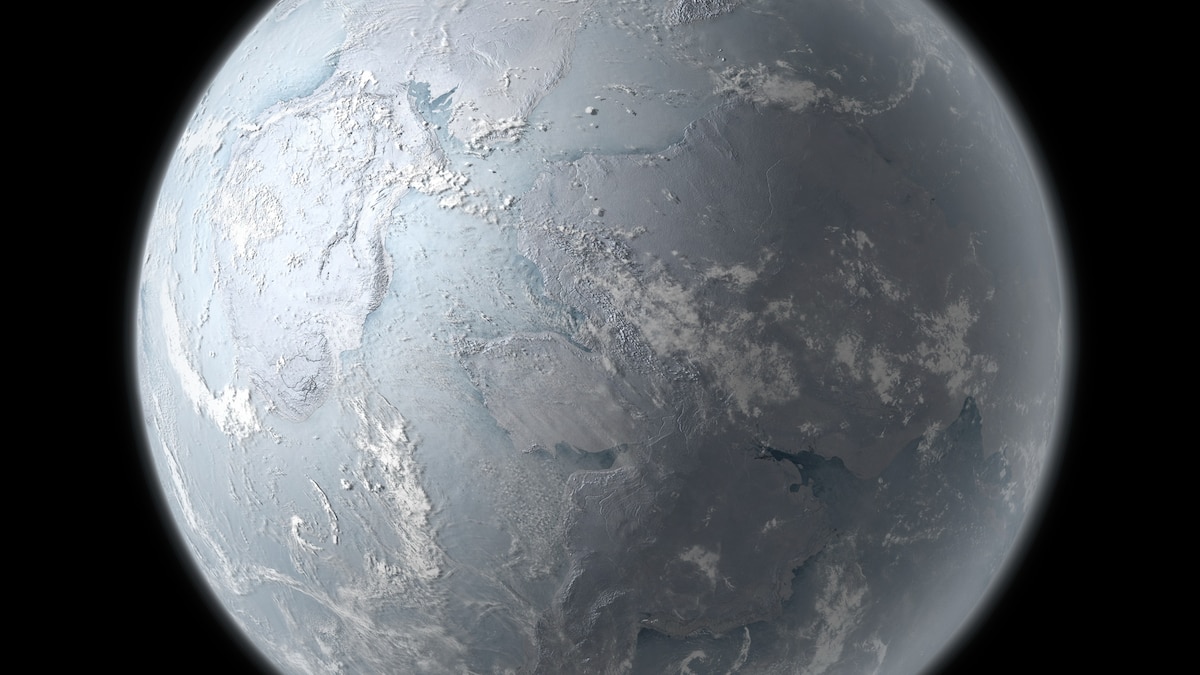
One theory is that life was more adapted to the extreme conditions of limited oxygen and little to no light, or that life persisted at hydrothermal vents where it could produce food from other chemicals.
Another theory is that life survived in meltwater ponds on the ice, like the cyanobacteria and algae that currently live on the McMurdo Ice Shelf in Antarctica.
“These surface settings could have enabled a diverse assemblage of life to persist and continue to evolve throughout the glaciations,” says geochemist Fatima Husain at the Massachusetts Institute of Technology, who was not involved in the study but led research on this topic last year.
Yet another possibility is that organisms survived or moved to ice margins to access the oxygen in the meltwater at the base of ice. But they would have had to deal with the extreme conditions predicted by the new study. Lending weight to this possibility is bacteria that have been found living in similarly cold, salty brines underneath the ice on Lake Vida, Antarctica.
“We keep learning more about how extreme the Cryogenian was,” says Husain, “ and that makes life persisting and diversifying dramatically after that, all the more amazing.”