Action plans for tackling climate change in Ireland’s second city and largest county are necessarily ambitious

As local authorities around the country adopt climate action plans, Co Cork is already facing significant impacts from climate change.
For one thing, the frequency of storms has gone up by 38pc since 1985 and the frequency of flooding events by 35pc.
Then there’s the increasing heat.
Three heatwaves have been recorded since 2018. At Cork Airport, based on records going back to 1961, four of the hottest summers ever recorded have been in the last 10 years. In June 2018, the county experienced its highest ever recorded temperature: 31.6C in Glengarriff.
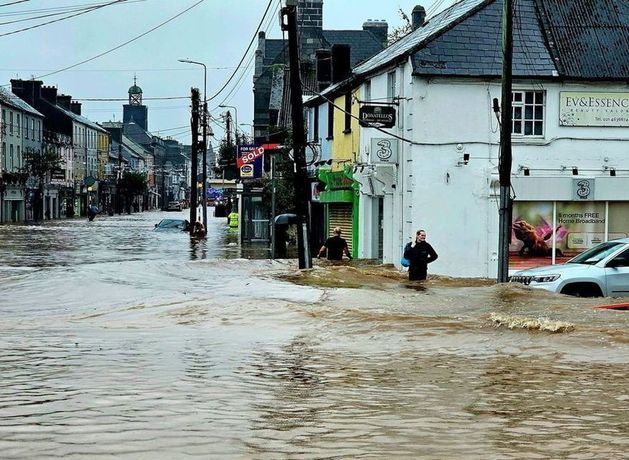
More and more extreme rainfall events are also occurring. The 230mm of rain that fell during the 2020 Rosscarbery flood was the most recorded since 1961. Midleton was hit by massive flooding in the aftermath of Storm Babet in October 2023 when a month’s worth of rainfall fell on the east Cork town over two days, causing damage estimated at nearly €200m. The town was also hit by serious flooding in 2015.
Add in erosion on the longest coastline of any county (about 1,200km) and a projected sea-level rise of up to a quarter of a metre and it’s clear that the local authorities in Cork face a tough battle in tackling climate-related challenges.
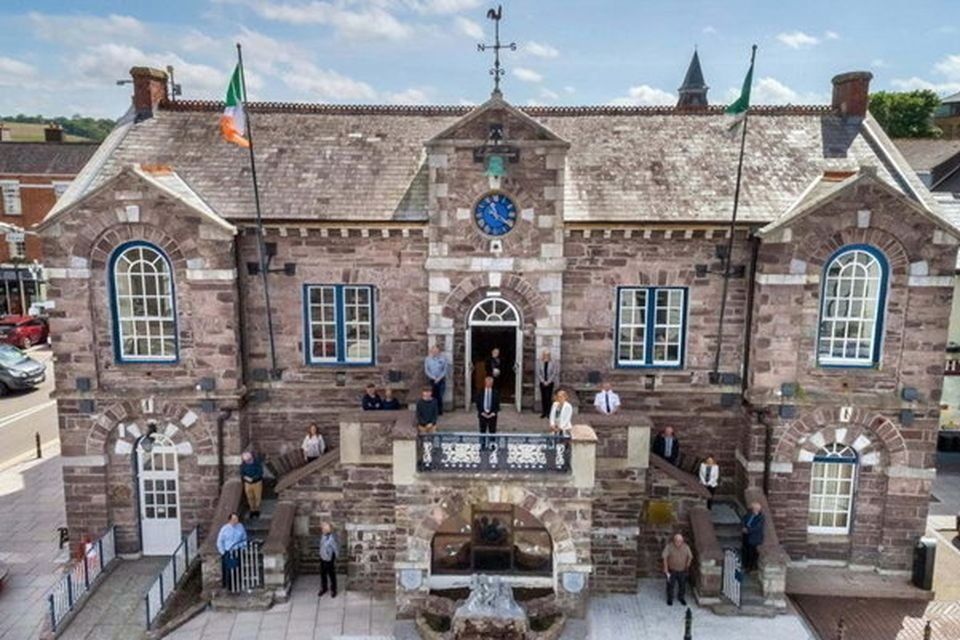
The town hall in the Cork town of Macroom, which is being established as the county’s decarbonising zone
Cork County Council adopted its first Climate Action Plan in February 2024. The plan runs until 2029 and includes a commitment to reduce greenhouse gas emissions by 51pc by 2030. Another key goal is to establish a decarbonising zone (DZ) in the town of Macroom to test climate action measures.
Cork city, home to around 225,000 people, was producing 987 kilotonnes of carbon dioxide equivalent in the baseline year of 2018, led by households (34pc), road transport (29pc), commercial, services and industry (22pc), public services (7pc), agriculture, land use and fishing (6pc), and waste (2pc).
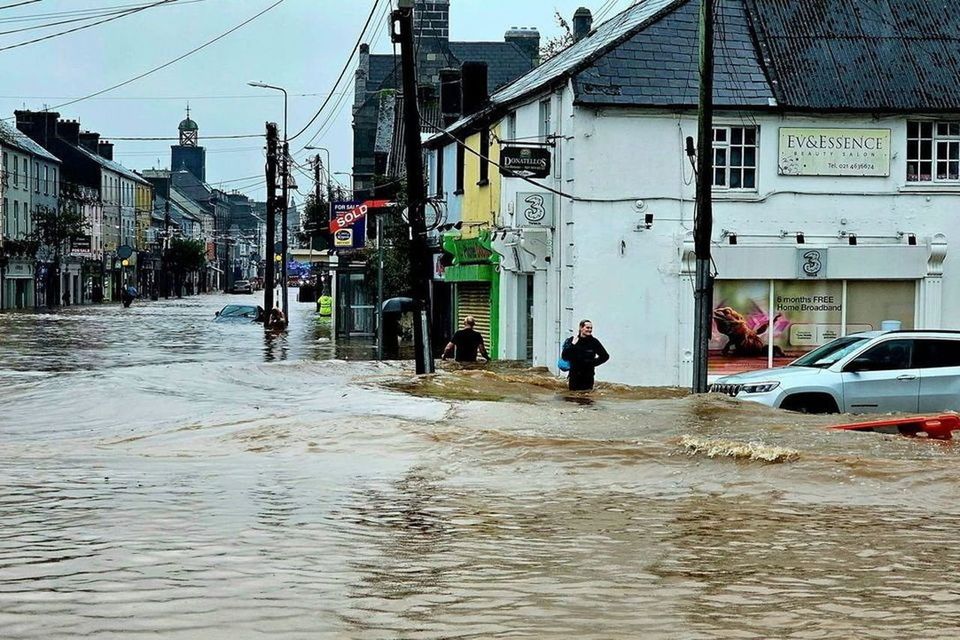
Midleton was hit by severe flooding during Storm Babet in October 2023. Photo: Damien Rytel
How your county is weighing in on fighting climate change
As would be expected, the county council area, with 8,083 kilotonnes of emissions, skewed far more heavily towards agriculture (39pc), with other sectors such as residential down at (11pc) and transport at (20pc).
The county council has already achieved an almost 28pc improvement in energy efficiency compared to 2009 and a 39pc reduction in greenhouse gas emissions compared to the 2016-2018 baseline, the local authority’s climate action officer Anthony O’Reilly told the Irish Independent.
“These results represent significant improvements and we have identified a portfolio of future projects over the next five years which will support Cork County Council to further reduce energy consumption and greenhouse gas emissions to meet our gap to target,” Mr O’Reilly said.
Developments in the Macroom DZ so far include a €9m upgrade of the Briery Gap theatre and Macroom Library to A3 BER standard, the establishment of a Towns Team, and upgraded active travel pathways.
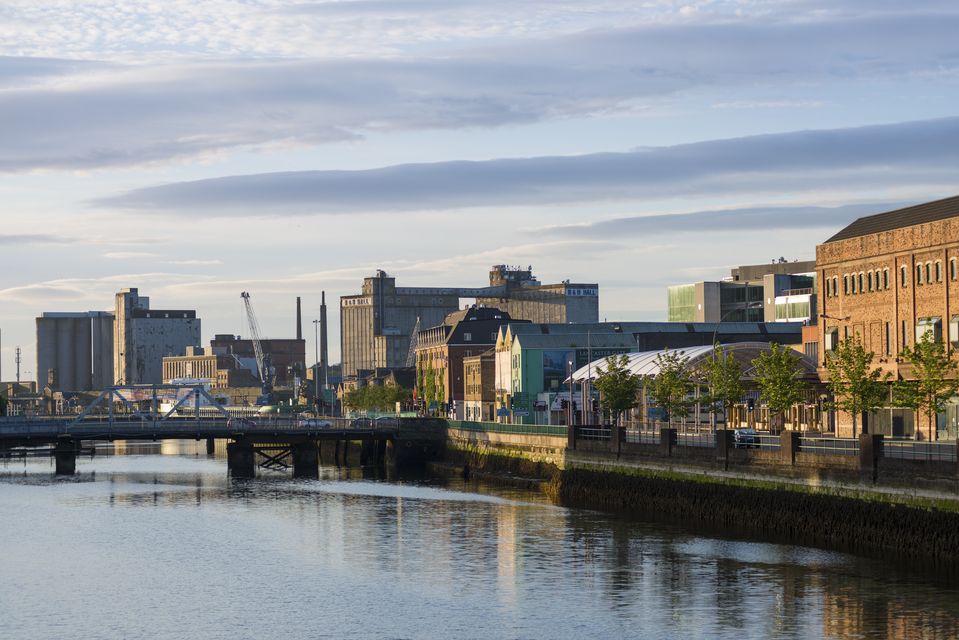
The quays in Cork city. Photo: Getty
Mr O’Reilly emphasised that strong support is needed from central government to ensure that local authorities have sufficient resourcing and funding to deliver climate action projects and meet their targets.
Meanwhile, the local authority in Cork city has set its sights on making the city climate-neutral by 2030 – and have a well set-out path. From greener transport to community grants, Cork City Council is rolling out a mix of big projects and local schemes aimed at cutting carbon and making Cork a cleaner, more liveable place.
The city council’s first Climate Action Plan, is hefty piece of work – 129 actions in all – covering everything from how the council runs its own buildings to improving public transport, planting more trees and pushing renewable energy. Over 1,100 people had their say during public consultations, and plenty of the feedback made its way into the final plan.
A big talking point is the city’s DZ – a pilot area where emissions will be cut by 7pc a year until 2030. It’ll see a mix of changes in transport, housing, energy and land use. If it works, the ideas could be rolled out across the rest of the city.
The council is also backing community projects in a big way. Last year saw the launch of the €840,000 Community Climate Action Fund, giving local groups the chance to run everything from home-energy upgrades to cycling initiatives and biodiversity projects. More funding is expected later in 2025.
Cork is not only doing its bit for the planet, but also becoming a healthier, more connected and more enjoyable place to live
Partnerships are another part of the push. The city council has signed 12 ‘local green deals’ with the likes of UCC, Boston Scientific and Cork Chamber, all aimed at getting businesses, colleges and community groups working together on sustainability.
On the transport side, the plans are ambitious. There’s a proposed Luas line from Ballincollig to Mahon Point, better cycle routes, more park-and-ride hubs and new walking links – all with the goal of reducing traffic and emissions. Through the Zero Carbon Infrastructure project, Cork is also looking at electric vehicle charging, greener deliveries and mobility hubs in partnership with other European cities.
For homeowners, the Home Energy UpGrade Office (HEUGO) offers free, practical advice on retrofits and the grants available, making it that bit easier for people to cut bills and emissions at the same time.
It’s a lot to take on, but the city council says it’s all part of a bigger picture – one in which Cork is not only doing its bit for the planet, but also becoming a healthier, more connected and more enjoyable place to live.
Funded by the Local Democracy Reporting Scheme