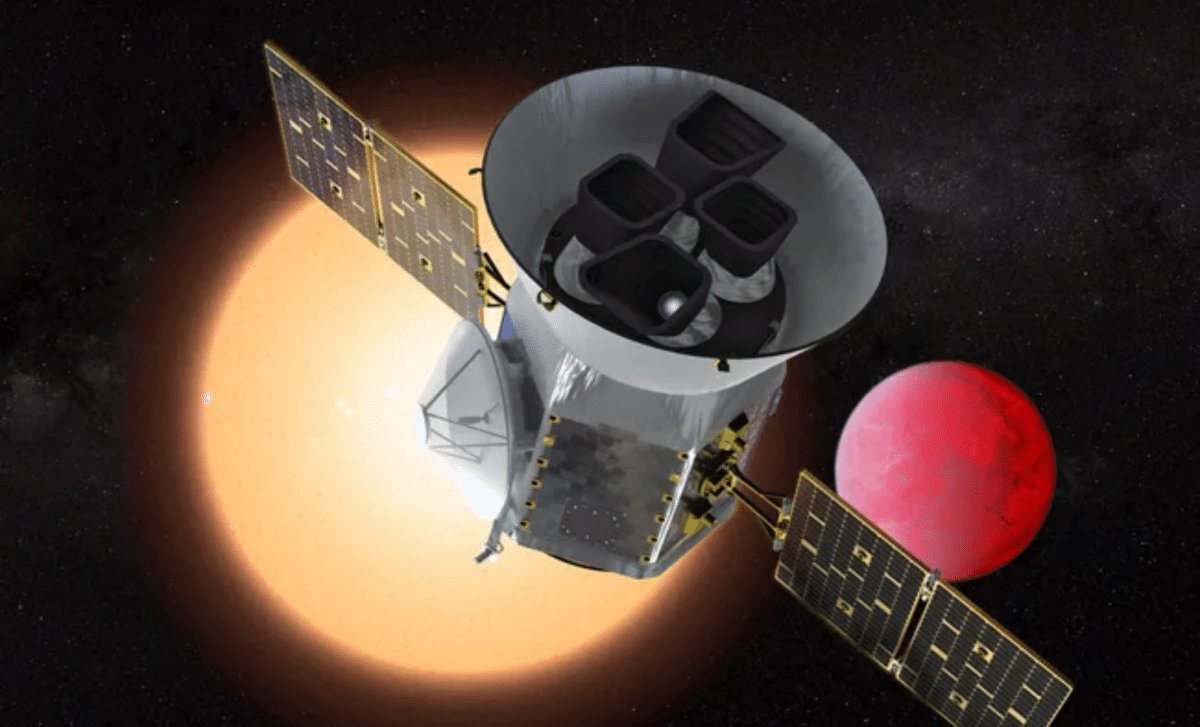
NASA’s Transiting Exoplanet Survey Satellite (TESS) was recently knocked offline after an unexpected command error caused the spacecraft to enter “safe mode.” This mishap, which occurred due to the spacecraft’s solar panels being misaligned with the Sun, left TESS unable to recharge its batteries, prompting a series of recovery efforts. While the situation has now been resolved, the incident raises important questions about the vulnerabilities of space missions to human error. The Register reported on this event, shedding light on the technical details of the problem and how NASA plans to address the issue moving forward.
The Solar Panel Misalignment That Took TESS Offline
NASA’s TESS satellite, which is tasked with hunting exoplanets, found itself temporarily sidelined after a command error caused the spacecraft’s solar panels to shift away from the Sun. This misalignment had serious consequences. The panels were unable to charge the spacecraft’s batteries, leading to a low power condition that triggered TESS’s automatic transition to safe mode. In safe mode, all non-essential systems are turned off to conserve power, and the spacecraft awaits further instructions from ground controllers. NASA engineers quickly worked to resolve the issue, but this was not the first time that spacecraft have been impacted by errors in commands sent from Earth.
 Interstellar comet 3I/ATLAS (circled) is a bright dot with a tail passing through a field of stars in this video from NASA’s TESS (Transiting Exoplanet Survey Satellite). The sequence uses 28 hours of TESS full frame images collected over Jan. 15 and Jan. 18 to 19. The time jump from Jan. 15 to Jan. 18 occurs 11 seconds into the video.
NASA/Daniel Muthukrishna, MIT
This event is reminiscent of past space mission failures, such as the unfortunate loss of communication with Viking 1 in 1982, which was caused by a faulty command, and the catastrophic series of events that nearly destroyed the SOHO probe in 1998. However, TESS’s safe mode performed as intended, protecting the spacecraft from permanent damage. According to The Register, a spokesperson from NASA noted, “The mission is reviewing and updating procedures to prevent this command error from happening in the future,” signaling a commitment to improving protocols that protect valuable space assets.
Safeguards in Space: Why TESS Didn’t End Like SOHO or Viking 1
Unlike the disastrous outcomes of previous space mission errors, TESS was fortunate enough to have safeguards in place. The spacecraft’s automatic safe mode kicked in when the power situation became critical. The safe mode is designed to preserve the spacecraft’s core functions, such as attitude control, and ensure it can be reactivated once engineers identify and address the issue.
TESS’s ability to recover so quickly demonstrates the importance of such fail-safes. It’s a stark contrast to the fate of missions like Viking 1, which ended in failure after a similar error left the spacecraft unable to communicate with Earth. Similarly, the SOHO mission also faced a disastrous sequence of failures when a missed step during routine calibration disabled its safe mode, leaving the spacecraft tumbling in space. The SOHO probe was eventually recovered after a multi-year effort, but only due to the dedication and teamwork of NASA and ESA engineers.
TESS’s successful recovery is a testament to how far space mission technology has come. However, the incident also emphasizes the need for continued vigilance in mission planning. The risk of human error remains a significant challenge, and the consequences of such errors can be costly in terms of both time and resources.
The Need for Robust Operational Procedures
While TESS’s safe mode worked as intended, this incident highlights the vulnerabilities inherent in complex space missions. The command error that caused the solar panel misalignment occurred because there were no specific “guardrails” to prevent the situation from unfolding. A spokesperson from NASA confirmed that the mission team was reviewing the entire process to ensure better safeguards moving forward. The goal is to prevent such errors from occurring in the future and to refine the operational procedures that govern spacecraft behavior.
As spacecraft missions become more complex and sophisticated, ensuring that operational protocols are flawless becomes increasingly important. A single mistake can result in mission delays, costly repairs, or even mission termination. With TESS, the misalignment of solar panels was a manageable issue, but future missions could face far more challenging scenarios. The lessons learned from this error will likely shape NASA’s approach to spacecraft command and control for years to come.