
The Bethnal Green Academy school that Shamima Begum attended changed its name in 2018 to escape the notoriety of what British media still call the “Isis brides”.
In 2015, Begum and two other schoolgirls were radicalised online to flee their families for then Islamic State-controlled Syria to join a fourth girl from the school. Begum was just 15.
Now she is 26. Even though she is locked up in a camp 4,500km away, she remains one of the most talked about women in Britain, and one of its most publicly reviled. Brits are convulsed with a fear she might come back.
Bethnal Green Academy is now the Mulberry Academy Shoreditch – better to be named after East London’s trendy tech hub than the Bangladeshi enclave that spawned Begum and the other two teenagers, Kadiza Sultana and Amira Abase, both now believed dead, who travelled with her to marry fighters from Islamic State (also known as Isis).
Sharmeena Begum (no relation) was the fourth pupil who went three months earlier. She was last tracked down by BBC in Syria in 2023. Another schoolgirl was pulled off a plane by police in 2015 as she tried to go. Five other Bethnal Green girls were made wards of court to stop them travelling.
Yet police were too slow to stop Begum and her two friends. Authorities knew they were at risk, but never told the girls’ parents and never followed it up.
Their old school sits off cacophonous Bethnal Green Road. The area was once a white-dominated, working-class East London neighbourhood – the gangster Kray twins attended Begum’s school 70 years before her.
Now it is the most Islamic part of London. Forty per cent of the population are Muslims from Bangladesh or their descendants. The Tube signs are in Bengali and English. The cloth markets sell hijabs and pashminas. The cafes are halal.
[ The story of Shamima Begum, a London teen turned exiled terroristOpens in new window ]
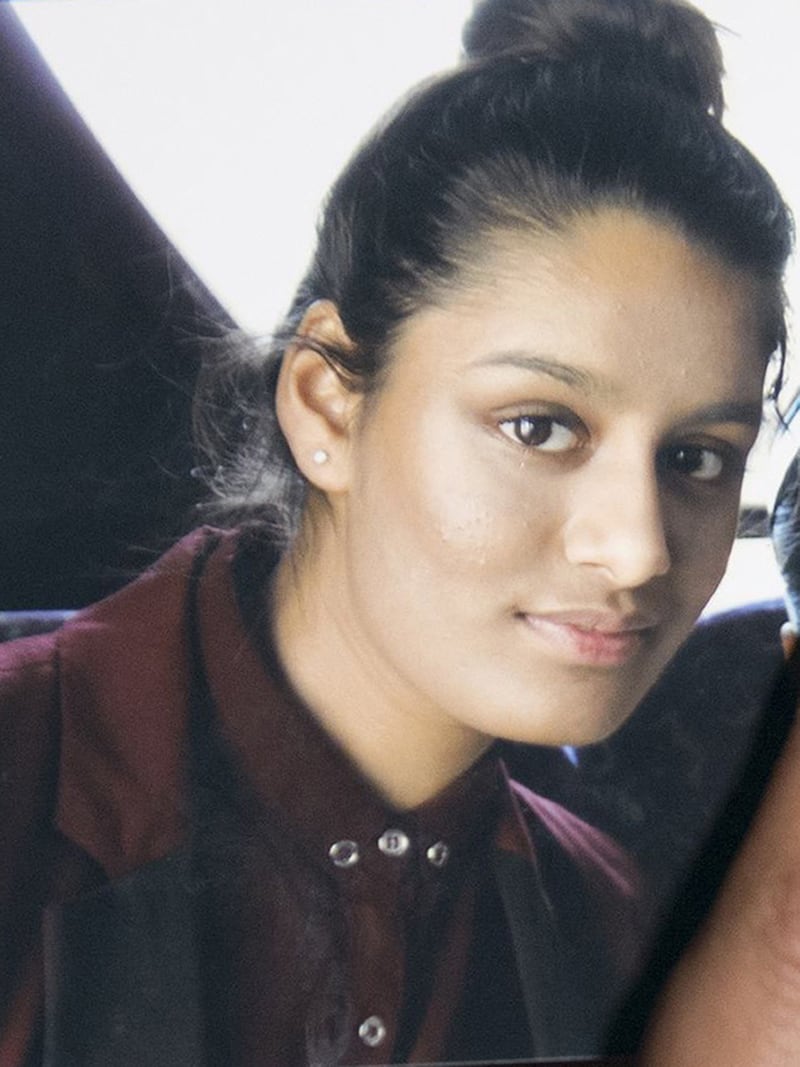 Shamima Begum travelled to Syria in 2015 – at the age of 15. Photograph: PA/PA Wire
Although it is being gentrified by tech workers, Bethnal Green remains dotted with the cramped estates where Begum and her contemporaries lived. As well as one of the most colourful districts in London, it also one of the most deprived.
The miserable arc of Begum’s story is, by now, well known. At 15 she married a Dutch Islamic State member – she says he was abusive. She had three babies who all died in infancy. When Islamic State fell she was captured by Kurdish forces who locked her in camps with other so-called “Isis brides”. She is still in one, al-Hoj, for now.
The “brides” term is still used by British media even though UK courts found Begum was likely trafficked for underage sexual exploitation. There are vague parallels with what happened domestically in areas such as Rotherham. An obvious difference is the Bethnal Green girls were groomed by jihadis in the Middle East, not Yorkshire taxi drivers.
The other obvious difference is the Rotherham victims were white British girls. Begum was a brown British girl – or at least she was British, until former home secretary Sajid Javid revoked her citizenship in February 2019 when she was found in a camp.
At the time, Theresa May was in the death throes of her premiership. Javid was a contender but had no chance without the support of the Tory right. As Britons raged at the ‘silly little Bethnal Green jihadi bride in Syria’, Javid stripped her citizenship.
His hardline act was met with huge public approval. It is legal in Britain if the person has the theoretical right to claim citizenship elsewhere, so the sanction is disproportionately a greater threat to British people with foreign ancestors. Indigenous white Brits have less to fear.
Javid had only to say his decision was “conducive to the public good” to make it legal. No more explanation required. Bangladesh, where Begum’s parents were born, refuses to take her. She is now stateless.
Begum wants to return. She fought in the courts but all UK legal avenues were exhausted. Now, with lawyers including Gareth Peirce of Birmingham Six fame, her case is with the European Court of Human Rights (ECHR). The Strasbourg court is politically controversial in Britain, blamed for halting refugee deportations.
ECHR this month asked the British government to defend how it factored Begum’s sex trafficking into its decision. The Labour home secretary, Shabana Mahmood, herself the daughter of Muslim Asian immigrants, says she will “robustly defend” the position taken by her Tory predecessor in 2019. It would be politically risky to do anything else.
The majority of Brits don’t want Begum back – a YouGov poll in November said two-thirds agreed she should never be allowed return. She has come to personify Islamic State, even though she was never convicted of an act of terrorism.
The Kurdish camps are now at risk of being overrun by Syrian government forces. British media is full of fearful stories that Begum and other “Isis brides” might escape.
Last week, the Daily Mail ran a story quoting the father of a victim of the 7/7 London bombings in July 2005, saying Begum must be kept out – she was only five years old when 7/7 happened. The Sun said freeing her “would be like releasing a shark into a swimming pool”. GB News said her re-entry would be “the worst thing that could ever happen”.
Britons are still obsessed with Begum, who reminds them of things they’d rather forget.
[ The problem with banishing Shamima BegumOpens in new window ]