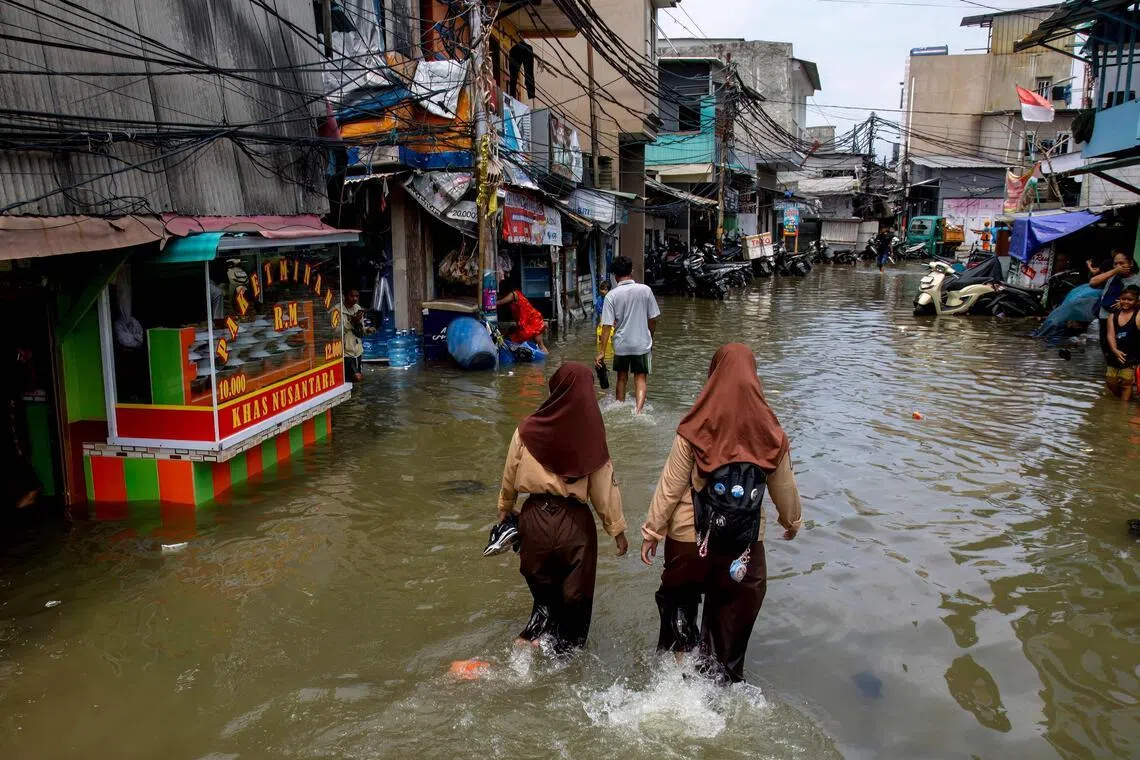
Losses tied to floods in South-east Asia may grow as much as tenfold in the coming years due to the rise of extreme weather events, according to insurance broker Willis Towers Watson (WTW).
Early indications suggest that major regional flooding events have the potential to cause economic losses in excess of US$10 billion (S$12.6 billion), compared with the US$1 to US$2 billion range typical of the past decade, according to the Natural Catastrophe Review 2026 report published by WTW.
“Warmer oceans, shifting formation zones and greater track sensitivity mean that past patterns are becoming less reliable guides to future risk,” senior research fellow at the National University of Singapore (NUS) Srivatsan Vijayaraghavan, and weather and climate risks research lead at Willis Research Network Daniel Bannister wrote in the report.
The year 2025 ended with three tropical cyclones
unleashing a wave of destruction
from Sri Lanka to Indonesia that left more than 1,300 dead and caused at least US$20 billion in losses. Countries in South-east Asia consistently rank among those most vulnerable to such risks, with the Philippines, Myanmar and Vietnam among the 10 nations most affected by climate change in 2024, according to Germanwatch, an independent human rights organisation.
“Risk‑layered disaster financing, combining public, private and parametric solutions is becoming essential to safeguarding long‑term resilience,” said Mr Christopher Au, head of the APAC Climate Risk Centre at WTW, in the release. “They can help reduce volatility, support faster recovery and strengthen financial stability across South-east Asia’s most disaster‑prone economies.”
Following Super Typhoon Yagi in 2024,
researchers at NUS conducted a series of climate sensitivity tests. The results found that warming oceans will make storms more intense, and even small temperature changes can radically alter storm tracks, the WTW report said.
While climate change is seen as having exacerbated the impact of recent floods, scientists and analysts have warned that deforestation, shortcomings in flood defences and a lack of funding for disaster resilience heighten damages.
In other findings, the WTW report stated that natural catastrophes caused more than US$100 billion in insured losses in 2025. That was a decrease of US$40 billion when compared with 2024 as no hurricane made landfall in the US.
Even so, the year 2025 marked the sixth time catastrophe losses have exceeded the US$100 billion threshold. BLOOMBERG