From the passing of the Covid pandemic in 2021 up until last summer, the unemployment rate in Ireland had been remarkably static.
This was despite some of the most challenging geopolitical and economic events of recent years.
A war had erupted in Ukraine with an associated explosion in oil and gas prices. Inflation spiked in a way not seen in decades. And Donald Trump won the US presidency – unleashing tariffs on Europe and uncertainty everywhere else.
Yet, until July 2025, the overall percentage of people classed in the State as unemployed bumped around between 4 per cent and 4.5 per cent (a level considered as full employment). The buzzword from the Government and the State agencies was “resilience”.
That figure has now edged up to 5 per cent – with youth unemployment (15 to 24 years old) rising to 14 per cent.
In real terms, almost 20,000 more people were out of work last month when compared to December 2024.
A nervousness pervades the jobs market. Workers wonder if this is a perfectly normal slippage after a period of unusually stable employment – or the sign of further job losses to come?
On the face of it, the latest numbers from Enterprise Ireland are encouraging.
The State agency, which supports Irish companies operating in the international sector, reported jobs growth among its client companies last year of more than 12,000 – with a net growth in new positions of about 2,900.
But the growth has slowed.
In 2021, Enterprise Ireland companies added more than 20,300 jobs but the numbers have been slipping since.
Announcing the figures, its chief executive Jenny Melia said Irish businesses had experienced an “extraordinary series of global shocks” since the turn of the decade – and hiring policies last year had become more cautious.
“By and large you could break 2025 into two halves,” says Enterprise Ireland executive director Kevin Sherry.
“In the first half of the year there was uncertainty about what impact tariffs would have – and some companies paused their investment decisions. But we saw that change in the second half of the year.”
Sherry acknowledges that the overall new jobs numbers among client companies have come down over the past five years – but he says what was witnessed in 2021 was a “recovery period” and a very welcome “bounce” after Covid.
“We have seen sustained growth since then – and sustainable growth. We don’t want to see big peaks and troughs. Importantly, the job losses number has not increased – in 2025 they were around the same level as 2024, ‘23 and ‘22.
“You are not seeing companies taking on talent and then having to let it go, which is what we don’t want.”
Sherry says Irish companies who are invested in the US will continue to do so and are in it “for the long haul”. However, he says many Irish companies have grown their presence in the euro zone and, in particular, the Nordic countries.
“Really, I’m very optimistic and confident about 2026,” he says.
“There will continue to be challenges – some known, some unknown. Our message to companies is that they should concentrate on controlling the controllables – the things you can influence.”
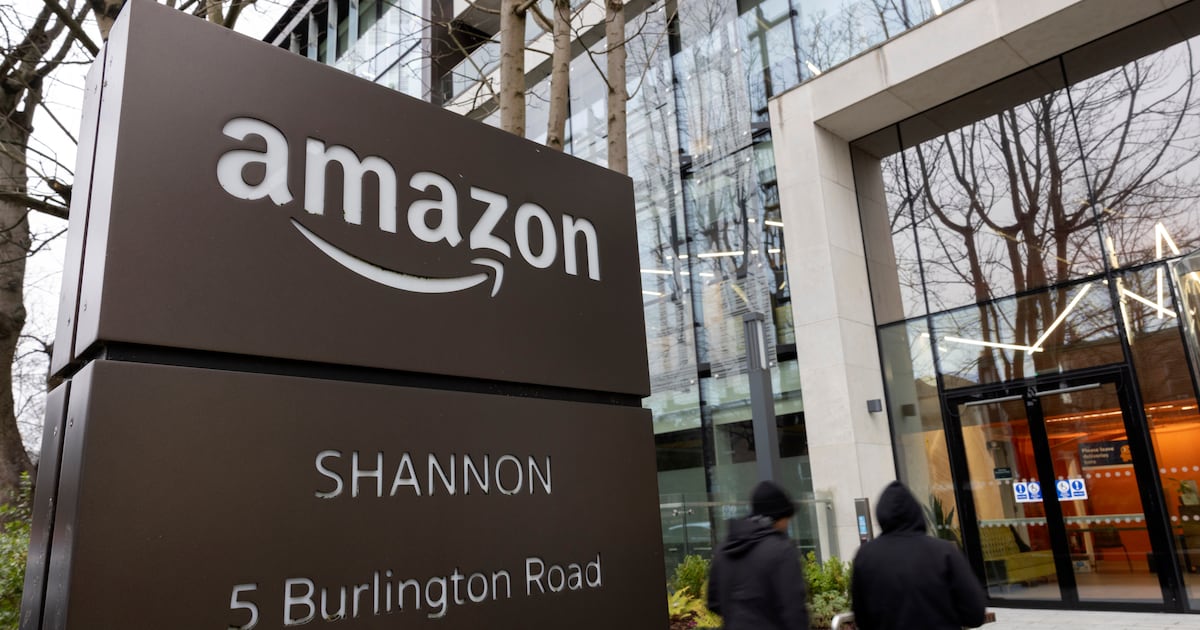
The news on Wednesday of a further 16,000 job cuts from Amazon’s global workforce (with 300 roles potentially impacted in Ireland, according to RTÉ) will not have eased anxiety about broader economic trends, however.
The online retail giant is rowing back on hires it made during Covid – and taking advantage of advancements in artificial intelligence to reduce headcount.
So-called white-collar workers are bearing the brunt of these changes.
Workers who had been on decent salaries, in many cases, are finding themselves being made redundant and having to face into a harsher labour market than the one they were previously acquainted with.
Conall Mac Coille, chief economist at Bank of Ireland, reckons the days of high growth in multinational job numbers are a thing of the past. The bank’s latest forecast puts employment growth for 2026 at 1.5 per cent – a significant cooling compared with recent years.
“Look at multinational sector employment,” he says. “It has barely expanded over the past three years – there has been a shake-out in ICT [information and communication technology] employment.
“There have been reasonable gains in manufacturing – but the days of 5 or 6 per cent growth in the multinational sector are behind us.”
He cites Google and Facebook owner Meta as good examples of companies that overhired during the pandemic period and have now rebalanced.
“The sectors that are doing well are manufacturing, construction and the public sector,” he says. “There has been a lot of money put aside in the budget for the wage bill.”
So called consumer-facing businesses are struggling, however. Mac Coille references rising costs for the restaurant sector, where increased energy bills and food price inflation continue to bite.
He says this may explain why there has been an increase in youth unemployment and a reduction in part-time work.
The same landscape in the jobs market has been identified by the Central Bank of Ireland. In its final quarterly bulletin of 2025 it noted that employment growth would likely continue to slow over the next couple of years.
This slowing rate of growth, it said, would have a stronger negative impact on people trying to re-enter the jobs market after a period on the sidelines.
Caution surrounded investment decisions in 2025, it noted.
The Economic and Social Research Institute (ESRI) made similar noises before Christmas. It calculated that a third of those people added to the unemployment numbers were in the youngest category.
It reported that “quarter-on-quarter growth in seasonally adjusted employment has been estimated to be near zero in three of the last four quarters”.
Bank of Ireland, the Central Bank and the ESRI all believe the Irish unemployment rate will average 5 per cent over the course of the year.
This would not be deemed a terrible outcome given the geopolitical tumult of the past 12 months.
Instead, the ESRI, and others, are watching to see the longer-term impact of US tariffs on European Union goods – which will bed in over time. It is also concerned with the rise in protectionist policies around the globe as posing the biggest threat to Ireland’s open economy.
“This process … may present structural changes to our globalised economic model … and lower the potential future growth rate of the economy,” it said.
In the short term there would not appear to be an immediate crisis looming.
According to Christopher Paye, country director of the StepStone Group Ireland – which runs the IrishJobs.ie website – there remains a skills gap here
The IDA said last year was a record one for inward investments – despite Donald Trump’s liberation day tariffs last April and the torturous negotiation of an EU-US trade framework.
It said those investments were expected to create more than 15,000 new jobs and represented a 14 per cent increase on the previous year. Overall employment at IDA-supported companies was reported to have increased by 1.5 per cent over the course of 2025.
Trayc Keevans is global foreign direct investment (FDI) director at Morgan McKinley.
She says there are still reasons to be optimistic about the “pipeline” of foreign investment into Ireland – but the pace of investment and decision-making has definitely slowed.
“Maybe I’m an optimist,” she says. “Last year everyone was looking on – and saw fewer companies investing in Ireland – but then when the numbers were finally published it turned out it had been a record year.
“US employers were reluctant to make job announcements – they didn’t want to put their heads above the parapet when the emphasis was on job creation at home.
“But the lag time between meeting a company and when they finally land here is definitely longer than it was. In the old days it could be as little as three months. Now some are taking up to 18 months – there are a lot more visits and a lot more decision-makers involved.”
Keevans says the US is obviously still very important from an FDI point of view – but the source of that investment has diversified. “China is showing a lot of interest,” she says.
“They are across every sector. In terms of the companies I have met – you are talking about very large tech companies on the scale and size of a TikTok and there is a lot happening in the pharma space. The traditional route for Chinese companies is to come through mergers and acquisitions rather than setting up a greenfield investment.”
On the skills front, Keevans has detected the impact of artificial intelligence on roles that would have traditionally been the domain of new graduates.
“Repetitive tasks, anything that can be automated,” have been handed over to AI in many instances – leaving the newly qualified with a less obvious route into many workplaces.
“Our message to graduates is to be more open-minded,” she says.
“It may feel more daunting to be a grad in today’s market – in that you think there are fewer roles – but I would argue that isn’t the case. There are fewer visible roles. If they can get their heads around that there are very interesting opportunities out there for them.”
She says that many old career trajectories have changed due to this rise in automation – and that graduates are having to pivot to those areas where there is still big demand – such as data compliance.
Keevans also reports that the Irish universities are “not waiting” any more – and are looking to work closely with sectors on how best to make their students “employment ready”.
According to Christopher Paye, country director of the StepStone Group Ireland – which runs the IrishJobs.ie website – there remains a skills gap here. He says its research shows that almost 70 per cent of employers are struggling to recruit talent that can “future-proof” their operations.
He says that while everyone is focused on AI there is also a need for talent management skills.
“While hard skills such as AI and data analysis are in high demand, employers are increasingly prioritising candidates with softer skills such as people management and leadership,” he says.
Their recent IrishJobs Hiring Trends Update reported that one in four employers here were planning on upping their recruitment this year – a sign perhaps of “growing confidence”.
However, he says many companies in export-led sectors such as manufacturing remain “highly attuned to international turbulence”.
Mac Coille is reserving judgment on the impact that AI plays.
“It’s too soon to say but I don’t think the slowdown in multinational job growth we are seeing is due to AI,” he says.
Kevin Sherry of Enterprise Ireland says the agency sees new innovations in AI as a positive for its client companies and not a threat to jobs.
“There are going to be areas that will be impacted by AI usage and we need to ensure that Irish companies are at the forefront of that deployment. There is nothing for us to be afraid of.”