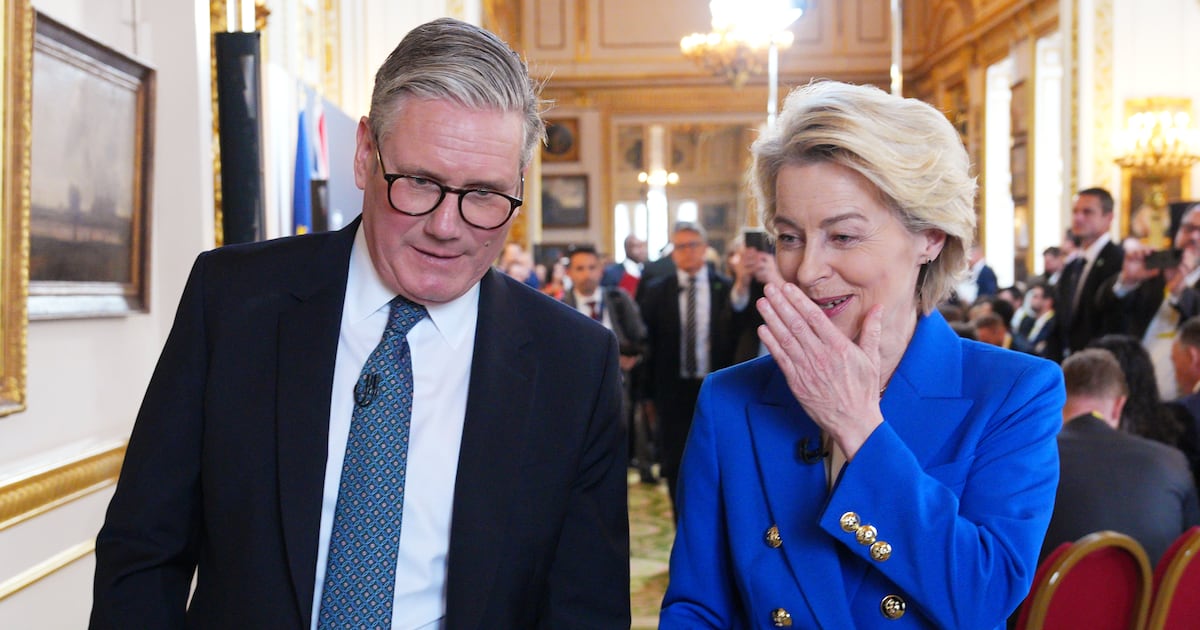
As if Keir Starmer needed reminding about the subtlety required in pursuing new geopolitical partnerships, US president Donald Trump waded in with an overnight warning on Friday to underline just how careful the UK prime minister needs to be.
While UK officials continued reset talks to the European Union in London and Brussels, Starmer spent the week schmoozing president Xi Jinping in China. Britain wants to ramp up partnerships with both to balance out the UK’s reliance on the US.
Late on Thursday evening Washington time – early on Friday morning in London – Trump was asked by reporters about the British government’s courting this week in particular of China, the biggest geopolitical and economic rival to the US.
“I think it’s very dangerous for them [the UK] to do that,” said Trump outside the Kennedy Center that was hosting the premiere for his wife’s Melania documentary.
Downing Street officials tried to play down the importance of the warning from the US president, but its ominous tone was clear. Yet the UK sees opportunities as well as threats in its shifting relations with all three superpowers: the US, the EU and China.
Starmer must be nimble as he seeks to deepen ties in Brussels and Beijing, while keeping Washington onside. Britain still needs to “hedge for the future”, said Anand Menon, director of the academic think tank UK in a Changing Europe.
It may be eight years since a UK premier last visited China but it is also, this weekend, exactly six years since Britain left the EU.
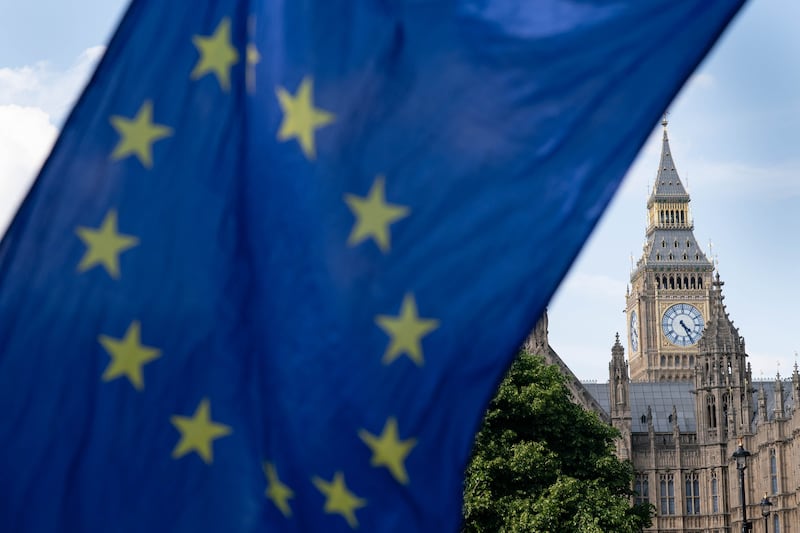 It is six years since this weekend since the UK left the European Union. Photograph: Stefan Rousseau/PA Wire
Talks this month ramped up on four strands of UK-EU co-operation spurred at their inaugural summit in London last year: integrated electricity markets, a youth mobility scheme, a veterinary and food safety agreement and emissions trading.
Nick Thomas-Symonds, the UK cabinet member who negotiates with Europe, told a committee of MPs on Wednesday that he hoped talks on the veterinary agreement and youth scheme, at least, would be wrapped up by the next UK-EU summit.
He declined to say when the summit would take place, but later that evening at a diplomatic gathering at the opulent official French ambassador’s residence in London, European officials discreetly suggested it would be in Brussels before the summer.
Thomas-Symonds and the European officials both dismissed the suggestion that any EU-UK deals would contain a so-called “Farage clause” of penalties for Britain to be applied if the Reform UK leader wins control of Downing Street and tears the deal up.
Both sides said it was just a normal “termination clause” that applies to both sides and is typical in such deals. “These agreements are always between countries, and not just between governments who happen to be in power at the time,” said Thomas-Symonds.
Meanwhile, factions inside the Labour Party, including its resurgent soft left, want to steer conversation in Britain around to whether rejoining the EU’s customs union should be on the table to ease trade barriers and boost the UK’s economic growth.
The mood even leaked into Starmer’s cabinet – Peter Kyle, the business secretary, told business leaders in Davos earlier this month the UK would be “crazy” not to consider it.
Starmer has repeatedly rejected the possibility, however, on the grounds that it could scupper parts of the trade deal the UK negotiated last year with India, as well as the trade agreements it reached last year with the US and Trump.
Yet he appeared to open the door this week to another more intriguing prospect: much closer UK alignment with the EU’s single market.
“I do think there are other ways [apart from the customs union that] we can get closer to the EU,” said Starmer in a podcast interview before he got on the plane to Beijing.
“I actually think the single market would be more effective than the customs union … We can get closer to the single market. We’ve already done an agreement on agriculture and food and we are implementing that this year. So there are things we can do.”
That was interpreted in Westminster as Starmer laying the ground for sector-by-sector re-entry to parts of the single market for parts of the UK economy. That might require concessions to the EU from Starmer on the movement of EU workers. Already, elements within the British press are accusing the prime minister of “betraying Brexit”.
If it boosts UK’s anaemic economic growth, Starmer may still consider it and it would also draw a useful dividing line with Farage’s Reform UK.
Some of Starmer’s advisers worry about the risk of alienating working-class voters in the battle with Reform, by getting too close to the EU. Others worry about alienating Green-adjacent voters in London if they don’t get close enough.
Britain’s future relationship with the EU is also expected to become a defining issue if, as some believe, there is a Labour leadership contest this spring or summer.
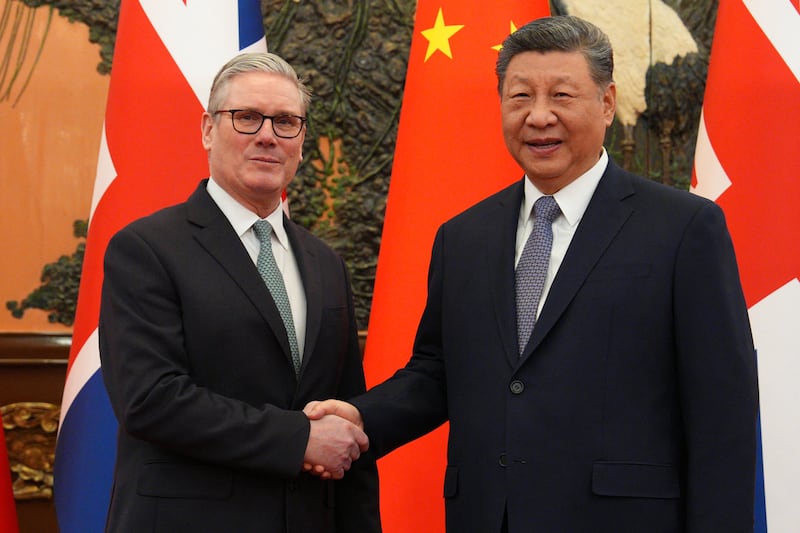 China’s president, Xi Jinping, and British prime minister Keir Starmer at the Great Hall of the People in Beijing earlier this week. Photograph: Carl Court/AFP/Getty Images
Meanwhile, Starmer may have been criticised by the Tories for “kowtowing” to Xi on his trip to China this week, but he also notched up a couple of small wins while there. China has agreed to ease visa requirements for UK visitors on trips of less than 30 days.
This had been a key request from some of the British business leaders who joined Starmer on his Sino voyage, including heads of HSBC bank and KPMG, as well as engineering group Arup.
The Chinese also agreed to halve tariffs on Scotch whisky to 5 per cent, which will do Labour no harm during campaigning over coming weeks for the Scottish parliamentary elections.
Starmer held three hours of talks to Xi in Beijing on Thursday. In addition to the visa and whisky deals, the two sides agreed to work towards a deal on mutual recognition of professional service providers such as accountants and lawyers, as well as co-operation combating organised crime and illegal migration.
Meanwhile, the shadow of Trump looms over any thawing of UK-Sino relations. The US president warned overnight that China is “not the answer” to the economic woes of other countries.
Some analysts, too, have also flagged concerns. Tahlia Peterson, a fellow at Chatham House, said the UK “needs to adopt a more long-term approach to economic security, to prepare for the risk that China will continue to weaponise its economic ties”.
Starmer, however, has his eyes on the upside: “Businesses have been crying out for ways to grow their footprints in China. We’ll make it easier for them.”