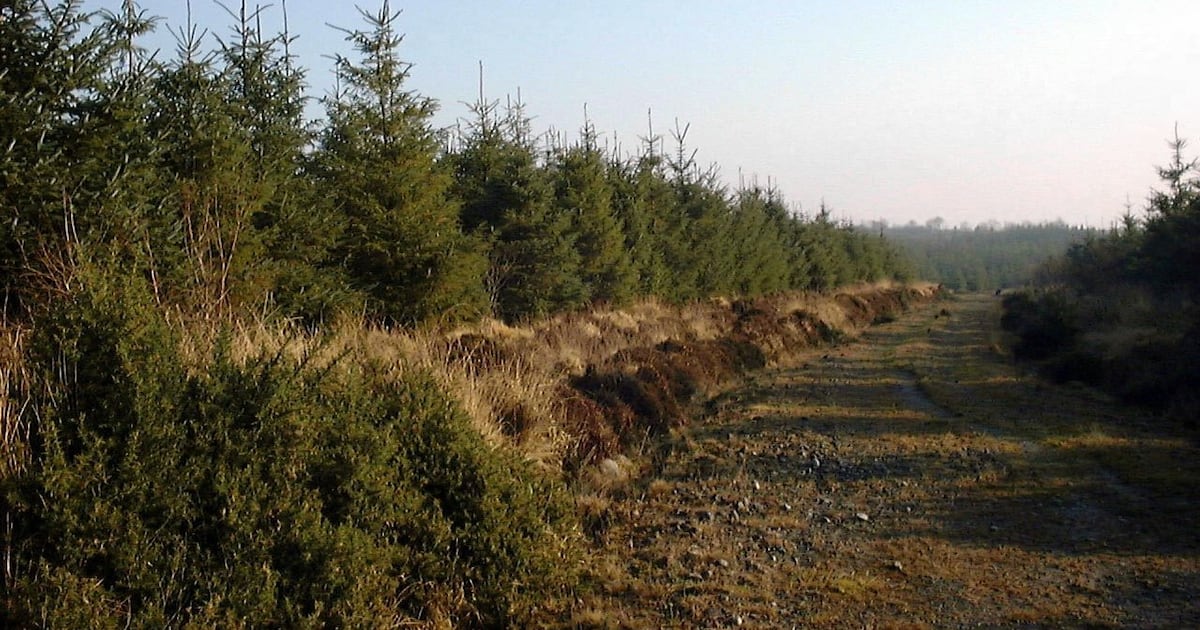
Forget your stocks and shares; how about trying to do something positive for the environment, while earning some money from the land?
Thanks to the State’s various tree incentive schemes, you don’t have to be a big farmer or have forestry experience to benefit from a variety of grants and annual premiums.
These grants are confirmed until 2027 through the Afforestation Scheme 2023-27, which aims to encourage people to plant and manage sustainable forests. Given Ireland’s current record, it is likely to be extended. The intention of the scheme is to increase the Republic’s forest cover from 11 per cent to 18 per cent by 2027 to help counteract climate change. The amount of money you get depends on the size and type of forest you plant.
According to figures from the Department of Agriculture, Food and the Marine, more than 2,500 hectares of new forests were planted in 2025 and paid to first grant instalment stage. That is up from 1,000 hectares in 2024.
However, this is still only about 31 per cent of the national target of 8,000 hectares a year.
So, if trees are your thing, can you make the sums add up to real investment?
From planning your own small woodland plot to establishing a commercial forest, trees are increasingly popular.
“Over the last number of years, there has been an increase in interest in forestry,” says Paul Lafferty, managing director of Forestsales.ie, noting that it is one of the few sources of income that is exempt from income tax – although you will pay PRSI and USC.
Part of the reason behind this interest is the level of support available.
 Trees are an increasingly popular investment option, from small woodland plots to commercial forestry
Tom Houlihan, acting head of forestry development at Teagasc, says there is a “suite of attractive supports” for farmers and other landowners interested in growing trees. The current incentives “are very attractive and among the highest that can be found in the world”, he says.
“The idea of the grant is to fund [establishing forests], which is a great help as we wouldn’t have a forestry industry without it,” says Lafferty.
There are two main schemes aimed at new forest creation – the Afforestation Scheme, which supports the establishment of a range of forest types, and the Native Tree Area Scheme, which focuses on the development of small native forests.
The former requires an afforestation licence and all applications must undergo environmental screening and assessment procedures.
“It’s a bit like the Grand National race: you have to get over every hurdle safely to get there,” says Lafferty.
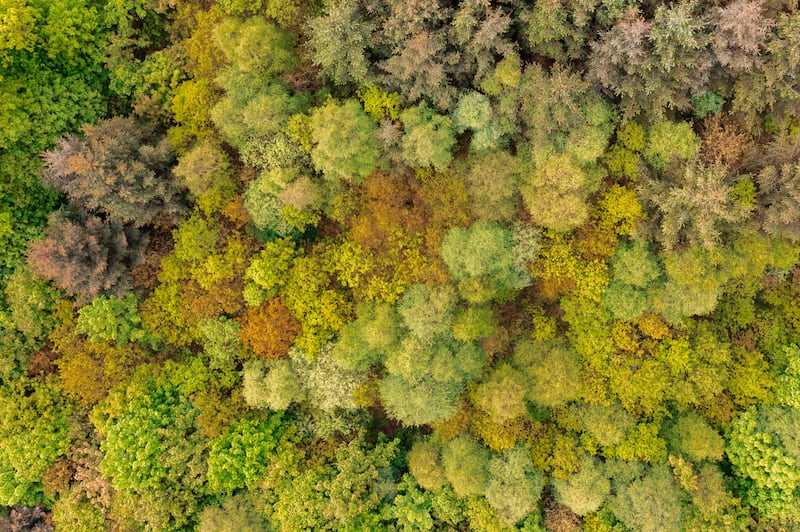 Mixed forestry: Supports available under the afforestation scheme include grants and annual payments, depending on the type of tree grown. Photograph: iStock
You don’t need a licence for the Native Tree Area Scheme. It allows you to plant trees on areas of land of between 0.1 and one hectare, and up to a maximum of two hectares per farm, as part of efforts to boost native forestry in Ireland.
According to Houlihan, Teagasc forestry advisers receive many queries on this scheme from a variety of people, including full-time and part-time farmers wishing to initially explore planting smaller areas – “putting their toe in the water, so to speak, before considering further planting options”.
[ Two years ago we planted 24,000 native saplings – now our forest is thrivingOpens in new window ]
The agency also hears from non-farmers looking to create an attractive native resource on their land.
“We often hear the phrase ‘I would like to give something back’ from an environmental perspective,” says Houlihan. The fact that a more fast-track approval process is in place for this scheme would certainly be viewed as attractive to many, as would the funding available, he adds.
Incentives
Supports available under the afforestation scheme include both forestry grants and annual premium payments, depending on the type of tree grown.
According to Houlihan, the grants (eg €3,858 per hectare for mixed high forests; €6,744 per hectare for native woodland; and €8,555 per hectare for agroforestry, with additional supports for fencing of the forest) cover all, or the vast majority of costs involved in establishing a forest, and also maintenance costs in the early years (usually four to five years).
While you have to leave up to 15 per cent of the site unplanted for reasons of biodiversity, both grant aid and forestry premiums will still be paid on this section.
[ How Ireland’s forests are undergoing a revolution to boost biodiversityOpens in new window ]
That means a person could receive a grant of as much as €855,500 for a 100 hectare plot.
The annual premium payments range from €746 per hectare for mixed high forests to €1,142 for “native woodlands protecting water quality”. These are payable over 20 years for farmers, or 15 years otherwise, apart from agroforestry, which is for 10 years.
“Once the 15/20-year premium is up, you’re on your own,” says Lafferty.
When it comes to the Native Tree Area Scheme, someone who plants one hectare is in line to receive premium payments over a 10-year period of more than €22,000, says Houlihan.
If you are thinking of getting involved, be sure to get advice. Teagasc has experienced forestry advisers who provide free and independent advice and comprehensive decision support on the planting options available.
Additional schemes, such as the Woodland Environment Fund, also exist, while programmes such as the Forest Road Scheme support forests when they’re established.
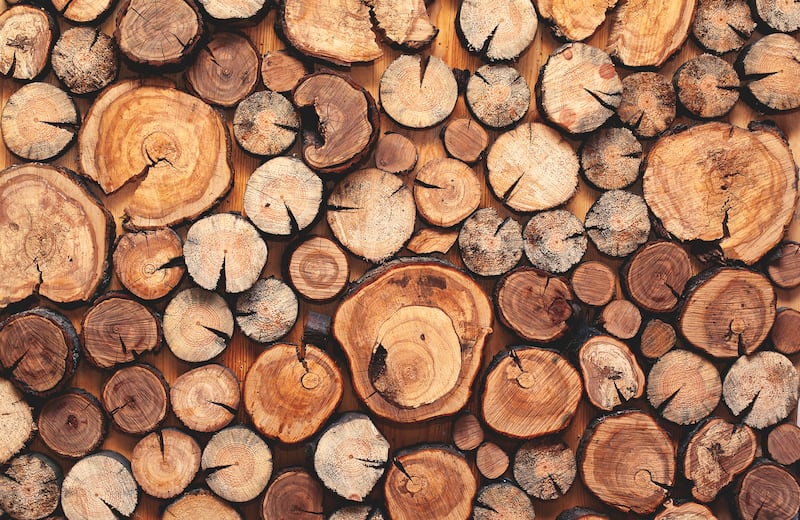 Commercial spruce timber can be produced from 28 to 40 years. Photograph: iStock Earning potential
Houlihan says the timing of harvest will depend on the tree species involved, as well as species productivity, growth conditions and how the crop is managed.
“For example, for landowners looking for a forest resource that can deliver a return on investment in one generation, fast-growing conifers provide early revenue on suitable sites and have tried and trusted markets for their timber products,” he says.
The fastest-producing forest type is Forest Type 12, which allows for a mix of 65 per cent Sitka Spruce and 20 per cent broadleaves, with the required 15 per cent left unplanted for biodiversity. According to Houlihan, commercial spruce timber can be produced from 28 to 40 years (depending on productivity, growth and management).
Other species can take longer. Norway spruce and firs take 35-50 years, for example. Scots pine, a native conifer, takes in the region of 55-65 years to mature, while birch and sycamore would take in the order of 45 to 70 years, depending on species, and oak up to 100 years.
When it comes to native woodlands, timber production is unlikely to be a primary objective, but Houlihan says such areas can be managed for a level of wood production, using continuous cover forestry practices.
Costs
When looking to buy land to plant trees, it’s worth remembering that it will be more valuable if it already has approval on it, says Lafferty. The highest prices currently being paid are for land that has FT12 approval (a mix of spruce and broadleaves). For this, you could be looking at paying about €8,000 an acre.
But Lafferty says there is very little actually being sold at this level as, where there is competition for the land, farmers will pay more for it, possibly pushing the price as high as €10,000 an acre.
The price you pay for land in the first place will be a key determinant in whether or not the investment can wash its face.
“It can be economical at sub-€10,000 an acre; if land goes over that, it’s marginal whether you can make it or not,” says Lafferty.
[ Ireland’s sika deer may face cull following ‘invasive species’ classificationOpens in new window ]
For the hobby forester, going down the native woodland route, there will likely be less competition for land, so you could be talking about €5,000-€8,000 an acre.
The easiest way of getting into it, says Lafferty, is to buy an existing plantation. This way, the applications will have been done, the trees will have been planted and, depending on how long it has been there, there may still be some premiums to be paid out.
“You can see what kind of trees are there, you can see what’s growing … it’s much easier and much cleaner to get involved in that way,” says Lafferty, although he concedes that you might be missing out on some years of premium payments.
The land may also be cheaper this way, precisely because all, or some, of the annual premiums will have already been paid out.
“Not every bit of ground would qualify,” he says, adding that land that is suitable for a commercial forest is also suitable for agricultural reasons. This pushes up competition for the land, and thus prices.
“Forestry becomes a poor relation,” says Lafferty, if there are more profitable ways of using the land.
Tax
A big incentive of the scheme is that you won’t pay tax on earnings from your forest. According to the Department of Finance, “all payments and earnings are income tax free”.
This includes grant payments and any earnings you might make from the land, such as selling timber etc. But universal social charge and PRSI do apply.
Houlihan points to some other “very significant” forestry-related tax benefits. For example, in relation to capital gains tax (CGT), an individual will be exempt from CGT on the growing timber should they opt to sell their forest, although CGT will apply to the underlying land.
Houlihan notes that most of the value will be in the timber, so chargeable gains on the land are “likely to be limited”.
While commercial woodlands are subject to capital acquisition tax in the event of inheritance or being handed on as gifts, they do qualify for agricultural relief. This relief can allow a 90 per cent writedown on the value of woodland, though it is subject to certain requirements, such as the active farmer test.
In circumstances where this relief doesn’t apply, the beneficiary might be able to qualify for business relief, says Houlihan. This would entitle them to a 90 per cent discount in market value.
Finally, as with CGT, the trees growing in commercial woodland are exempt from stamp duty but it will apply to the underlying land at a rate of 7.5 per cent.