
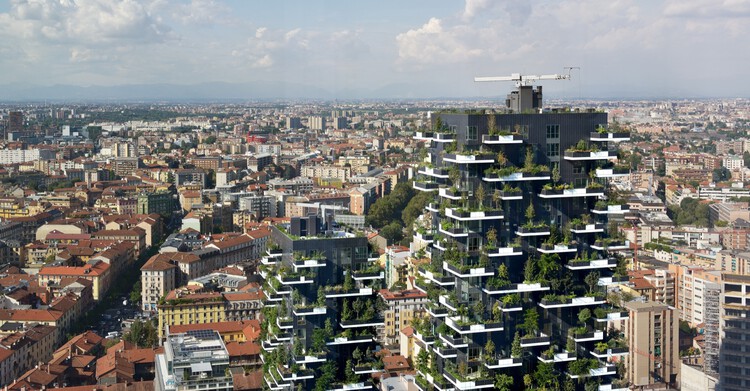
 Bosco Verticale / Boeri Studio. Image © Paolo Rosselli
Share
Share
Or
https://www.archdaily.com/1038280/one-week-to-milano-cortina-2026-the-cultural-olympiad-expands-the-games-through-a-distributed-arts-and-public-programme
Nearly one week before the start of the Milano Cortina 2026 Winter Olympics, the organizing committee has released official information on the event’s Cultural Olympiad: an arts and culture programme accompanying the Olympic and Paralympic Games. The programme is recognized by the IOC as one of the three pillars of the Olympic Movement, alongside sport and education. Conceived as a widespread platform involving territories, institutions, and communities across Italy, the Cultural Olympiad aims to highlight the Italian Alps and Milan’s cultural heritage while promoting Olympic values through art, history, and participation beyond the official sports venues.


Conceived as a long-term cultural programme accompanying the Winter Games, the Cultural Olympiad for Milano Cortina 2026 frames culture as a symbolic and social movement capable of generating dialogue, territorial connection, and lasting transformation beyond the event itself. Launched in January 2024 and running through March 2026, with a peak during the Games, the programme is structured around six thematic pillars that link sport, art, history, and culture; foster active communities; celebrate territory, outdoor lifestyles, and sustainability; advance inclusion, diversity, and empowerment; and promote peace and the Olympic Truce. These pillars guide both programming and project selection.
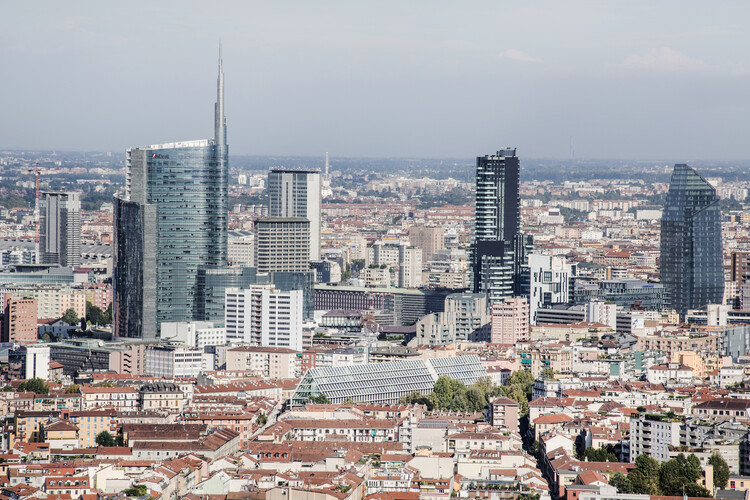 Feltrinelli Porta Volta / Herzog & de Meuron. Image © Filippo Romano
Implementation combines co-design initiatives developed with major institutional and cultural partners such as Triennale Milano, La Biennale di Venezia, and TEDx, alongside a broad range of recognized projects selected through open calls involving cultural institutions, schools, and artists. All initiatives operate under the official Cultural Olympiad identity and are supported by Fondazione Milano Cortina 2026’s communication channels. Governance is organized through a multi-level framework bringing together local, regional, national, and international actors. Between 2024 and 2025, the programme has already mobilized more than 500 proposed initiatives, labelled 300 projects, engaged 6.8 million people, involved over 57,000 students through 1,481 educational activities, and generated approximately 2,250 days of events, positioning the programme as an important spatial, social, and cultural component of the Olympic Games’ legacy.
Related Article David Chipperfield Architects Releases New Images of the Milano Santa Giulia Arena Ahead of the 2026 Winter Olympics
In Milan, the Cultural Olympiad unfolds primarily through exhibitions, performances, installations, and public art that activate the city’s major cultural institutions and public spaces, positioning culture as an urban-scale project. Museums such as Triennale Milano, Palazzo Reale, MUDEC, and Castello Sforzesco host exhibitions that connect Olympic values with design, art, history, and contemporary issues such as climate change, inclusion, and collective memory. Theatres and concert halls, including Teatro Strehler, Teatro Lirico Giorgio Gaber, the Conservatorio, and the Auditorium di Milano, frame sport as a cultural narrative through music, opera, and performance, while large-scale installations, murals, and outdoor programmes extend the Olympiad into streets, parks, hospitals, transport hubs, and civic spaces.
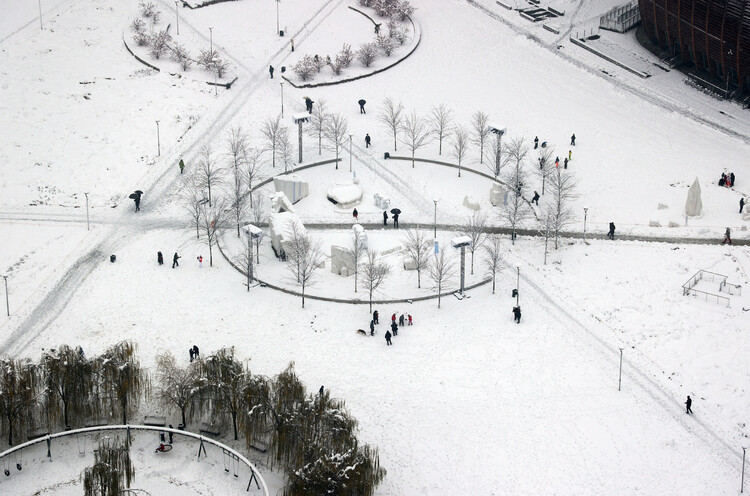 Bibilioteca degli Alberi Park / Inside Outside Architecture. Image © Andrea Cherchi
Across the mountain towns and Alpine regions of Lombardia, Trentino, Alto Adige/South Tyrol, Veneto, and Cortina d’Ampezzo, the Cultural Olympiad is embedded within landscapes, historic buildings, and repurposed infrastructure, emphasizing the relationship between culture, sport, and territory. Museums, villas, and former industrial or infrastructural spaces such as redeveloped road tunnels in Trento or high-altitude exhibition venues in Cortina, host exhibitions exploring mountain life, winter sports, technology, and the human body, often set against dramatic natural backdrops. Public art installations, festivals, concerts, and temporary works appear in town centres, valleys, ski venues, and cultural routes, linking local identity with international Olympic narratives. Rather than concentrating activity in single venues, the programme adopts a distributed model that leverages small cities, alpine landscapes, and cultural networks.
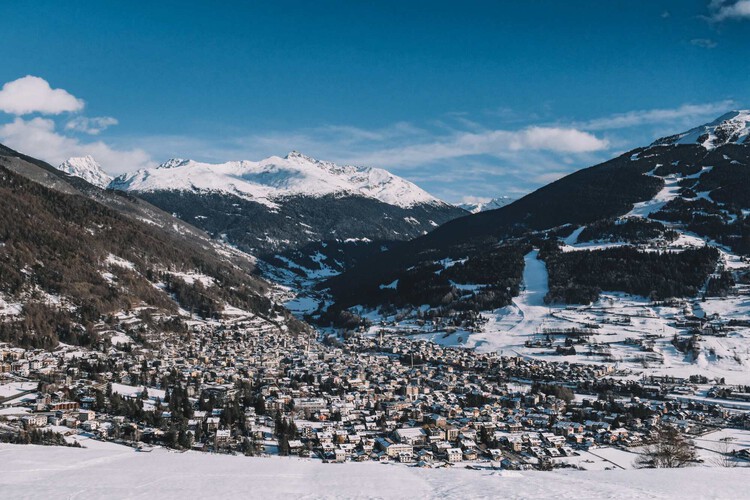 Bormio . Image Courtesy of Milano Cortina 2026
This adds to an extensive City Experiences programme, a widespread model highlighting local areas, communities, and symbolic locations. City Experiences includes Fan Villages and live sites in Milan, Cortina d’Ampezzo, Bormio, Livigno, Predazzo, and Brunico, designed as places for gathering, participation, and entertainment, offering live streaming of competitions and ceremonies, athlete celebrations, sports activities, and experiential workshops centred on sport. In addition to the Fan Villages, visitors will encounter an Olympic Boulevard connecting Milan’s Central Station to the Arco della Pace; marketing partner activations in iconic locations across the city; National Olympic Committee (NOC) Houses serving as dedicated spaces for interaction among fans, athletes, and stakeholders in Milan and the mountain clusters; and Off-Venue Stores in both urban and alpine areas.
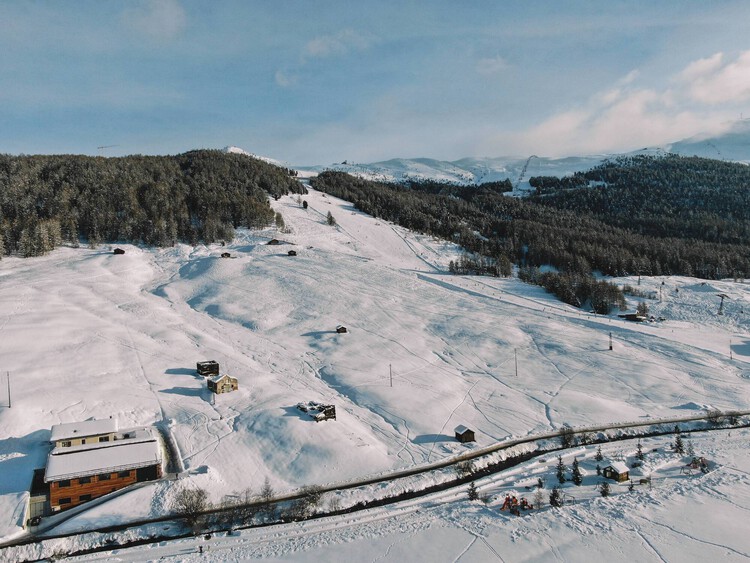 Livigno Snow Park. Image Courtesy of Milano Cortina 2026
Further information and calendar updates are available on the official Milano Cortina 2026 website. The Cultural Olympiad remains open, with new projects still eligible for inclusion in the official schedule, and applications can be submitted via the Cultural Olympiad website, where participation criteria and guidelines are outlined. As the opening date approaches, the 15 official sporting venues are also progressing toward preparedness. David Chipperfield Architects has recently released new images of the Ice Hockey Arena in Milan, currently in the testing phase. In total, six sites will host the Olympic Villages of Milano Cortina 2026, reflecting a focus on existing infrastructure and regional tourism development.
We invite you to check out ArchDaily’s comprehensive coverage of the Milano Cortina 2026.