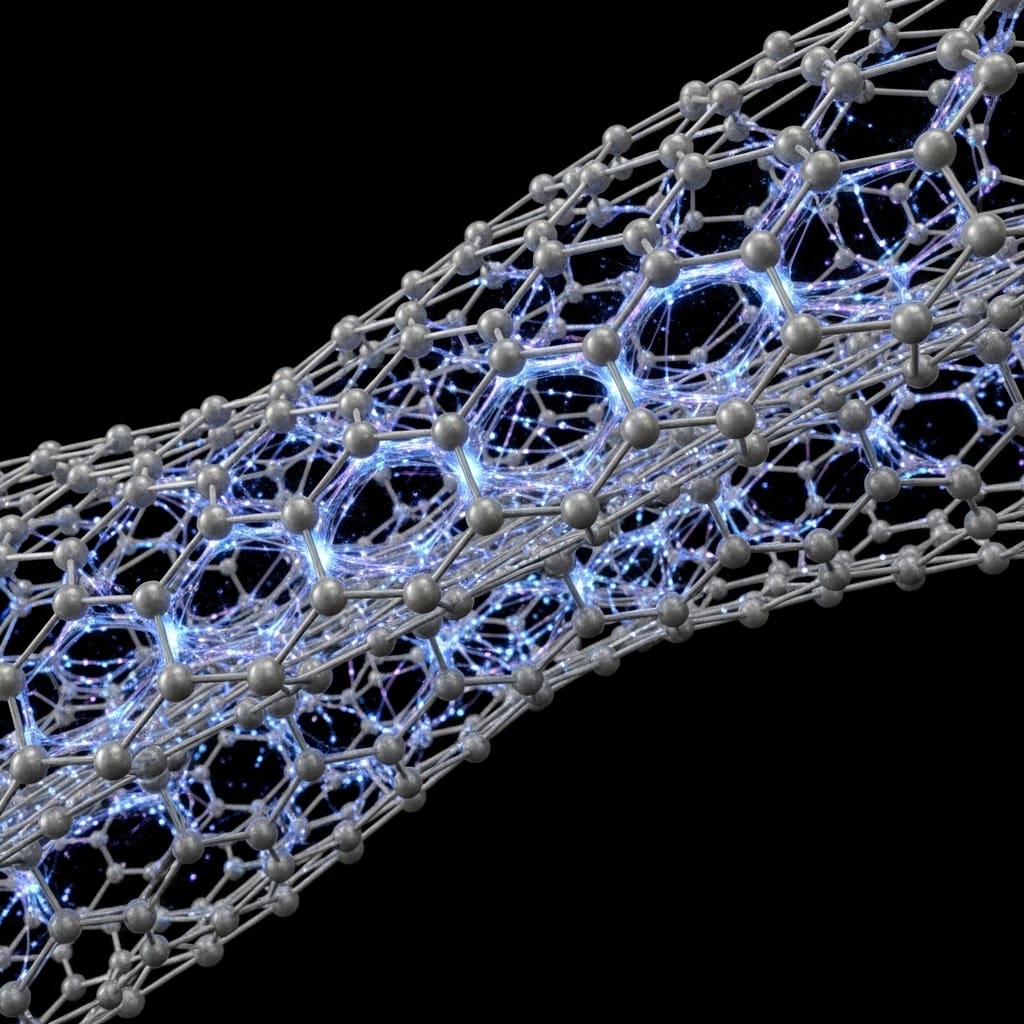
Researchers have long sought to understand the behaviour of vortices within twisted bilayer graphene, a material exhibiting remarkable superconducting properties. Marta Perego, Peter Koopmann, and Clara Galante Agero, all from the Laboratory for Solid State Physics at ETH Zurich, alongside Artem O Denisov et al, now present compelling evidence of a quantum-to-classical transition in vortex dynamics. Their work, utilising a gate-defined Josephson junction to observe individual vortex events, demonstrates that vortices tunnel through energy barriers at low temperatures (below 90 mK), a phenomenon previously unseen in this system. This discovery, further supported by the contribution of Takashi Taniguchi, is significant because it provides direct insight into the fundamental mechanisms governing superconductivity in these materials and could pave the way for novel quantum devices.
This discovery, further supported by the contribution of Takashi Taniguchi, is significant because it provides direct insight into the fundamental mechanisms governing Superconductivity in these materials and could pave the way for novel quantum devices.
Vortex dynamics observed in twisted graphene superconductors reveal
Scientists have demonstrated a novel method for studying superconductivity in two-dimensional materials, utilising twisted graphene as a tunable platform. The research team achieved direct observation of individual vortex dynamics, a feat previously hindered by conventional studies focusing on averaged bulk properties. However, at lower temperatures, below 90 milliKelvin, a distinct phenomenon emerges: macroscopic Quantum tunneling dominates, bypassing the classical thermal activation pathway. The data are consistent with a first-order type quantum-to-classical transition, indicating a fundamental shift in the mechanism governing vortex dynamics.
This work opens new avenues for investigating the interplay between quantum and classical phenomena in two-dimensional superconducting systems, particularly in the context of Pearl-vortices. The team’s approach provides a powerful new tool for studying fluctuation dynamics and their impact on superconducting device performance. This research establishes magic-angle twisted graphene as a versatile platform for exploring superconductivity, enabling the creation of superconducting nano-devices with independently tunable phases. The ability to control the superconducting state through carrier density manipulation offers unprecedented flexibility in device design and in-situ control of electronic phases. By focusing on dissipative vortex dynamics at low temperatures, the study highlights the significance of macroscopic quantum fluctuations in influencing the performance of superconducting devices, including current persistence and qubit coherence. The observed transition from thermal activation to quantum tunneling, evidenced by a dimensionless quantum action between 24 and 27, provides valuable insights into the underlying physics of vortex dynamics in these materials.
Vortex dynamics in twisted graphene via transport measurements
This work pioneered a transport-based method, enabling the detection of single vortices and their real-time behaviour, a significant departure from conventional studies averaging over vortex ensembles. The team fabricated a magic-angle twisted graphene (MAT4G) stack utilising a dry pick-up method, with detailed fabrication and tuning procedures previously reported elsewhere. All measurements were conducted within a dilution refrigerator maintaining a base temperature of 7 mK, crucial for observing quantum phenomena. Experiments employed a current-biased configuration, applying a current and measuring the resulting voltage drop across a two-terminal setup, with corrections applied for contact resistances.
A home-built d. c. source in series with either a 10 MΩ or 100 MΩ resistor generated the bias current, while a custom low-noise d. c. amplifier and a Hewlett Packard 3441A digital multimeter measured the voltage. The bottom, top, and finger gates were connected to independently controlled, low-noise d. c. voltage sources, allowing for precise electrostatic manipulation of the graphene device. For statistical analysis of vortex fluctuations, the output voltage was further amplified by a factor of 30,000, low-pass filtered at 1.1kHz, and recorded using a National Instruments BNC-2110 data acquisition card at a sampling frequency of 20kHz. However, below 90 mK, the study observed macroscopic quantum tunneling through these same barriers, demonstrating a clear quantum-to-classical transition. The persistence of a temperature-dependent critical current, Ic(T), down to the lowest measurement temperature confirmed device equilibration and validated the observed transition. This innovative methodology provides valuable guidance for designing sensitive superconducting devices, such as qubits and quantum sensors, where minimising vortex fluctuations is paramount.
Vortex dynamics transition from thermal to quantum tunnelling
Scientists have developed a tunable platform for investigating superconductivity in two dimensions, focusing on the behaviour of individual vortices. Experiments demonstrate a transition from thermal activation to macroscopic quantum tunneling at lower temperatures, below 90 mK. Data shows a sharp, first-order type quantum-to-classical transition, evidenced by the dimensionless quantum action S/ħ falling between 24 and 27. The ratio 0/Γ, at these low temperatures, deviates substantially from extrapolated thermal behaviour, further supporting this transition. This crossover is indicated by the replacement of the thermal exponent U/kBT with the dimensionless quantum action S/ħ, a key finding of the study.
The research team fabricated a magic angle twisted four-layer graphene (MAT4G) device, with a twist angle of approximately 1.64°, incorporating an electrostatically defined Josephson junction. Measurements were conducted with carrier densities and displacement fields set to nl = 4.8 × 1012cm−2 and Dl/ε0 = −0.37V/nm in the superconducting leads, and nj = 6.2 × 1012cm−2 and Dj/ε0 = −0.5V/nm in the junction region. Under these conditions, the leads were tuned to a ‘weak-leads’ regime. Tests prove that the device exhibits a pronounced field dependence in its maximum supercurrent, Ic(B), forming a characteristic Fraunhofer-like interference pattern.
Scientists recorded sharp discontinuities in this pattern, attributing them to the entry or exit of individual vortices, which shift the pattern towards higher magnetic fields. These shifts correspond to changes in flux of order of one superconducting flux quantum Φ0 = h/2e = 2.07 × 10⁻¹⁵ Wb over an area of order W2. At 7 mK, a well-defined critical current emerged, and stochastic switching between two dissipative states was observed at a fixed magnetic field of 2 mT, confirming the repeated crossing of vortices across the superconducting leads.
Quantum to Classical Vortex Transition Observed in Superfluid
Their research focused on magic-angle twisted graphene, revealing a transition in how vortices enter the superconductor depending on temperature. However, below 90 milliKelvin, the process shifts to macroscopic quantum tunneling through the same barriers, indicating a clear quantum-to-classical transition. This transport-based technique offers a novel approach to studying vortex behaviour, moving beyond ensemble measurements to examine individual events in real-time. The authors acknowledge limitations in fully modelling the dissipative dynamics of vortices and calculating the free energy landscape beyond current approximations.
Future work could address these points, potentially refining the understanding of vortex behaviour and improving the design of superconducting devices. These findings are significant because vortex fluctuations can negatively impact the performance of sensitive superconducting technologies like qubits and quantum sensors. By gaining a more detailed understanding of vortex dynamics, this research provides guidance for optimising the design and operation of such devices. The persistence of a temperature dependence in the critical current of the junction confirms the reliability of the measurements, despite potential concerns about temperature equilibration at low temperatures. Data supporting the study is openly available, facilitating further investigation and validation by the scientific community.