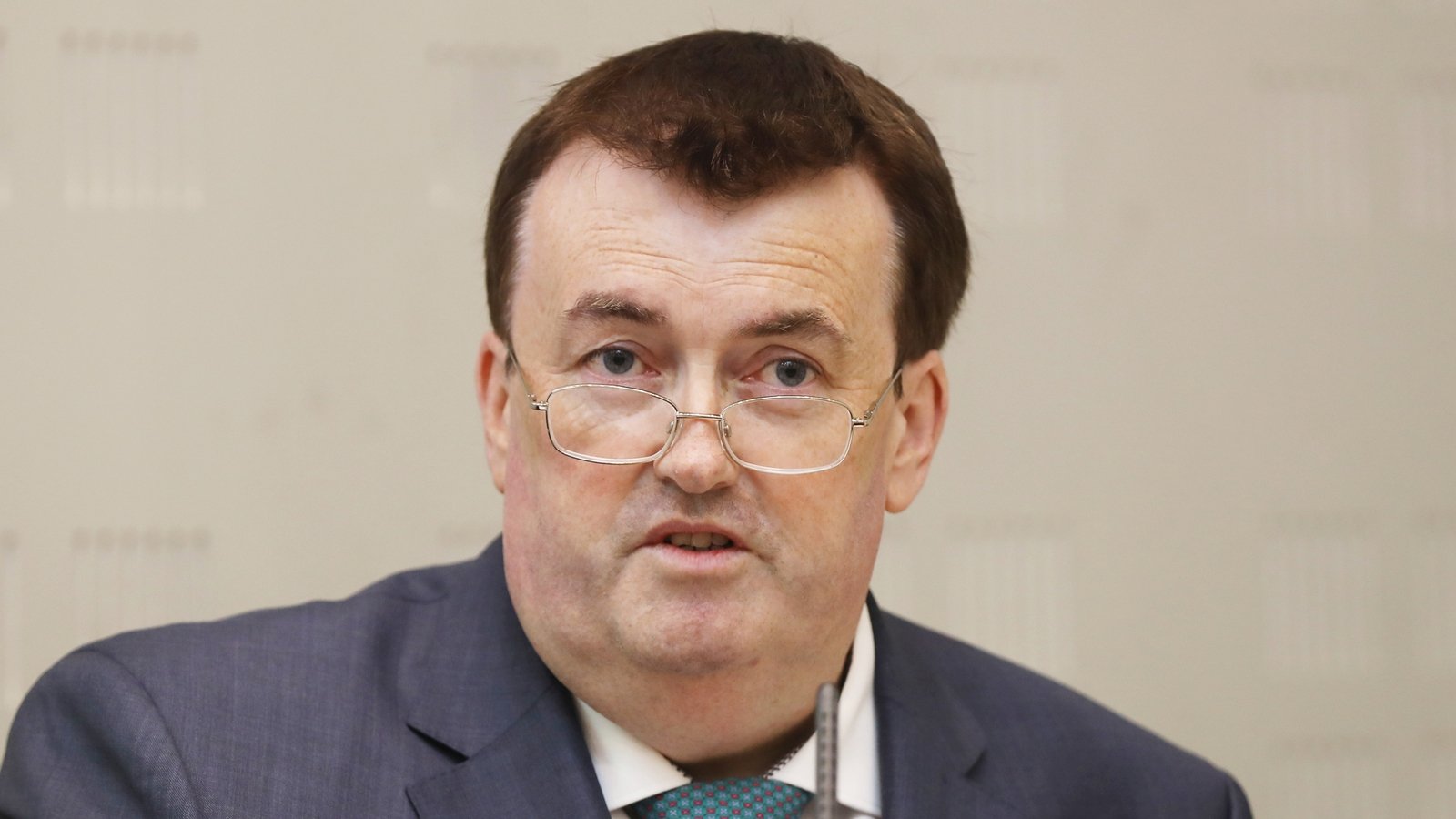
Minister of State and Fine Gael TD Colm Brophy said the Government needs to “look again, completely” at flood relief and responses.
Speaking on RTÉ’s Saturday with Cormac Ó hEadhra, he said people’s lives have been “upended and destroyed” in the last few days, adding that many residents in Rathfarnham in south Dublin had not experienced flooding of that level before.
“Even those residents who were really angry with the local authority and the situation were saying, as I was, that that particular area, that particular type of flood coming down from the top and down to the bottom in Woodside, is not something anyone had experienced before,” he said.
“We had experienced Dodder flooding quite regularly and there has been a flood relief programme started for that. We are now experiencing in a number of areas … where the sheer volume of water falling over a period of time is unprecedented.
“And when you get super surges of rain coming through on top of that, that water run off is actually hitting and impacting areas where no one has a memory of flooding.”
The Dublin South-West TD said he would not defend planning permissions from years ago that allowed properties be built on flood planes, adding that it “shouldn’t happen”.
Minister Brophy said that when applications are made now, local authorities require a full investigation into the potential for flooding.
“We shouldn’t be building in areas where we know that there’s a potential for people to get flooding. We need to be building, rapidly, but we need to be building sensibly as well,” he said, adding that “proper flood relief schemes” need to be built at a faster pace.
National Emergency Coordination Group meeting
Earlier, the Taoiseach convened a meeting of the National Emergency Coordination Group to discuss the flooding issue.
Addressing the online meeting, Micheál Martin stressed the need for continued vigilance over coming days given current river levels.
While there is expected to be some respite in terms of rainfall today and tomorrow, another front is due on Monday with wind and rain forecast for the east of the country.
Mr Martin confirmed that the scheme open to businesses as well as community and sporting organisations, who can prove they have been impacted by Storm Chandra and do not have flood insurance, is to be increased from a maximum of €20,000 to €100,000.
The Taoiseach also asked those administering the scheme to help as many people and businesses as possible.
Speaking in Cork this afternoon, Mr Martin confirmed he would visit the affected areas in the south east over the coming days.
Govt should ‘prioritise’ public health and safety over environmental concerns
Minister for Health Jennifer Carroll MacNeill has said she “unashamedly believes” that Government should priotirise public health and safety over environmental concerns when developing flood protection infrastructure.
Storm Chandra left hundreds of homes underwater, most notably in Enniscorthy in Co Wexford, after the River Slaney burst its banks during heavy rain.
The devastation left by the storm has led to renewed calls from locals for the immediate introduction of a flood prevention scheme, which was historically blocked due to the presence of the protected freshwater pearl mussel in the Slaney.
Speaking today, Minister Carroll MacNeill said there has been a slowness in infrastructure development for too many individual reasons
“There is a broader public need, there is a broader collective imperative to develop the things that we need whether it’s in energy, whether it’s in flood protection, whether it’s health infrastructure and to develop that in the interests of the broad public common good to make sure that our people are served and protected in the way that they deserve to be.”
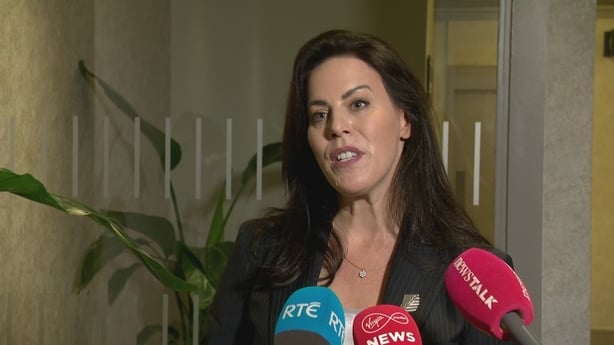
Jennifer Carroll MacNeill said there had been slowness in infrastructure development for many reasons
She added; “we have had some changes in relation with Jack Chambers recently in relation to speed, let’s see how that works,” she said.
Minister Carroll McNeill added that steps will need to be made to better communicate with the public in regard to warnings of extreme weather events.
“We recognise that weather is getting much more difficult, that we’re going to have to find ways to communicate and recognise the challenges.”
“It’s a very sorry situation to have this level of climate change where we’re seeing these impacts but we’re going to have to develop a way in which we communicate more effectively with people,” she said.
‘Real anger’ over lack of flood relief schemes
Sinn Féin TD for Waterford David Cullinane said many of the towns and villages currently affected have been “flooded multiple times over the last 20 years”.
Speaking on RTÉ’s Saturday with Cormac Ó hEadhra, Mr Cullinane said there is a “real anger” that many of the flood relief schemes have not materialised.
“In some areas it’s lack of funding, in other areas it’s held up in the planning process … we’re talking about doing something that should have been done 10, 15, 20 years ago,” he said.
“Even if we do everything humanly possible over the next 12 months, it’s still possible that we’ll have floods again next year in these places, so unfortunately we’re starting from a very weak point.”
Labour Senator Laura Harmon said it is a question of “when, not if” these floods will happen again.
She said scientists have warned for years that “climate chaos is real” and there will be an increase in adverse weather.
“We can’t have a situation where every time there is an adverse weather event we are hearing this big sense of urgency in the days and the weeks afterwards and then very little being done in between.
“Ultimately, what the public want is they want reassurance from the Government in a calm way that this is being dealt with and that there will be protections in place,” she said.
“My concern is for families who are living in areas that are prone for flooding that can’t get insurance for their homes and businesses. The insurance companies certainly need to play a role here but also the State does need to step in with greater supports.”