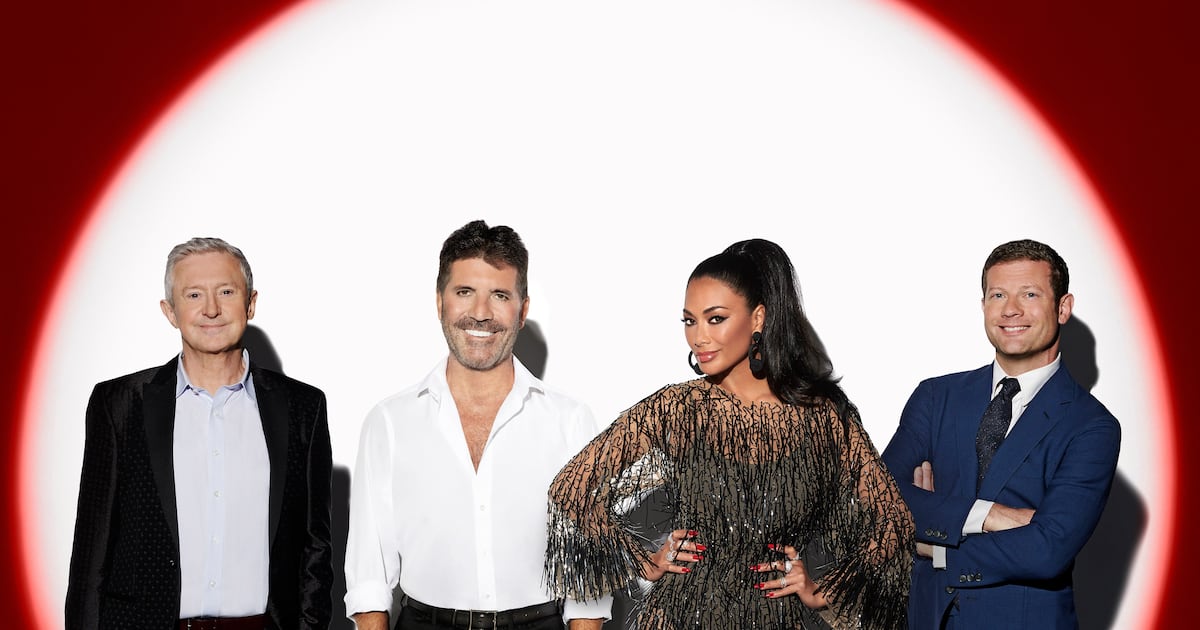
It is with a mix of dread and hope for restorative justice that I will watch Sky’s “premium, definitive” documentary series about The X Factor, the greenlighting of which was announced this week. Will this take on the defunct television-ratings monster have the exposé factor?
The X Factor, which Sky accurately describes as an “era-defining entertainment juggernaut”, is due a thorough raking over. The words of Peter Dickson, the show’s voiceover artist, boom into mind: It’s time. To face. The music.
The phase in pop history that immediately preceded it has been mined by a flurry of documentaries, from the BBC-commissioned Boybands Forever and Girlbands Forever to Netflix’s just-released three-parter on Take That and Sky’s riveting Boyzone: No Matter What.
Each delivers bursts of candid testimony and retrospective insight while bearing the common-denominator hard truth that being in a boyband or girlband is not something you do, it’s something you go through.
The X Factor began in 2004 and finally ground to a halt in 2018 – a “celebrity” version limped through the autumn of 2019. I resisted the arrival of the ITV show, thinking it overcooked the weekly-elimination formula established by Pop Idol and Popstars: The Rivals. But I got sucked in and digested four of its 15 seasons, including the peak-popularity 2010 season, which saw viewership of the TV3 simulcast swell as the Irish economy tanked. We were too broke to go out.
If I heard that brash theme tune now it would make me feel quite unwell. Shiny-floor TV shows and chart pop can, and should, be life-affirming, but The X Factor often represented the worst of both realms.
It was always more about television than music. The relentlessness with which its central antagonist, Simon Cowell, stripped pop of any sense of freshness or evolution was merely a subplot to its function as a viewer magnet that would serve as a bloated advertising vehicle throughout ITV’s key commercial months.
The untitled Sky-commissioned series will be made by 72 Films, which has an impressive catalogue, including Savile: A British Horror Story (Netflix), The Rise of the Murdoch Dynasty (BBC) and, most promisingly in this context, Spice Girls: How Girl Power Changed Britain (Channel 4).
Unlike Sky’s Boyzonefest, the Spice Girls series had no new input from the band. It compelled instead by giving the feminist treatment to the sexist assumptions of the music industry they encountered and the swirl of misogynistic coverage they received. This excellent three-parter from 2021 was distinguished not by nostalgia but by a potent undertow of fury.
The only thing revealed to date about The X Factor documentary is that Cowell will contribute, but a similarly sharp examination of his show would be a must-watch.
There’s another noteworthy dimension to 72 Films: it’s owned by Fremantle, which coproduced The X Factor (through its company Thames) alongside Cowell’s production outfit, Syco. This could be interesting, as any self-respecting documentary must interrogate the role of the producers.
As a TV proposition, The X Factor was bombastic, sentimental and calculated. The whole premise was that it was big enough to bestow guaranteed stardom. When its own fortunes started to plummet, its internal logic failed.
Some of the unpleasantness was much dissected at the time. This was a show where auditioning hopefuls were held up for mockery. That peak seventh season, which arrived just as Twitter was taking off, triggered a real-time nastiness that seemed, if not new, then newly public.
Other grubby aspects were guessable. Rebecca Ferguson, who came second to Matt Cardle in 2010 – beating One Direction into third – has since spoken out about being required to sign management and recording contracts without independent legal advice to avoid being kicked off the show.
In 2023 she posted screenshots of an email to ITV in which she outlined her concerns about contestant welfare. It contained the sad observation that she wouldn’t wish her “traumatic experience away from the cameras” on anyone.
Almost every television series of this ilk has had its duty-of-care failures. The difference with The X Factor is that its darkest incident emerged only in 2023, five years after the show’s final season aired.
Lucy Spraggan, who was scouted to appear on The X Factor’s ninth season, in 2012, when she was 20, was raped by a porter in the hotel to which she and another contestant, Rylan Clark, had been moved.
The production team called the police and supported her in the immediate aftermath, but she wrote that they were “unprepared” for what happened and didn’t contact her after the trial, in which the rapist was convicted. She felt abandoned.
Cowell, who hadn’t been involved in the 2012 season, personally apologised. Fremantle subsequently said it was “extremely sorry”. The television industry has been working to reform its procedures. But Spraggan’s case remains a disturbing reminder of the importance of safeguarding and aftercare.
The X Factor couldn’t have existed without its singers. Their stories deserve more attention.