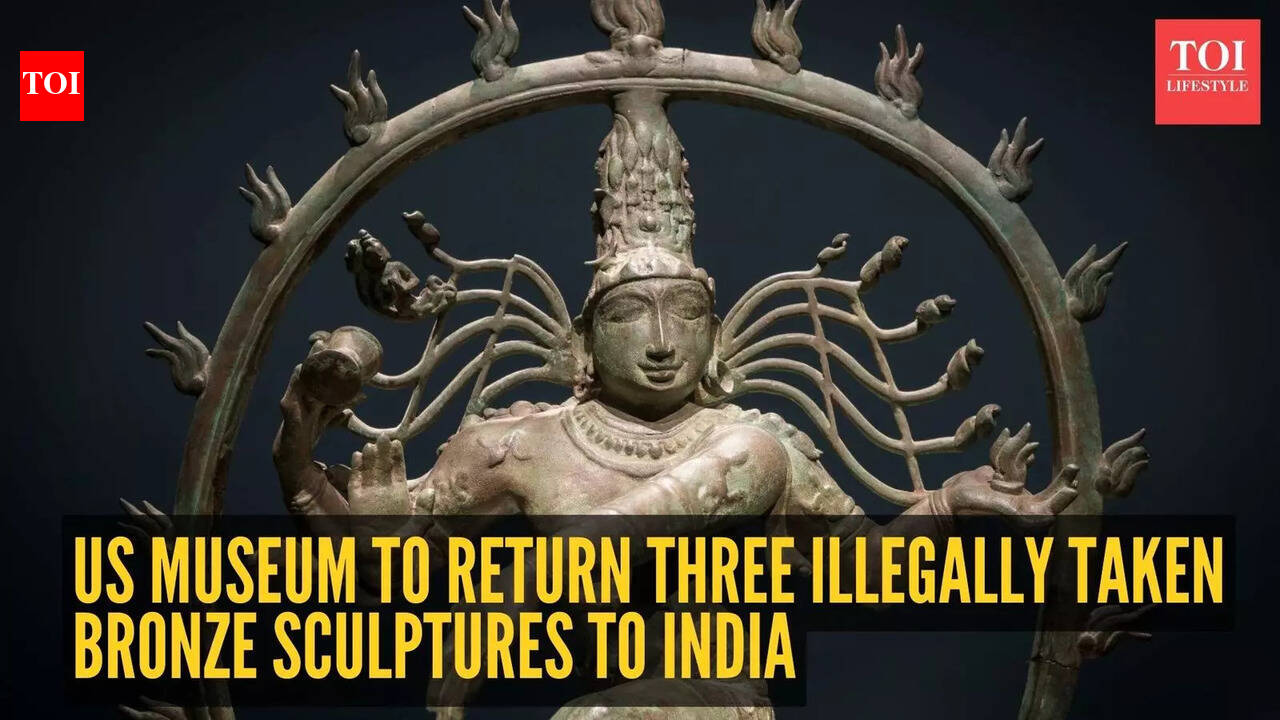
 Something interesting is happening in museums around the world. For years, rare artworks were displayed without much discussion about how they got there. Now, that is slowly changing. Museums are looking back at their collections and asking honest questions about where these objects came from and whether they should still be there.In this changing atmosphere, the Smithsonian’s National Museum of Asian Art in the United States has taken an important step. The museum has announced that it will return three old bronze sculptures to India after confirming that they were taken illegally from temples in Tamil Nadu.
What these sculptures are
The three sculptures are well-known examples of South Indian bronze art. According to a report by the Times of India, dated January 29, 2026, one is a ‘Shiva Nataraja’ from the Chola period, dating to around the year 990. The second is a ‘Somaskanda’ from the 12th century. The third is a ‘Saint Sundarar with Paravai’ sculpture from the Vijayanagar period of the 16th century.These were not just decorative pieces. They were created for temples and were part of religious life in Tamil Nadu.
How the museum found the truth
The return happened after the museum carried out a careful review of its South Asian collection. As part of this work, researchers looked closely at the history of each sculpture.According to the Times of India report, in 2023, museum researchers worked with the Photo Archives of the French Institute of Pondicherry. During this process, they found that all three bronzes had been photographed inside temples in Tamil Nadu between 1956 and 1959.The Archaeological Survey of India later checked this information and confirmed that the sculptures had been removed in violation of Indian laws.
What the museum said
The museum has openly spoken about its responsibility in this matter.“The National Museum of Asian Art is committed to stewarding cultural heritage responsibly and advancing transparency in our collection,” said museum director Chase F Robinson.
Where the sculptures originally belonged
The ‘Shiva Nataraja’ originally came from the Sri Bhava Aushadesvara Temple in the Thanjavur district. It was photographed at the temple in 1957. Years later, in 2002, the museum bought the sculpture from the Doris Wiener Gallery in New York, according to the report.Later research by a museum staff member showed that the gallery had submitted falsified documents to complete the sale.As mentioned in the report, the ‘Somaskanda’ and ‘Saint Sundarar with Paravai’ sculptures were part of a gift that included around 1,000 objects. Research showed that the Somaskanda came from the Visvanatha Temple in Alattur village in Mannarkudi taluk. The ‘Saint Sundarar with Paravai’ sculpture was traced back to a Shiva temple in Veerasolapuram village in Kallakuruchchi taluk.
What happens now
While all three sculptures are being returned to India, the Indian government has agreed to place the ‘Shiva Nataraja’ on a long-term loan with the museum, according to the report. This means the museum can continue to display it while clearly explaining its full history.The sculpture will be shown as part of the exhibition titled ‘The Art of Knowing in South Asia, Southeast Asia, and the Himalayas.’Thumb image: X