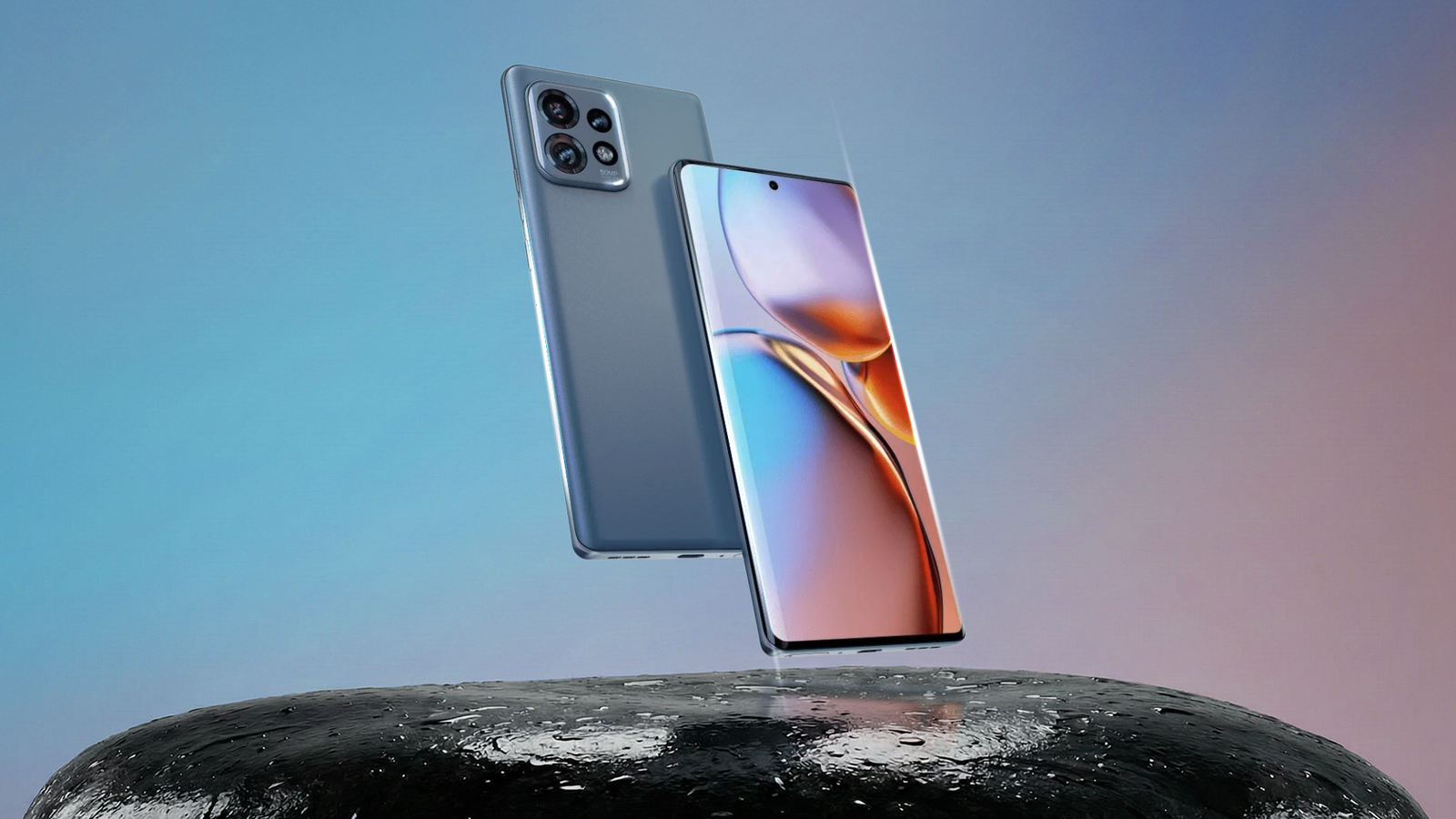
This is an exciting time to cover smartphones. We have phones that fold not once, but twice. Keyboards are making a resurgence. Slab phones, while not as exciting, are better than ever—but there’s one I want to see make a comeback in the US more than any other brand.
My last slab phone was the Moto Edge+ 2023
These days, I carry around a Samsung Galaxy Z Fold 6. It’s my favorite consumer electronic device I’ve ever bought, and until I recently purchased a Galaxy XR headset for productivity, this phone was my sole PC. But before I discovered how affordable foldables are on the second-hand market, I carried around a Moto Edge+ 2023.
Credit: Bertel King / How-To Geek
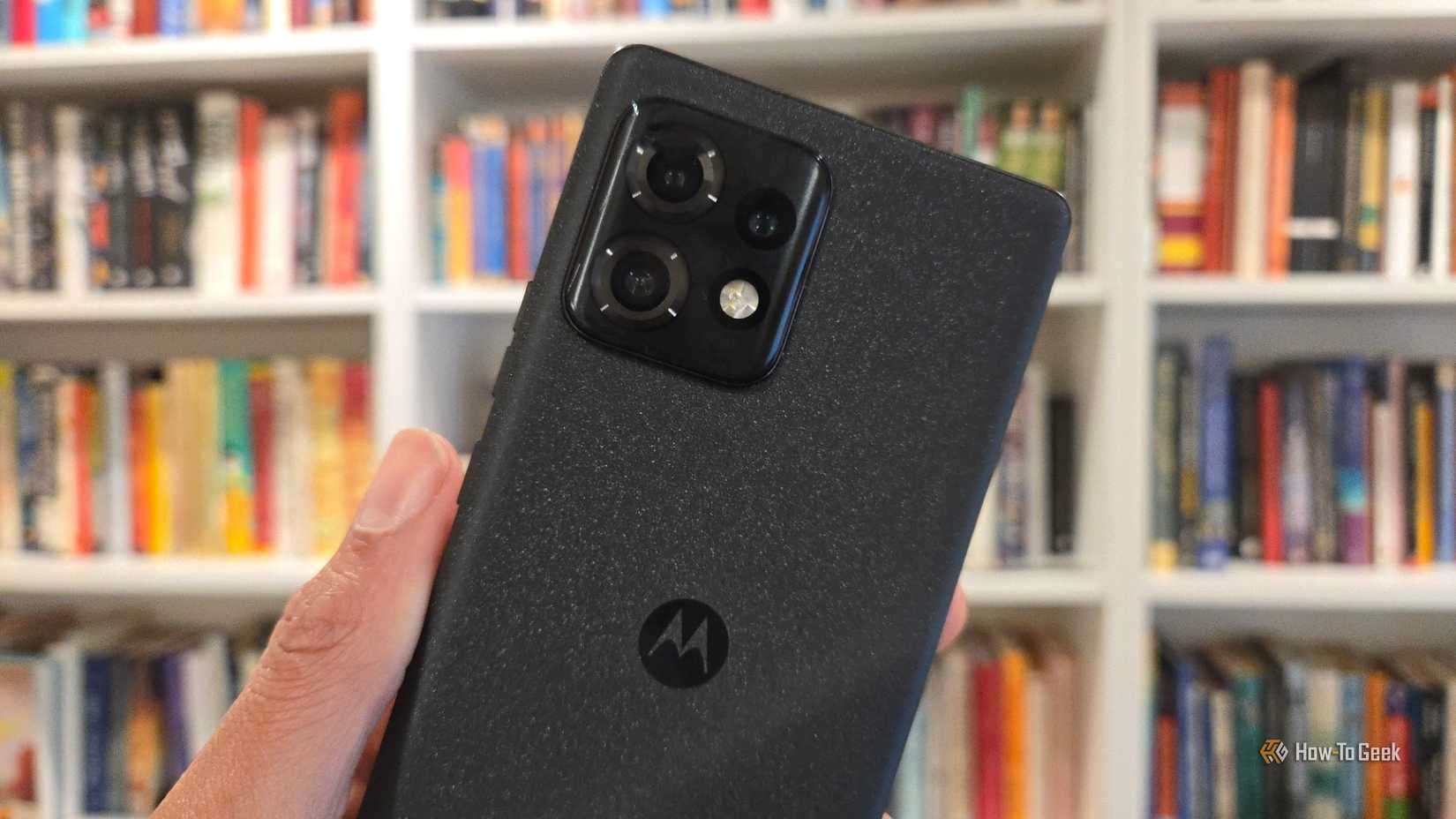
The Edge+ was Motorola’s flagship phone, representing the most powerful hardware the company offered in the US. It had the same Qualcomm Snapdragon 8 Gen 2 processor as other flagships released that year. It was shielded by the same Gorilla Glass Victus. It even came with some advantages that some competitors have yet to match several years later.
A Premium phone with high-end specs, at a compelling price
The Moto Edge+ 2023 came with 512GB of storage. That’s the exact amount I want when I buy a phone, and I loved that I didn’t have to pay extra. There wasn’t even a 128GB or 256GB model available.
This was also the fastest charging phone I’ve ever used. My Galaxy Z Fold 6 tops off at 25W fast-charging, whereas the Moto Edge+ charged at 68 watts. The screen’s refresh rate also went all the way up to 144Hz.
All of this was available for $799, the same amount of money as an iPhone with a 60Hz screen and 128GB of storage or a Pixel 8 with the same paltry storage as the iPhone and a weaker Tensor G3 processor.
Moto continues to embrace curved screen edges
One of my favorite things about the Moto Edge+ was its curved display, a trend I had missed out on entirely up to that point. Around the time Samsung phones were known for curved displays, I was carrying around dumb phones like the Light Phone 2. When I switched back to a smartphone, Moto was the most prominent company still selling a high-end phone with a screen that curved. This display is what the “Edge” in the name refers to.
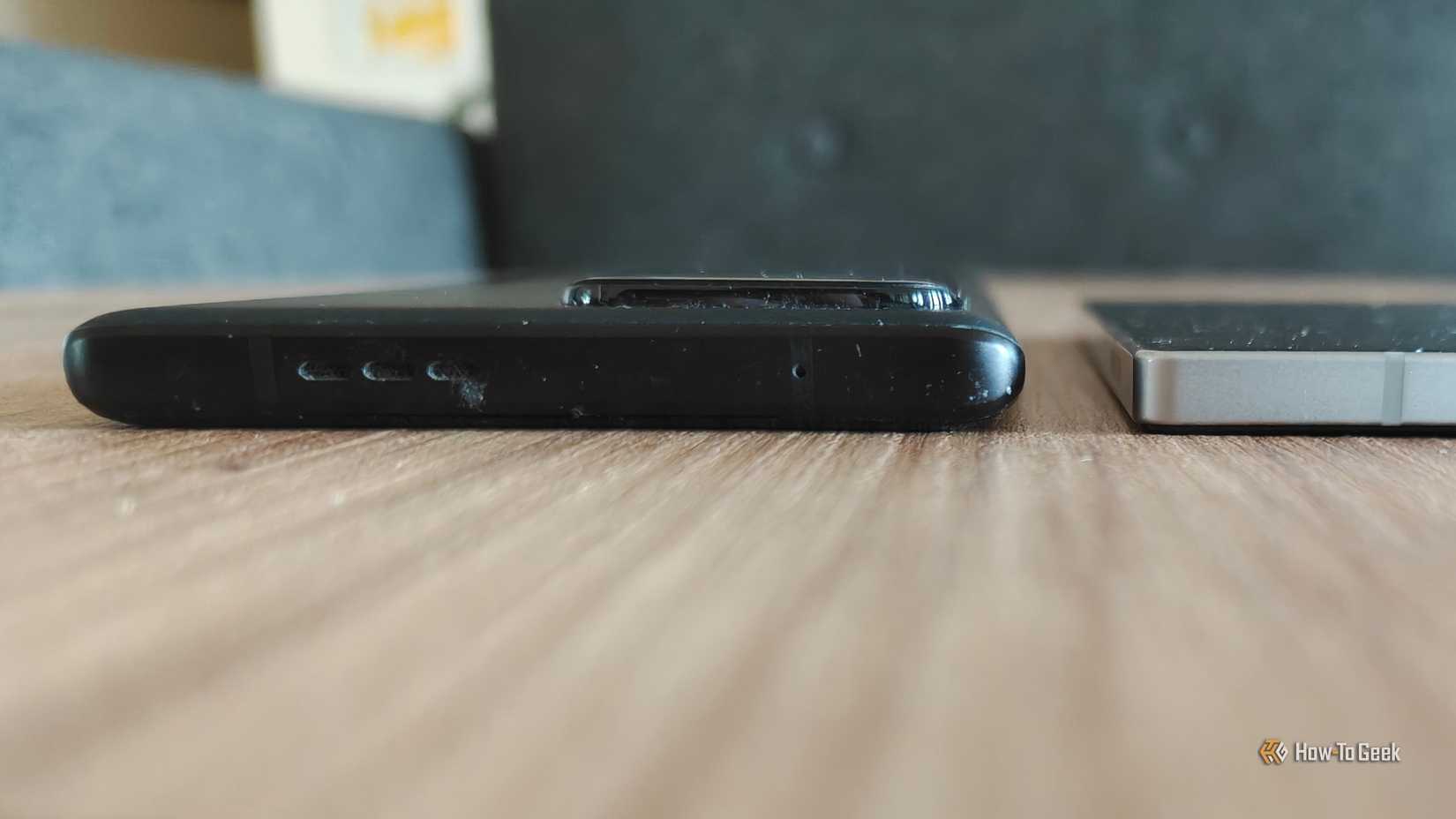
What I loved most was that the display curved not only at the sides, but at the top and bottom as well. The phone felt like a pebble, and it remains my favorite smartphone to hold. These curved make the phone feel nearly as thin as my foldable does when unfolded.
Credit: Bertel King / How-To Geek
I’ve heard the critiques of curved displays, but I personally liked the way it made media look, and I never had any issues performing gestures. This is the single aspect of the phone I miss the most.
The biggest competitor to Samsung DeX
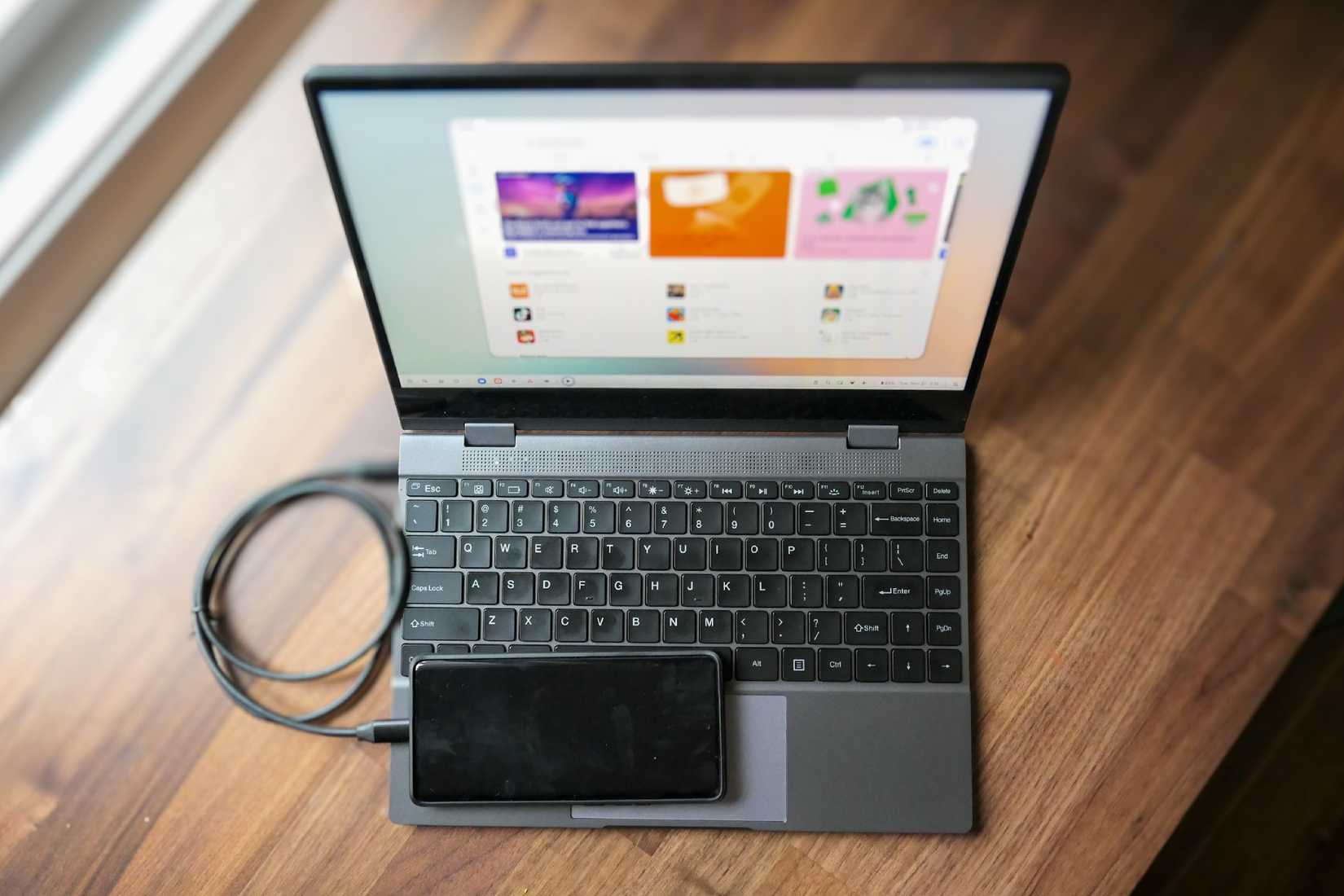
For over a year, I used an Android-based desktop as my PC replacement. The very first article I wrote for How-To Geek was about turning a phone into a PC using a lapdock. The phone pictured all throughout that piece is the very phone I’m talking about—my Moto Edge+ 2023.
Credit: Bertel King / How-To Geek
My introduction to Android desktops wasn’t Samsung DeX, which for years was the only option. My first taste was Moto Ready For, which has since rebranded to Moto Smart Connect.
There are aspects of that Motorola’s desktop mode that I wish Samsung and Google would copy, such as how it offered different experiences when you connected your phone to an external display. In addition to a desktop interface, there was a gaming mode imitating a game console and a media mode more akin to a streaming box. I bought a bunch of cheap portable monitors just to plug into that phone whenever I wanted to watch something.
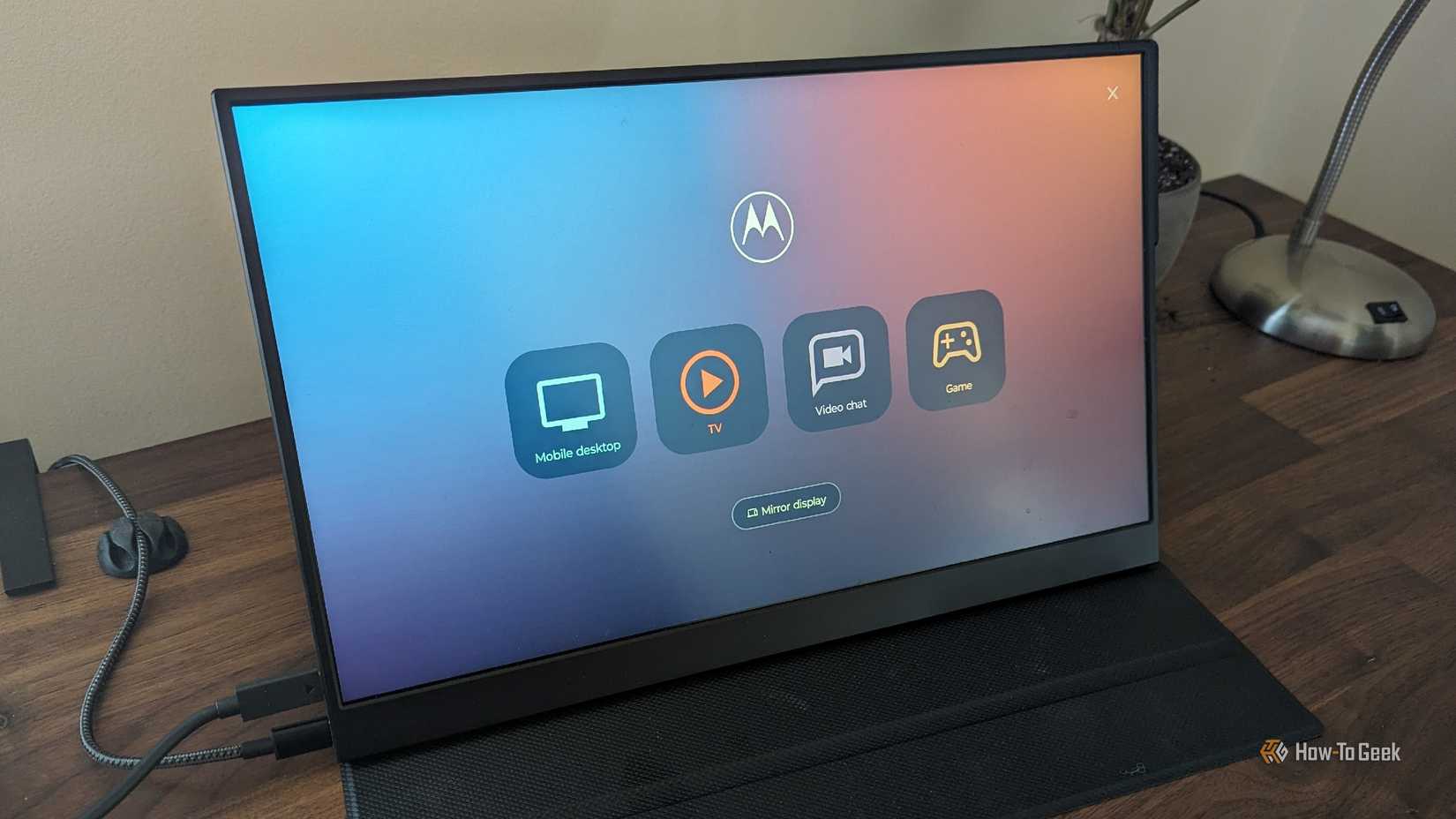
Credit: Bertel King / How-To Geek
This phone still exists—just not in the US
It turns out, Motorola never stopped producing the Moto Edge+. My model was known as the Moto Edge 40 Pro outside of the US. 2024 saw the release of the Moto Edge 50 Pro overseas. 2025 saw the latest model, the Moto Edge 60 Pro.
On the newest iteration, you can now get 12GB of RAM instead of 8GB, and the battery has increased from an already large 5100mAh up to 6000mAh. Charging speeds have improved from 68W to 90W. Some changes are less clear-cut improvements, such as the switch to a MediaTek Dimensity 8350 processor away from Qualcomm. Some changes go in the opposite direction, such as 256GB of storage being the only option and the refresh rate now topping out at 120Hz. Still, this is a phone I’d love to see return to our shores.
Fortunately, Motorola hasn’t completely abandoned the premium phone market. These days, the company is simply leaning into foldables instead. 2025 saw the release not only of the Razr and Razr+ flip foldables, but the even more expensive Razr Ultra.
-
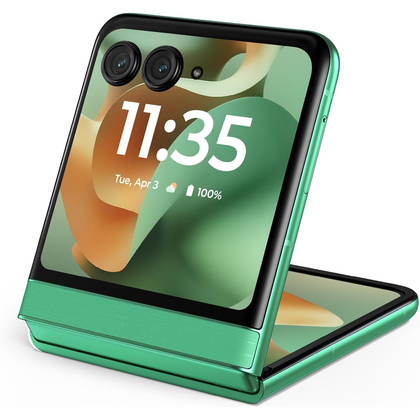
- SoC
-
MediaTek Dimensity 7400X
- RAM
-
8GB
- Storage
-
256GB
- Battery
-
4,500mAh
- Ports
-
USB-C
- Operating System
-
Android 15
The Moto Razr 2025 refines the popular foldable clamshell design with key upgrades for enhanced durability and performance. It features a robust titanium-reinforced hinge and an improved IP48 rating for dust and water resistance, making it more resilient for daily use.
-
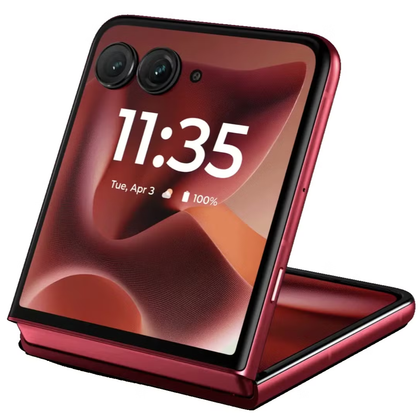
- SoC
-
Snapdragon 8 Elite
- RAM
-
16 GB
- Ports
-
3.5mm headphone jack
- Operating System
-
Android 15
- Colors
-
Cabaret, Mountain Trail, Rio Red, Scarab
- Weight
-
0.33kg
The Razr Ultra is Moto’s best, most advanced clamshell foldable. It offers a large cover screen, a titanium-reinforced hinge for added durability, the powerful Snapdragon 8 Elite processor, and three 50MP cameras (two on the back and one on the front). It builds on the nostalgia of flip-style phones but adds modern sophistication to the form factor.
2026 is expected to see Motorola introduce its first book-style foldable, the Razr Fold. And, well, I can’t blame the company for this shift in focus. As much as I want to be able to recommend a newer Moto Edge+ as the slab phone to get, I’d personally, like many others, pass it over for a Moto that folds.