It is just after dawn in the Masai Mara National Reserve and for Akira the leopard a chase for prey has been somewhat interrupted. Land Cruisers filled with tourists are jostling to see the big cat, which is soon ringed in by tyres that push into prohibited off-road territory.
A truck full of rangers draws close, warning the vehicles that they face fines for veering off the track. But a $500 charge would pale in comparison to what many of the tourists have paid to come here.
The Masai Mara reserve, which covers an area the size of Greater London, welcomes more than 300,000 tourists a year and is the front line of Kenya’s battle between lucrative tourism and wildlife conservation and community rights.
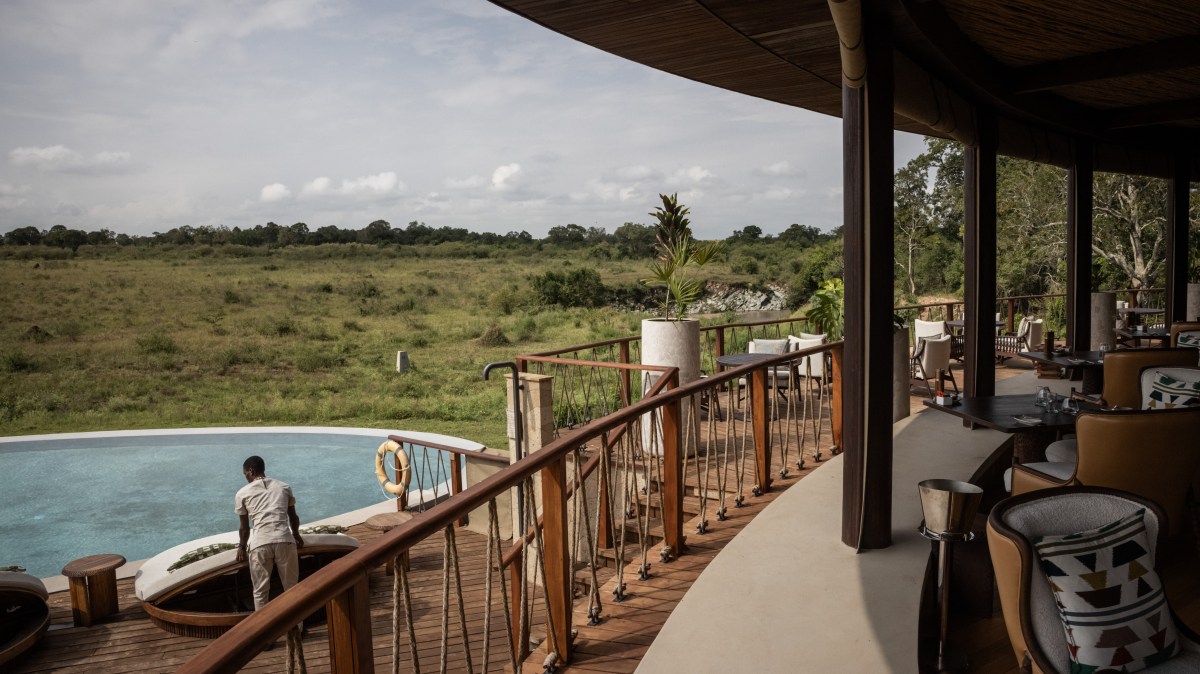
In August, a luxury destination opened — the Ritz-Carlton Masai Mara Safari Camp — offering 20 tented suites with personal butlers and access to some of the best wildlife spots. Prices are from $3,500 a person (£2,500) per night.

The Ritz-Carlton is a luxurious staging post for safari drives
ED RAM FOR THE SUNDAY TIMES
The Ritz-Carlton camp is also the subject of a legal complaint from an environmentalist and Masai elder, Meitamei Olol Dapash, who has claimed the camp blocks a critical wildlife corridor.
The case, due in court on February 10, has been clouded by Olol Dapash’s attempt to withdraw his claim in December. On public interest grounds, the judge has upheld the case, but tensions are growing within local Masai indigenous communities over the development.

Meitamei Olol Dapash
THOMAS MUKOYA/REUTERS
It symbolises the struggle between protection of the wildlife that the Masai people have lived alongside for hundreds of years and an increasing reliance on tourism income, environmentalists said.
“It highlights the continued issues we face around land in Kenya and access to resources,” said Nora Mbagathi, executive director of the Katiba Institute, a legal nonprofit specialising in Kenya’s constitution. “Too often it’s the tourism industry and other corporate interests that ultimately get to make decisions.”
Miracle of nature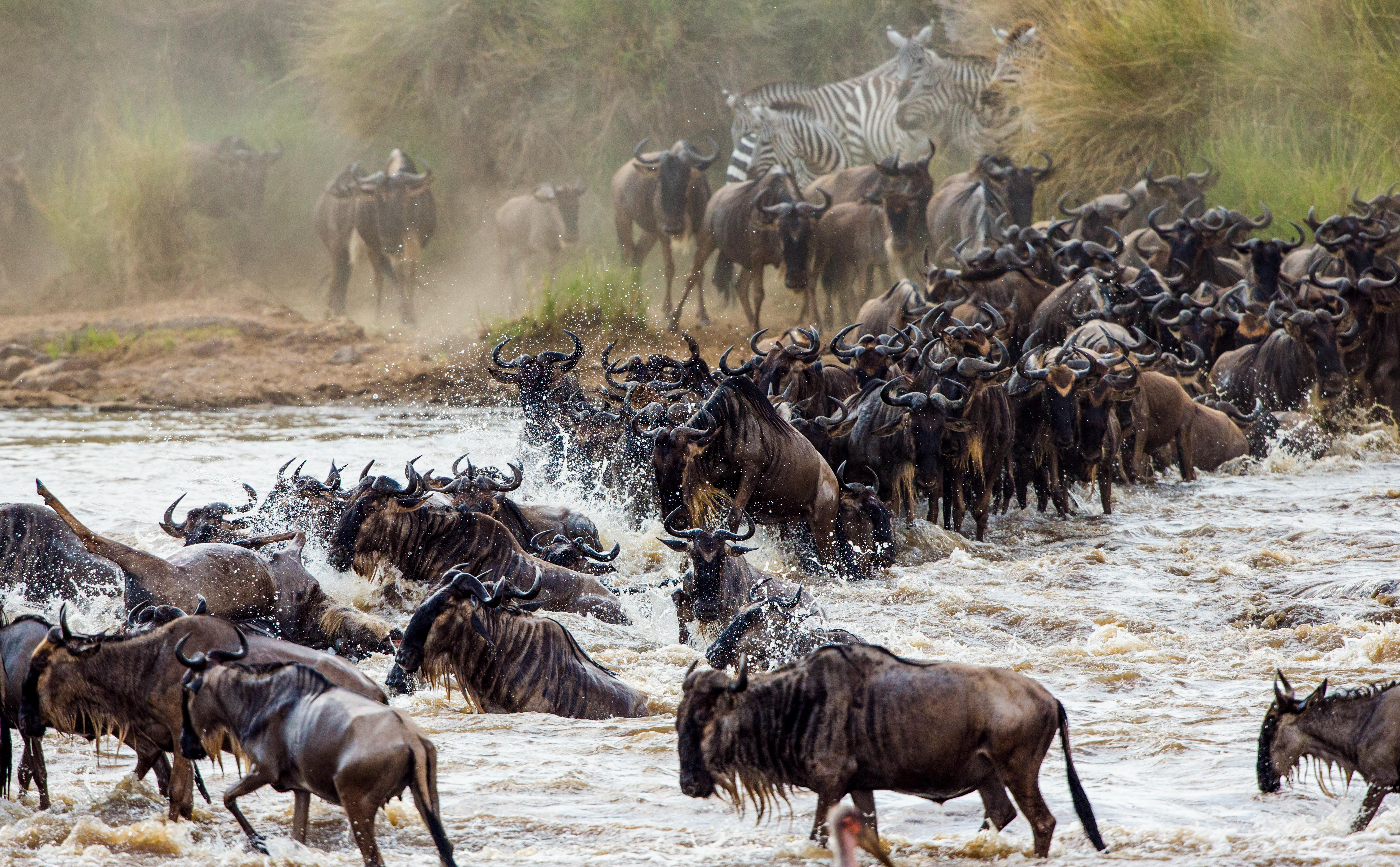
Wildebeest and zebra on the Great Migration, 2022
ALAMY
The Masai Mara’s rolling grasslands teem with wildlife, stretching across the Tanzanian border into the Serengeti. The reserve supports critical populations of herbivores such as wildebeest, zebra and gazelle, as well as the carnivores that feast on them, including leopards and lions.
The Serengeti-Mara ecosystem is considered the best place in the world to go on safari, and the highlight of the year is the Great Migration, often called “the greatest show on Earth”.
More than 1.5 million wildebeest and hundreds of thousands of other herbivores brave crocodile-infested rivers and stalking carnivores to cross into the Mara from July to September in search of grass, filtering back to the Serengeti months later to breed.
Kenya’s tourism industry accounts for 7 per cent of the economy and is growing fast, with revenues estimated to have increased 20 per cent from 2024 to last year, to about $5 billion. The Mara accounts for about 40 per cent of Kenyan park entry revenues.
Demand has seen the number of permanent camps in the reserve jump from fewer than ten in the 1970s to about 175 today. Experts and activists say overdevelopment threatens animal migration and the wider ecosystem, and concerns over the impact of overtourism have led to the local Narok county government introducing a reserve management plan in 2023, which put a moratorium on the development of new camps until 2032.
• Why Craig the elephant’s death is a victory for conservationists
There was one notable exception: the Ritz-Carlton. In April 2024, Felix K Koskei, chief of staff to Kenya’s president, William Ruto, asked the National Environment Management Authority (NEMA) to grant a “one-time exemption” of the moratorium to allow the Ritz-Carlton development.
The Sunday Times visited the camp last week. It is elevated from the ground to allow the passage of animals and has decking built around old trees. Camp management say it is sensitive to wildlife, and that it is working towards 100 per cent renewable energy and using water-saving techniques.
But the legal case centres on whether it should be there at all.

The Ritz-Carlton
ED RAM FOR THE SUNDAY TIMES
The same month it opened, Olol Dapash filed a complaint against the Ritz-Carlton, its owner Marriott International, Lazizi Mara — the franchisee that owns and operates the camp — NEMA and the Narok county government.
Seeking to stop its operations, Olol Dapash claimed that the Ritz-Carlton, which sits on the Sand River and is near to the critical Mara River crossing point, blocks the wildebeest migration. The owners of the camp, as well as NEMA and the Kenya Wildlife Service, contest this, denying that the Ritz-Carlton sits on a migratory corridor by citing ecological assessments including GPS data.
In a statement to the Sunday Times, Lazizi Mara said: “We believe this issue has been categorically addressed by relevant authorities and experts, who have demonstrated that the hotel site does not block any animals’ migration routes.”
“That whole area is a wildlife corridor,” said Leyian Nairuko, 32, a freelance safari guide in the Mara. “If someone builds a hotel there — maybe the wildebeest just move somewhere else.”

A lion and an elephant on the Masai Mara National Reserve
ED RAM FOR THE SUNDAY TIMES

ED RAM FOR THE SUNDAY TIMES
Joseph Ogutu, a statistician at the University of Hohenheim who has tracked wildlife in the Mara since 1988, believes the camp is blocking the migration route. “They are not only squeezed in many places, they’ve been totally blocked or completely disappeared,” he said.
This is part of a wider clash between tourists and the wildlife, he added. “I would not specifically say that the Ritz-Carlton is worse than others. There’s a general pattern of allowing excessive development of facilities within the Mara itself, and this tourism is now becoming harmful to the very objective of having a national reserve.”
Much of the concern around the Ritz-Carlton has been expressed by local communities of Masai, one of Kenya’s 42 tribes and the most recognisable with their traditional red robes and beaded accessories.

ED RAM FOR THE SUNDAY TIMES
Construction in Kenya requires public consultation over developments on public land like the Mara, and the Masai are key stakeholders.
The Ritz-Carlton developers said in court submissions in November that they had held multiple community consultations over the development. A document viewed by The Sunday Times shows the attendance of 19 people at one such consultation.
But one of the apparent attendees, Bernard Karia, a 29-year-old businessman, said he was not there. Karia claimed that he attended a totally different community meeting — over a family dispute — along with the 18 others whose names appear on the same list. He alleges that a local leader fraudulently submitted the attendance sheet to help support the development.
“I was never invited to a public consultation on the Ritz-Carlton,” said Karia. “I would have never supported the construction of the camp.”
In a statement to The Sunday Times, Lazizi Mara said they “are aware of claims that one individual listed on an attendance record has stated he did not attend the consultation meeting in question and has alleged that the list may be inaccurate. These claims are being reviewed.”
They added: “At this stage, there has been no finding that the consultation process was improper or that any approvals or licences issued were invalid. If any irregularities are identified, they will be addressed through the appropriate legal and regulatory channels … the existence of such allegations does not, in itself, invalidate the consultation process or the licences subsequently granted.” They said that the Masai community was “at the centre” of their work.
About a two-hour drive from the Ritz-Carlton is Talek, near a main entry gate to the Mara. Garbage is strewn on the streets and children clamour for the leftovers of tourists’ packed lunches. Before dawn, as tourist vehicles head for the reserve, drunks loiter in Talek’s streets.

Rubbish covers an area in Talek
ED RAM FOR THE SUNDAY TIMES
It is an understatement to say that tourism is important here. More than 1.5 million people in Kenya are supported by the industry, many from communities around the Mara.
“I’m grateful to God that we have [tourism] … it has created jobs for thousands of people like me,” says Staicy Naanyu, 26, a “cultural ambassador” at the Ritz-Carlton camp and curator of its gift shop. Naanyu has a five-year old son and is also paying the school fees of four other children from her Masai community from her salary.
• My magical stay on Kenya’s low-key, low-cost paradise island
More than 200 people are employed by the Ritz-Carlton, says the camp’s manager Justin Landry, and staff also undertake community outreach and development, including offering internship programs.
The row over the Ritz-Carlton has been hard for its employees, Landry said. He has had staff in tears over social media posts and some have even received death threats. Guests, too, have questions. “People go on Google, and call me and ask what’s going on before they book,” Landry said.

Justin Landry, the Ritz-Carlton manager
ED RAM FOR THE SUNDAY TIMES
But Nairuko, the safari guide, says tourism cannot be divorced from conservation. “We need the animals to have enough room so we get tourists,” he said. “Masai Mara will never disappoint if we protect the land.”
Geoffrey Taki, 23, the co-founder of a local Masai conservation watchdog, said “trading the ecosystem for cash or even tourism jobs would not be fair to our forefathers who have protected this land”.
Olol Dapash’s attempt to withdraw his legal claim has heightened tensions further. Five people interviewed by The Sunday Times claimed that, prior to the Ritz-Carlton development, Olol Dapash had been operating a camp without permission on the same site along the Sand River.
Lucas Ntika, 24, said he worked as a guide for Olol Dapash from July 2022 to November 2025, and would see as many as ten non-permanent tents run by Olol Dapash on what would later become the Ritz-Carlton site.

A leopard on the Masai Mara reserve
ED RAM FOR THE SUNDAY TIMES
“He has been advocating for conservation and environmental justice, which is good, while running an illegal camp,” said Taki. He said his watchdog group had been helping Olol Dapash gather evidence for the case against the Ritz-Carlton before the attempted withdrawal of the suit.
A document viewed by The Sunday Times shows that Olol Dapash, along with two other men, Peter Narok and Kantai Ole Pesi, had secured a licence to develop in the Mara in November 2017. Lazizi Mara said: “We are aware of a document that purports to show the petitioner applying to develop on the site of the camp, however we are unable to comment on its authenticity.”
The Narok family had agreed to speak with The Sunday Times last week about their relationship and business with Olol Dapash but retracted their invitation overnight.
• I’ve been on countless safaris — these are the tips I tell my friends
Legal experts said that the future of the legal dispute remains unclear. “If someone is not interested in prosecuting the case, then of course the matter will definitely flop,” said Dale Onyango, a lawyer at Natural Justice, a Kenyan legal organisation that supports communities in cases related to human rights and environmental law.
Olol Dapash said to The Sunday Times: “My earlier application regarding withdrawal was made on legal advice. I have acted in good faith and within the law throughout. Out of respect for the judicial process, I will not comment on contested allegations while the matter is ongoing.”
In Kenya, inappropriate pressures on complainants in public-interest, community-rights disputes are common, said Onyango. “Behind every other litigation case, there are usually a lot of external issues, and most of it comes from either intimidation or manipulation,” he said.
There is no suggestion the Ritz-Carlton has engaged in such behaviour towards Olol Dapash.
The Ritz-Carlton, for its part, is keen to have the dispute resolved publicly. “We want to get into the hearing. We want to show everything that we have so we can start to rebuild the reputation and start talking about the good things we’re doing here, not the misinformation,” said Landry.