In Minneapolis, the people keep turning out and turning up. On Friday, Bruce Springsteen gave a live rendition of his newly minted Streets of Minneapolis at a hastily arranged lunchtime benefit gig organised by Tom Morello of Rage Against the Machine, which pre-empted a long, sprawling march through the downtown thoroughfares. It was one of many marches across the country in what the Trump administration has termed “sanctuary cities”.
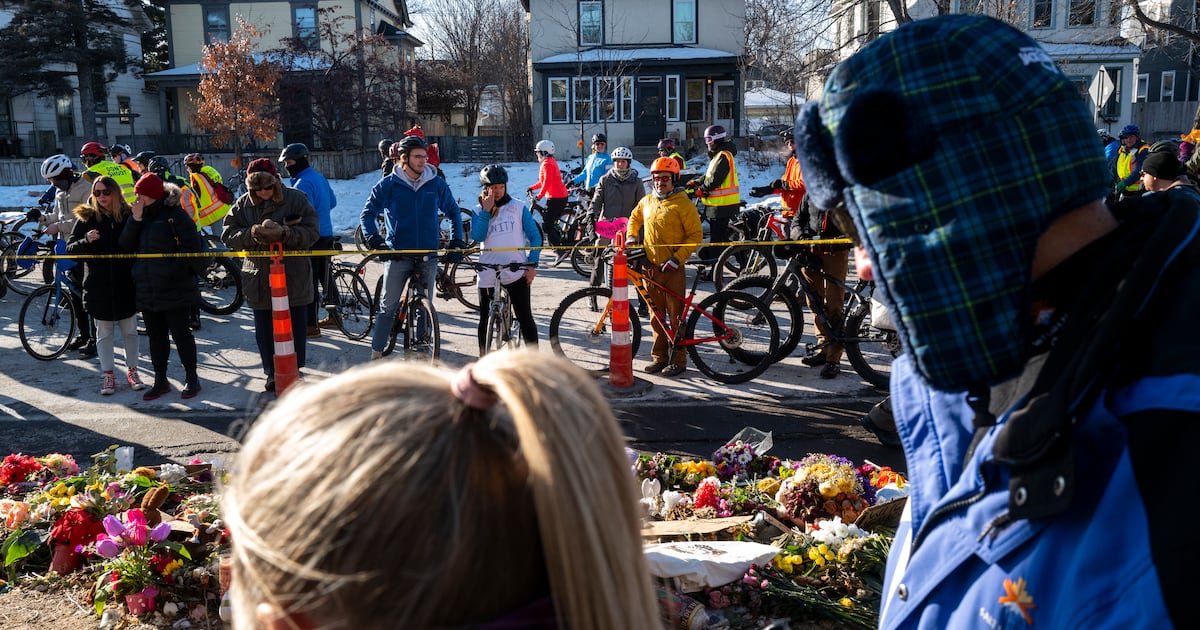
On Saturday, thousands more were back in the bright, chilly sunshine and iced-over footpaths for a rally in Bryant Park. Across the Twin Cities, 19 Target shops became the focus as protesters tried to push the owners of the city-based behemoth to speak out in support of their immigrant employees. Seven days after Alex Pretti was shot dead on Nicollet Avenue by customs and border officials, a 10-mile bike ride was held in his memory. A lush display of frozen flowers and fir cones and burning candles has become an ongoing memorial site.
In the continuing legal and policing struggle between the Trump administration and the city and state, a federal judge ruled that the “metro surge” operation could continue, leading attorney general Pam Bondi to quickly issue a post warning that “neither sanctuary policies nor meritless litigation will stop the Trump administration from enforcing the federal law”. Minnesota governor Tim Walz, meanwhile, reflected on the meaning of the unrest in his city by asking an open-ended question.
“I mean, is this another Fort Sumter?” he said, referring to the South Carolina landmark where the first shots of the Civil War were fired in April 1861.
“The governor said that?” Donald Trump responded on Friday.
“Wow. Does he know what Fort Sumter was or do you think somebody wrote it out for him? No, I was elected on law and order. We had a border that allowed 25 million people to come in. Many were murderers – we had 11,888 murders. We had prisons, including Venezuela, the Congo in Africa opened their prisons and dumped their prisoners into our country.”
The detente between government and state, in so far as it ever existed, is fragile at best.
As a series of rallying speeches began in Bryant Park, Hayley McSperrin, who grew up in the city, explained her reasons for turning out, again, on another afternoon when her city was in the grip of a deep freeze to close out January.
“Because the government is lying to us. They are here having Ice [Immigration and Customs Enforcement] terrorise our streets, saying that they are taking violent immigrants off our streets. Most people here, their heads are down and they are trying to make a good life for themselves. They are not violent criminals.”
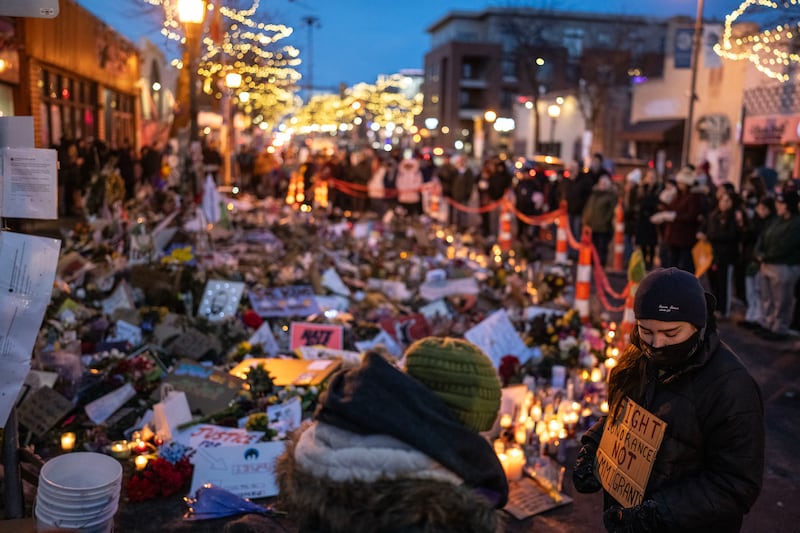 Mourners gather at the site of the killing of Alex Pretti by federal agents in Minneapolis. Photograph: Victor J Blue/New York Times
Over the past few months, thousands of Minneapolitans have come to see protests as a habitual part of life. This has become protest season. Many wear whistles, as if they’ve just now stepped away from refereeing a basketball game. The normal Saturday chores and leisure pursuits have been placed to one side. They come bearing home-made signs and slogans. The atmosphere is subdued because they are strangers coming together for an hour or two. Then, they take the tram lines home. In profile, the crowd is overwhelmingly white and there’s an obvious reason for this.
“They are in hiding,” says McSperrin of the many ethnic groups who have made Minneapolis home.
“We have the privilege to be out here fighting for them. I even have black American friends born and raised here who don’t feel comfortable protesting, because if you are not white, they [Ice] are taking you. They might be releasing you later but they are still taking you and brutalising you and spreading fear.
“None of us are ‘paid agitators’,” she clarifies with a laugh.
“We are absolutely not paid. There would be a lot of money if we were paid.”
During a series of speeches, there are repeated calls for governor Walz to enact an eviction freeze for all residents in the city. Fear of detention and deportation has caused many immigrants to simply forsake work. Businesses have closed. And rents go unpaid.
One woman carrying a sign reading Stop Deporting My Students explains that in her class where she works as a multilingual teacher, the numbers of immigrant children has fallen sharply. On Monday, when she returns to school, she expects to see several new empty spaces. She prefers not to give her name because she recently gave an interview to a city-based television channel and it made her anxious.
[ The battle for Minneapolis: ‘Ice agents are like this invisible goon squad’Opens in new window ]
“Kids are moving out and no new students are coming in. It is always fairly fluid but now we are seeing that they are not coming in. When kids have left, others will say, ‘oh did Ice get them?’ I personally don’t know so I say ‘oh I heard they moved to Texas, they are okay’. Kids aren’t showing up to school because their families don’t feel safe. They are floating out there. After 15 days they get dropped. It’s really terrifying for them and we aren’t supposed to talk about it because it induces more fear. But kids will come up and ask and I don’t always feel equipped to know what to say to them.”
It’s this descent of what feels like a twilight existence for the immigrant communities that brings so many out, day after day.
“Governor Walz, you have emergency powers and this is a f**king emergency,” says a speaker to cheers and chants of “f**k Ice.” On this day, there is little evidence of the 3,000 Ice agents across the city, but reports came through of active raids on the peripheral neighbourhoods of the city. Since the abrupt removal of Greg Bovino and the arrival of Tom Homan, the veteran border tsar, the Ice presence is less visible. Homan has vowed to replace the indiscriminate sweeps with more traditional targeted arrests of specific individuals. He has stated that city officials should co-operate in allowing Ice agents to detain known criminals upon their release from state prisons rather than allow them to disappear back into the city.
For now, an uneasy lull has fallen over Minneapolis a week after the death of Alex Pretti. But nobody is sure what is coming next.
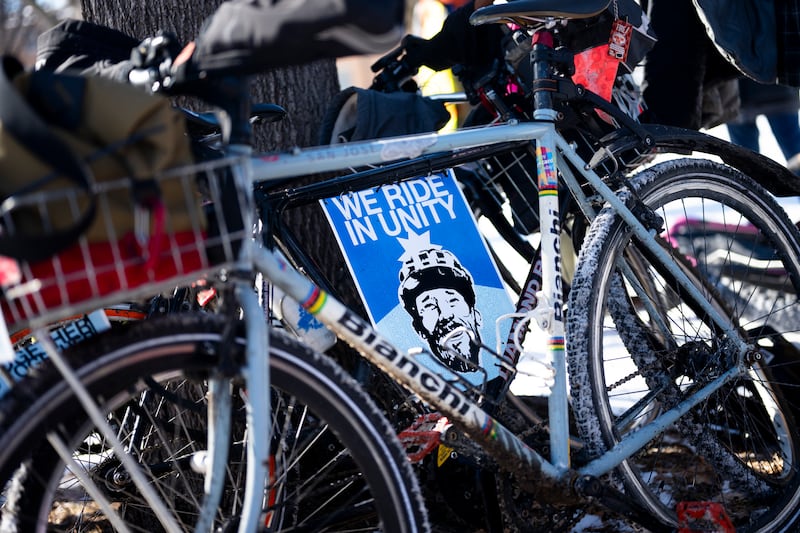 A 10-mile bike ride was held to honour Alex Pretti in Minneapolis. Photograph: Stephen Maturen/Getty Images
“It’s really hard to say,” says Hayley McSperrin.
“I feel it is not uncommon with this administration to back off for a short time and then when people’s guards are down, they come back. I think there is a lot of pressure within the GOP party right now and I’m hoping that this will continue in a positive direction. But we don’t know.”