There is a picture on my iPhone that I set as wallpaper 35,000ft above the Atlantic, flying home from Costa Rica, a little tight on fridge-cold merlot served in tiny bottles, that pops up now, months later, whenever I reach to answer a call, and reminds me of the day my son became a man.
It shows Sam on a black beach on the Pacific coast, with the grey ocean seething to his left and the rainforest steaming to his right. The sky is full of water and looks a little angry. As does Sam. He is leaning on his teak snake stick, his legs crossed at the ankle. His olive-green, wicking, zippy jungle top is open to the chest (there weren’t as many mosquitoes as Esther had feared), he is wearing his blue cricket trousers (which are made of the same stuff as the pricey jungle kit you’re told to buy) and the wellington boots that, however good your walking shoes are, they always make you wear in the rainforest.

Giles and, right, Sam during their trek on the edge of the Corcovado National Park. “This is the moment my son became a man. I’m pooped and he’s encouraging me over the line”
COURTESY OF GILES COREN
His jungle hat is hanging behind his neck, its long, looped string dangling down in front. There isn’t another soul for a mile in any direction apart from our guide, who has marched on ahead, and Sam is about to speak.
“Come on, Dad,” he says. “It’s only another mile.”
“I’m fine,” I say. “Just wanted to get a picture of you.”
“You’ve got plenty of pictures, Dad. Don’t stop now.”
“I’m not stopping. No way. Just let me have a drink of water.”
“Of course, Dad. Good idea. But don’t sit there too long or it’ll be hard to get going again. You can do this. Just focus on the cold beer they’ll have in the truck. Hey, do you want me to carry the rucksack?”
“No, I’m fine, son. It’s not heavy.”
“Okay then, one last push,” and he pulls me up from where I’ve flopped on the sand and gives me a high five, and on we go.
So, you see, that photo depicts the exact moment when my boy entered adulthood. In some cultures, you have to kill a lion. In others, read aloud portions of the Torah. But as far as I am concerned, it’s when you become the person in the family whose job it is, on a long walk, to get the others over the line, rather than be dragged over it yourself.
For years, the dragging was my job. But here, on the edge of the Corcovado National Park, in the rainy season, in 30C heat and near total humidity, walking in deep sand, in heavy boots, with our food and water on our backs, 16 miles already covered, it is Sam — whom I used to have to carry on my shoulders when he flaked out six minutes into a Cotswolds pub stroll — who must take control. Because I am pooped.
This rainforest slog would be hardcore
This Corcovado hike was the element of our two-week tour of Costa Rica that had loomed most ominously: a day-long yomp into primary rainforest requiring some quite specific clothing, provisions, the expectation of discomfort, no option to pull out once under way, and walking conditions the travel agent was not ashamed to call “hard”. It was not even part of our original itinerary. They’d got in touch with us just before we left London to say that some recent guests at our final stop in Lapa Rios had failed to secure the required permits in advance and been very disappointed, so did we want to make sure we booked?
It was about $600 (£520) for the four of us, but would be our only crack at virgin jungle, while the rest of our trip would be spent in the secondary rainforest that has grown back in the past 40 or 50 years, since the continent-wide logging catastrophe of the last century.
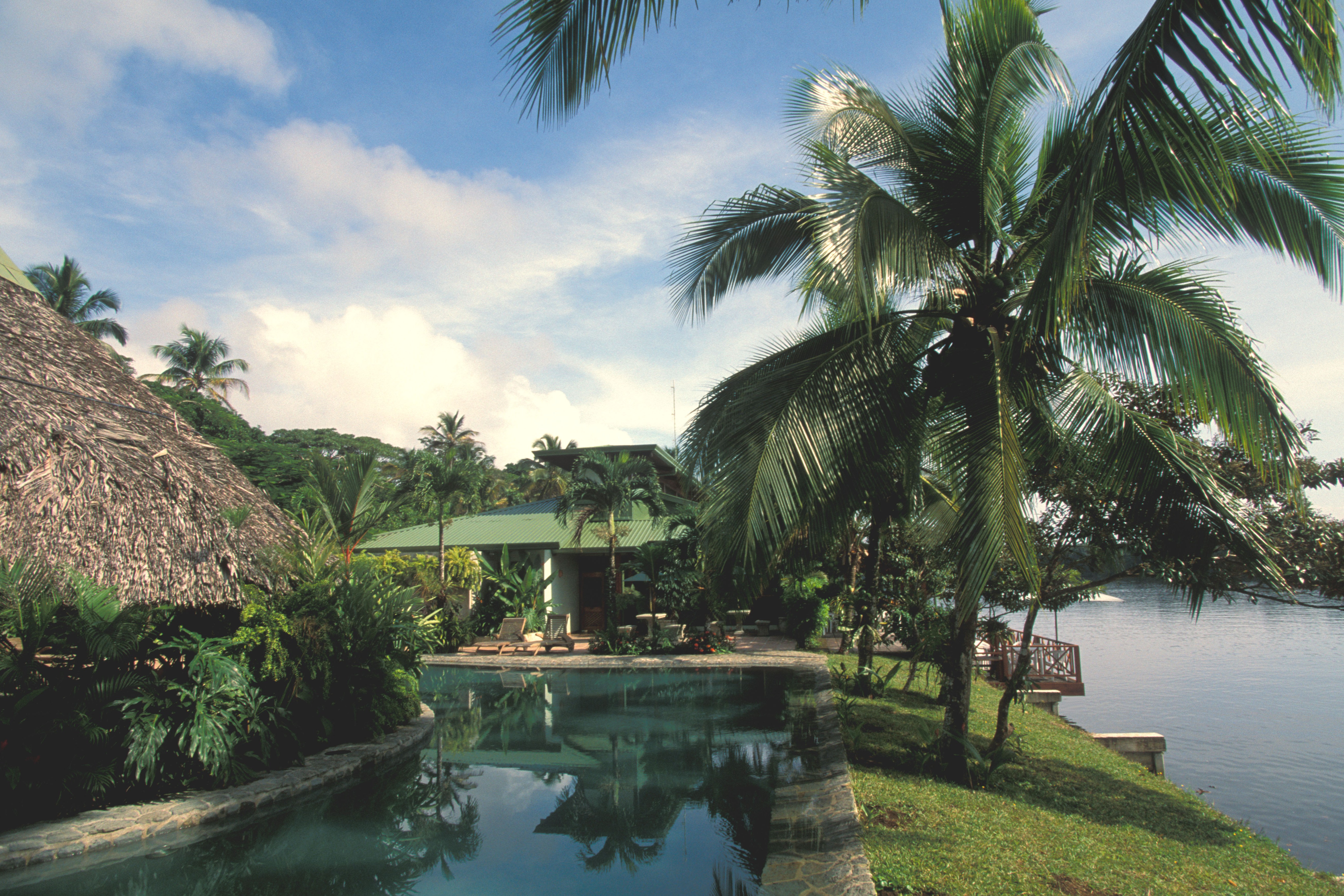
Tortuga Lodge — turtles nest on the nearby beaches
ALAMY
Costa Rica has done a grand job of monetising its jungle in recent years (which is the only way to protect it) with wildlife tours focused on its two and three-toed sloths, toucans, tapirs, macaws, monkeys, wild cats, crocs, caimans, coatis, iguanas and other lizards, luminous frogs, poisonous snakes and other elements of its world-beating biodiversity, plus endless ziplines and walkways in the canopy, white water rafting and kayaking, spelunking… All the activities I always wrote off as dipstick diversions for holidaying bozos, until Esther and I found ourselves with a couple of holidaying bozos of our own requiring diversion.
This rainforest slog, on the other hand, would be hardcore. The sort of thing Esther and I love, to make us feel a little superior to all the mollycoddled glampers and mooing “adventure” zombies, to get a little contact with the elusive “real” Costa Rica (or wherever we happen to be) and to burn serious calories to make room for the three (excellent) hotel meals a day provided by the all-inclusive package.
The problem was likely to be the kids. If there were heat, mozzies, sweat, snakes, spiders or too much of a gradient on this hike, there was a chance they’d want to pull out halfway through. Which wouldn’t be possible. They would cry and scream and fuss and then we would all die of… whatever the jungle kills you with. But we wouldn’t really be able to gauge their willingness until we got there. So I paid the $600 to secure our permits and we’d keep our fingers crossed everyone was up for it on the day.
A late-night appointment with a turtle
But first, Tortuguero. After a connection via Madrid, the 11-hour flight to San José and 36 hours in the capital to stare jet-lagged at the ceiling in a nice old colonial-style hotel then walk in a daze through the city parks, trying to stay awake on litres of the famously excellent local coffee, we eventually headed back to the airport and out on the local Sansa airline to the north Caribbean coast, close to the border with Nicaragua, where the mini town of Tortuguero caters to international travellers keen to witness the life cycle of the green, leatherback and hawksbill turtles that nest there.
The biggest draw is the hatching season, when you get that mad, tragicomic dash for the ocean that works on the principle that if 10,000 delicious little portions of seafood make a run for it, 3 or 4 will eventually grow into adult turtles. The grim mathematics of the Somme.
• The country with world-class wildlife, empty beaches and these top hotels
But we were there in laying season, when the giant mother turtles haul themselves up the beach, wriggle a nest into the sand, disgorge up to 200 gelatinous spheres about the size of a golf ball, cover them up and waddle away again, leaving whatever hatches to fend for itself in the wild (like upper-class English parents of yore), which is almost equally appealing to the world’s nature tourists.
Now, all this is a huge draw. It not only brings money into a country that was traditionally reliant on the tropical fruit monoculture that makes it the world’s biggest exporter of pineapples and third biggest of bananas (despite being only about half the size of Portugal), but also gives locals a way to turn “their” turtles to account. For if tourists weren’t paying to watch them reproduce, the locals would eat them.
They would eat the eggs, the babies and the mummies and daddies, whose shells they would afterwards turn into coffee tables. It’s what Costa Ricans did for hundreds of years before the tourists came, reducing the population of some species in some areas by 98 per cent. And it is what they reverted to almost immediately after lockdown descended in 2020, which not only switched off the tourist dollar tap, but turned the world’s eyes away from vulnerable beaches (the same tragedy occurred in the protected game reserves of southern Africa and elsewhere). So, if you want turtles in this world, turtle-watching is an unequivocally good thing.
But we decided in the end that it wasn’t for us. Partly, we felt it was intrusive. I hadn’t realised I would feel that way until we suited up on the night of the expedition (dark clothes, special torch, mozzie repellent) and were drilled in how to behave. Groups of ten would be assigned to a mother turtle, five kneeling at her cloaca, five standing behind, like a team photo, for 90-odd minutes while she did her business. We practised with a carved turtle in the hotel lobby. I thought they were joking. Esther thought of herself giving birth under such scrutiny and went green. Like a turtle.
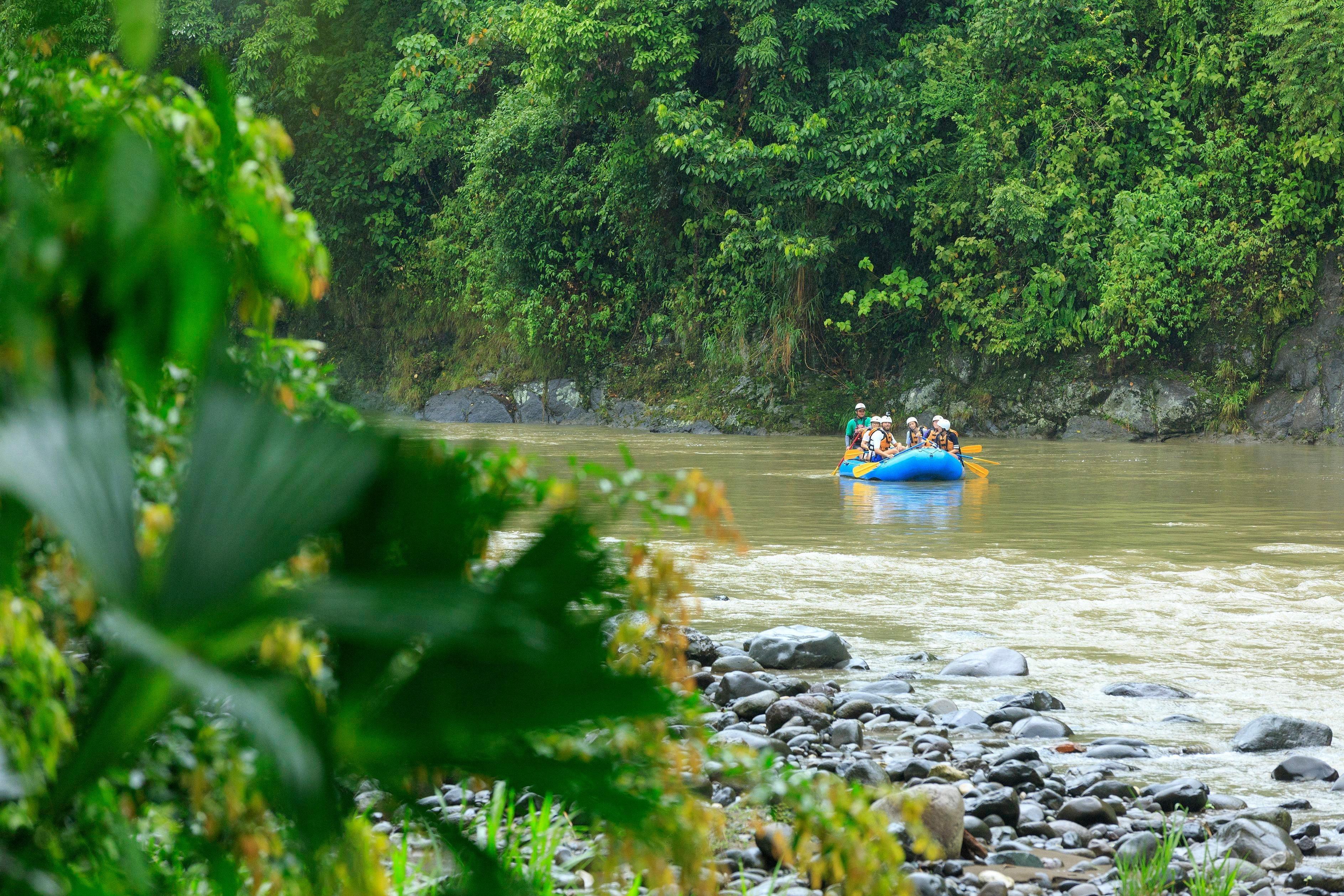
Rafting on the Pacuare river: “Nothing but screams and whoops of joy for two thrilling hours”
ALAMY
We took the short boat ride to the birthing beach but were then held in the hot darkness for so long — surrounded by bored Dutch teenagers playing with their phones — that my poor missus began to feel queasy. The kids too. So we bailed. Back to lovely Tortuga Lodge for piña coladas at the bar and watching the huge local iguanas disport themselves on the lawn.
We later learnt there had been 800 people on our strip of beach that night, lined up behind 80 laying turtles. That just wouldn’t have worked for me as a vibe. We paid our money, and I am glad it went to the conservation of the turtles, but we were happy to let biology take its course without us.
Toucans fly overhead, on their way to Guinness auditions
Next day we went kayaking. Now that was fun. Caimans basking on the banks, toucans flying overhead with those massive yellow beaks, like flying bananas, on their way to Guinness auditions. There really is nothing like a toucan. Then off the main waterway into little slipstreams through the jungle, like something out of Heart of Darkness, hushed by our guide to watch a Jesus Christ lizard on a log, who paused, turned, looked at us and then did the thing! Actually ran across the water — splish, splish, splish — on his little whirring feet. It’s called that, by the way, because when it literally walks on water, you go, “Jesus Christ!”
You have to be lucky with your guide, though. Some of them are very engaged, of course, but many paddle along looking down at the iPhones in their laps like teens at the back of the geography class, which is a bit of a mood killer. You find yourself saying, “Is that a monkey?” to a guide who looks up from his TikTok reels and says, “Where?” But Costa Rica is such a rapidly growing tourist destination (everyone seems to have been there) that they are having to train up guides superfast, and not all of them yet grasp how important the illusion of their own fascination with the wildlife really is.
Our first sloth
On one hike up to a high platform to look at the view and then back down again, our man did a good job of pointing out the crazy insects, the massive tarantulas, the birds and snakes and huge, luminous, blue morpho butterflies (mariposas azules, they call them) that make the unspoilt parts of Costa Rica feel like Pandora in Avatar, but then was in such a hurry to march back to the boat (I guess because of some unspoken time constraint) that when Kitty saw a round bundle of brown fur high in a tree and said, “Is that a sloth?” he barely glanced up. He just said, “Yes.”
Our first sloth! The national animal of Costa Rica.
“What kind is it,” I said, “two-toed or three?”
“Two,” he said, hustling on.
“How can you tell?”
“The colour.”
I guess these guys live with this stuff all year round and don’t have a handle on how much more exciting a sloth is for a 14-year-old girl than the spider webs he found more convenient to point out. Although she loved them too.
As we waited for the boat, there was a great rustling in the trees over our heads and Sam squealed with surprise and delight: “Spider monkeys!”
“Or are they howler monkeys?” said Kitty.
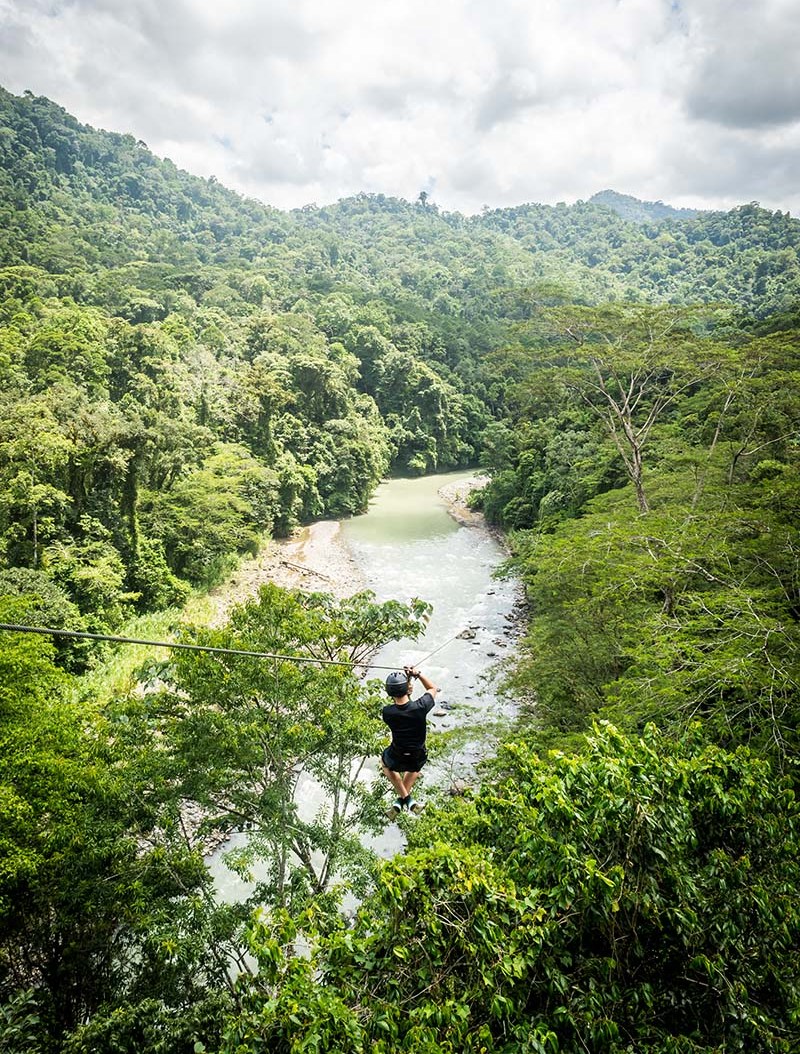
Ziplining in Pacuare. “The zipline? I refused, like a spooked horse in the Grand National”
PACUARE OUTDOOR CENTER
“Come on,” said the guide. “No time. The boat’s here.”
“But we’ve waited two days for monkeys,” said Esther.
“There will be more monkeys,” I consoled her as we boarded the boat, while our guide got back to his iPhone, Sam filling the silence with his familiar information download: “Howler monkeys are the second loudest animals on earth in terms of decibels, after the sperm whale of course, and it is a little-known fact that…”
• Our nature-packed family road trip in Costa Rica — sloths included
Next morning it was a two-hour drive south to the Pacuare river through banana country controlled by giants such as Chiquita and Del Monte, where for mile after mile the palms stretch to the horizon, heaving under the weight of their giant blue fruit. Yes, blue. For the pesticides that cannot be sprayed willy-nilly from the air (and are indeed banned in the EU in many cases) must be contained in the ubiquitous blue plastic sheeting that is wrapped around each bunch. It is not pretty, or very good for the wildlife, workers or water table. But the world must have its bananas. And apart from our small tourist contribution, they are a key part of the Costa Rican economy.
Here, on the bank of the river, was where the transfer to Pacuare Lodge began, which is accessible to guests (they claim) only by two hours of whitewater rafting. This had been another slightly daunting prospect. The kids worried that it would be dangerous and terrifying and we’d all drown (none of us had rafted before), while I, in explaining to them how incredibly safe it would have to be for the camp to afford the insurance, worried that it would be bland and pointless.
The towering canopy was like Jurassic Park
But it was neither. It was just brilliant. Nothing but screams and whoops of joy for two thrilling hours as, after a brisk and comical ten minutes of “training” from our guide, we alternately slid gently down the smooth brown river, enjoying the towering rainforest canopy like something out of Jurassic Park, and careened helplessly through rocky rapids, paddling like maniacs, spinning and rotating and plunging.
I don’t know how real or fake any of the jeopardy was (you never do on holiday, especially in Cozzy Reeks, as I couldn’t help coming to call it), but it was a huge lift, a great highlight, a wonderful thing, a massive plus to set against some of the small minuses of what the locals call “the Gringo Trail”.
Pacuare Lodge itself, from the same owner as the one in Tortuga, was even more luxurious, with a plunge pool on the balcony of our jungle-facing suite and even better food. I loved the local gallo pinto breakfast of rice and beans with spicy sauce and tried to ignore the pancakes and bacon and eggs and all that malarkey, saving myself for the simple, excellent lunchtime and evening cooking (of both local and international dishes) that would have made it the best restaurant in any small town in England.
The entertainment at Pacuare was all about the ziplining, canyoning and canopying for which Costa Rica is so widely celebrated, and I had hoped that, once in situ, I might be able to put aside my small personal issue with heights, to enjoy the advertised sensation of “flying through the rainforest like a bird”.
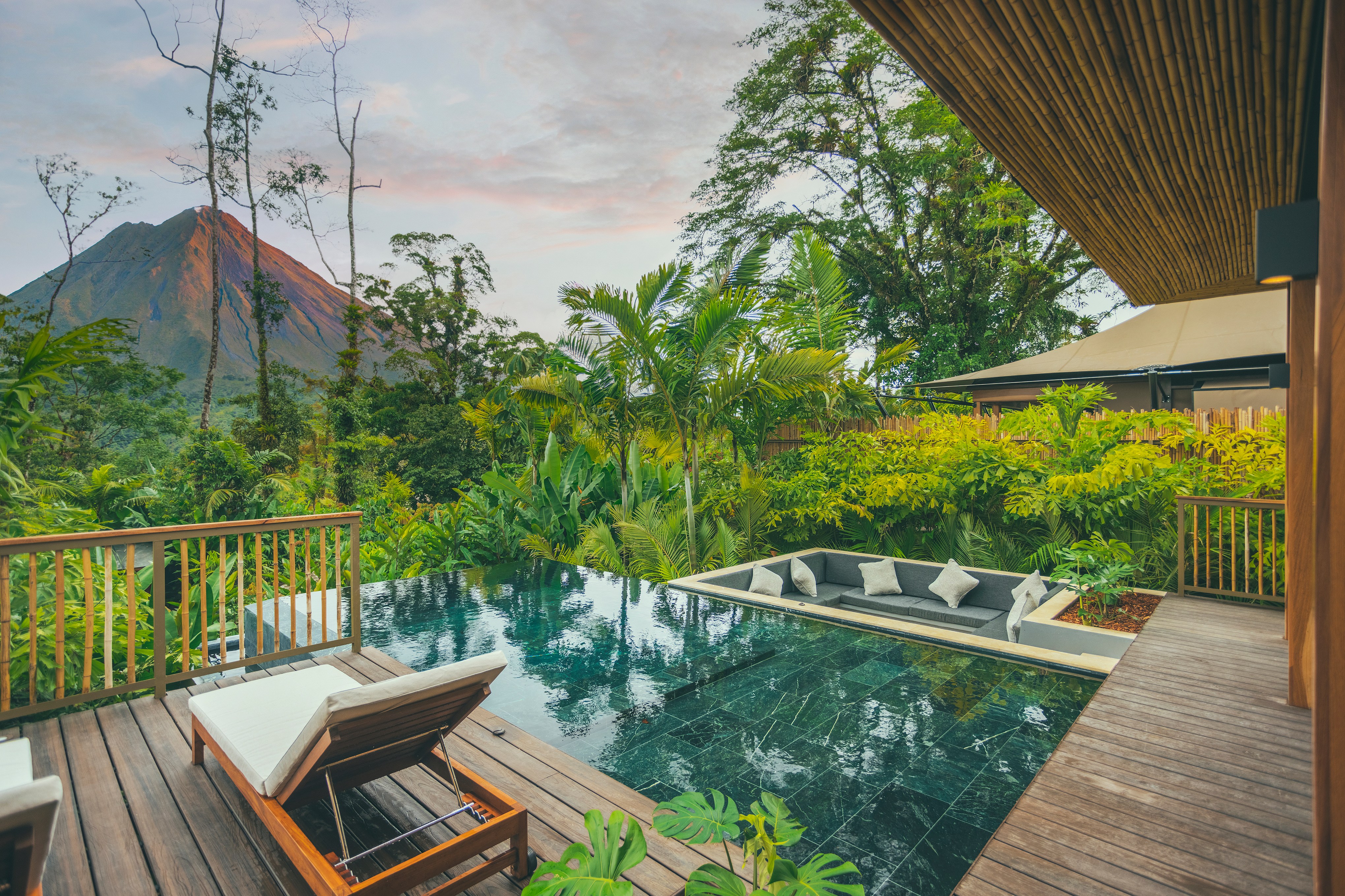
Nayara tented camp, by the Arenal volcano
BRICE FERRE STUDIO
Nope. At the very first hurdle, a small swing from a platform to another platform achieved by attaching a carabiner on a rope to the one on my safety harness and then leaping out over the void, I refused, like a spooked horse in the Grand National. “Plunging through the rainforest like a rock” was the only experience my imagination would entertain, and as my family swung off through the jungle like gibbons, whooping and laughing and screaming, I turned and trudged back to the lodge alone, feeling a proper loser.
But after a day hanging out with the hummingbirds and butterflies back at the camp and swimming lengths of one of the most beautiful swimming pools in the world, surrounded by steepling jungle, enveloped in those mariposas azules, I’d kind of got my mojo back. Enough, at least, not to feel too left out when the gibbons returned, singing for joy and exhaustion like the Seven Dwarfs, having had, by all accounts, the time of their lives.
And the next day they did it again. Ropes, harnesses, helmets, 100ft heights, great leaps into the void on trust at the hands of some handsome Hispanic chancer in a hard hat… I don’t know where they got those genes from. Presumably the female parent who went with them.
I, meanwhile, stayed back in camp with a case of Pilsen (my favourite of the two historic Costa Rican lagers, the other being the rather bland Imperial) and my copy of The Mosquito Coast, Paul Theroux’s novel about an uptight urban dad who takes his family deep into the heart of the Central American jungle, goes mad and eventually dies.
We move on, by raft
When it was time to move on from Pacuare, we did it, of course, by raft. And it was even better on the way out, downriver (obviously) through what I’m told is some of the best rafting in Central America. That was a longer trip, broken by a lunch stop in which our raft was upturned for a communal table on which our boys laid out a huge DIY burrito spread while we disported ourselves in the river, swimming under a waterfall, not thinking for a second about piranhas.
Arenal, our next stop, was all about the volcano, now dormant, but recently quite active. Enough that a whole frontier town has built up along the main road offering everything from volcano-themed nightclubs, bars and tat shops to mountaineering outfitters and volcano safari outlets. Aside from the volcano, it is mostly about sloths, with endless offers to pay your money and take your choice at places called things like “Slothworld”, “Slothtown”, “Kingdom of Sloths” and “Sloths R Us”.
In short, they have sloths here, so we went to see some. They are small and cute and furry and a long, long way up in the trees. You get a very stiff neck looking at them. And their faces are generally curled in, so that you see only what appears to be a football made from the pelt of an Afghan hound, high in a tree. But on the plus side, they do not move at all. So when someone yells, “Sloth!” you never miss it. And it’s still there if you look away at something else and then look back. Or even if you go off and get some dinner and come back in the morning. They get out of bed only to poo, about once a week. We’ve all been there.
Here we stayed on the edge of town at the superluxe Nayara tented camp, which has gone to huge lengths to plant a jungle around itself to give it the illusion of wilderness that was real at Pacuare, but with a hot plunge pool on your deck, fed by the boiling volcanic springs, a huge mahogany butler bar full of exotic spirits, air-conditioning (which in most places there is not) and a three-minute chauffeured buggy ride to the Italian trattoria or Asian fusion restaurant.
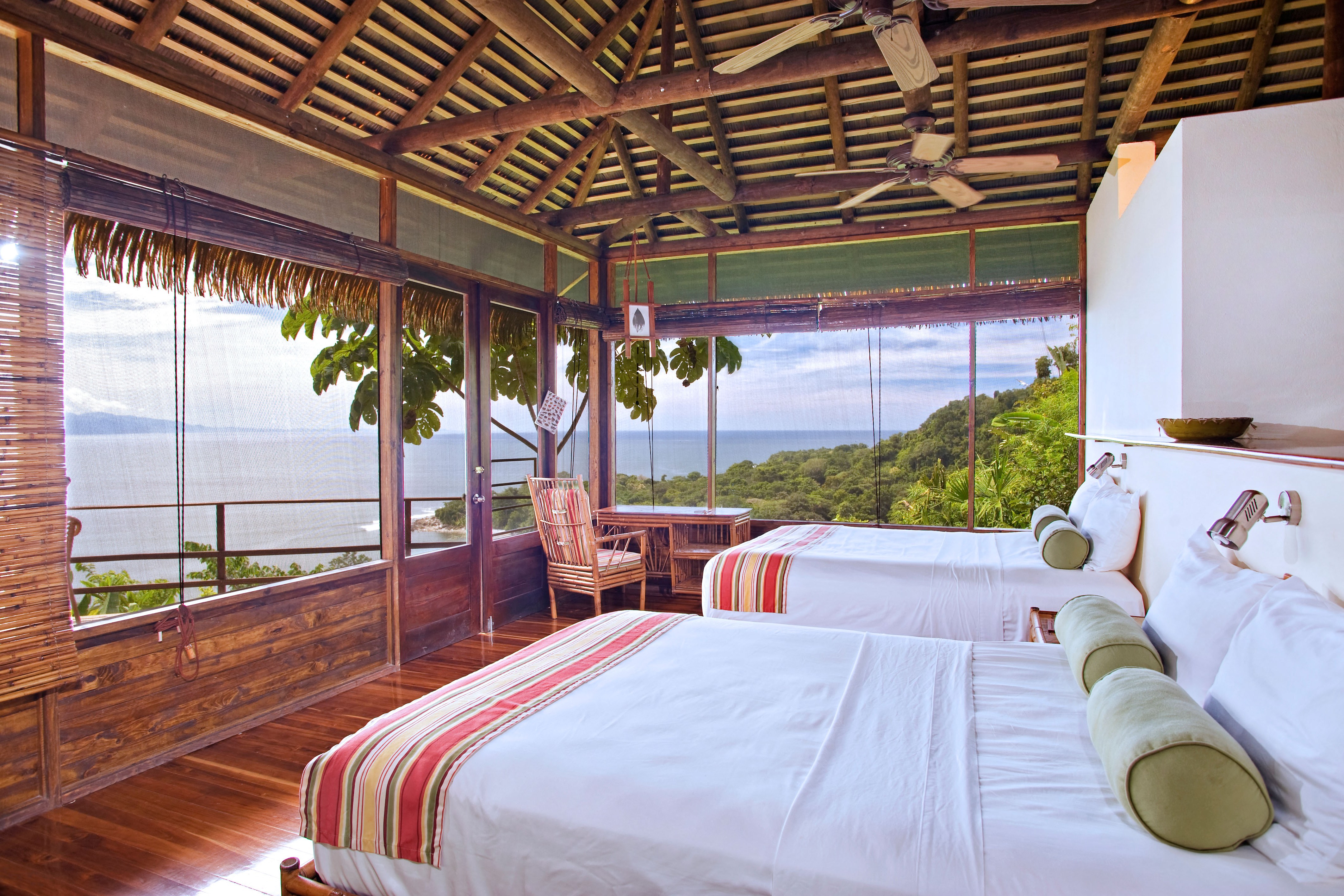
And then a flight out to Lapa Rios, on the Osa peninsula, the sky full of magical scarlet macaws. On arrival, I took a shower in the outdoor bathroom on our balcony and suddenly came eye to eye with a spider monkey, on his way to feed in the fruit trees above. He looked at me; I looked at him. We were a metre apart and as naked as each other. I have never felt more like an ape. Then I barked loudly, and he ran away. Ha! Who’s the king of the jungle now?
There was a magical day on the ocean looking for and finding whales. A joyous crew, wonderful men, full of love for the sea and its bounty. We saw two kinds of dolphin and then humpbacks, a pod of seven males chasing a female and her baby with only one thing on their mind.
“Bastards,” shouted Kitty. “Losers! Incels! Rapists!”
But they lost interest in the mama whale, thank God, and mother and child both got safely away. So we cracked a celebratory Pilsen and a pack of cheese Doritos and watched the males turn their attentions on each other. A magnificent show, interspersed with the always hilarious aerial darting of the flying fish. And then a swim to the beach followed by a chug into the mangroves to look at the wildlife in there, maybe hope for a manatee. Some chance. On an Attenborough show, maybe. But not in real life. And I think anyway they would have been up in the Pacuare or the quieter waters of Tortuguero, not here. Although personally I don’t believe in manatees. I think somebody made them up.
‘The rainforest doesn’t want us’
Which left us, for the last day (not counting flights back to San José and a night in a famous art hotel on a coffee plantation), only Corcovado: 115,000 acres, 700 plant and tree species, jaguars, peccaries, tapirs and 450 kinds of bird.
“Yes, but it’ll be hot,” said Esther.
“And wet,” said Kitty.
“And the mosquitoes will be nightmarish, and we’ll be walking for miles and miles and miles.”
“And we’ve seen everything now.”
“And the thing about the rainforest,” said Esther, who had been thinking about this for days, “is that it doesn’t want us. That’s why it is dark and wet and prickly and everything wants to kill you. You boys go. We’ll stay at the lodge and have a massage and a swim, maybe go on a hummingbird walk.”
“Sam?” I said to my boy.
“Let’s do it, Dad!” he said.

The Corens taking a break on their second rafting trip
COURTESY OF GILES COREN
And so we did. Up at dawn while the flakeouts slept, to dress in our anti-jungle gear and stop by the restaurant for gallo pinto burritos to go, fruit and water bottles, watched by a spectacled owl, high in the rafters, and thousands of circling bats. And then the drive to the ocean and the sand walk, past empty turtle nests, into the bubbling jungle where howlers and spider and squirrel and white-faced capuchin monkeys hurtled and banked and flew in the branches above us, harvesting the boundless year-round nuts and fruit that is why there is so much life in here and why, for so many millennia, until we got soft,it was where humans thrived too. Just looking at the floor, at the abundance of rotting soursops and rambutans, the peach palm fruit (pejibaye), starfruit, papaya and monkey guava, you got a sense of how easy life is here for the animals until something eats them.
Troops of coatis, cute as hell, were grazing on them, their tiny fearless young flitting between the parents in search of fruit and above us were those impossible rainbow toucans and macaws and blue mariposas and also out there, in the darkness, puma, ocelots and jaguar and, who knows, maybe King Kong, awaiting his human sacrifice.
But it was hard. It was. We crossed rivers and climbed hills, and it was hot and it was wet and there were spiders and snakes, and just our bulging rice sandwiches and warm water for sustenance. While our guide, Danielo, forged on regardless, quasi-military, metronomic, relentless. Sam admired him so much — his silence, his pace, his brown, angular, eagle-like face, his refusal to compromise on our behalf — and was determined to keep pace with him.
But when I stopped and kneeled in the sand on the pretext of taking a photo — Danielo pressing on for home without a backwards glance — Sam indulged me and posed briefly, if somewhat angrily. Then he pulled me up and dragged me on through the jungle which, though it had thoroughly defeated his father, mother and sister, had made a man of him.
Giles Coren was a guest of Scott Dunn, which offers 14 nights in Costa Rica from £7,000 per person based on two adults and two children sharing, including accommodation, bespoke experiences and a driver-guide (scottdunn.com; 020 4600 5390)