(Bloomberg) — In the exclusive world of private-company ownership, Kevin Moss is a rare gatekeeper — offering everyday investors exposure to tech giants before they go public.
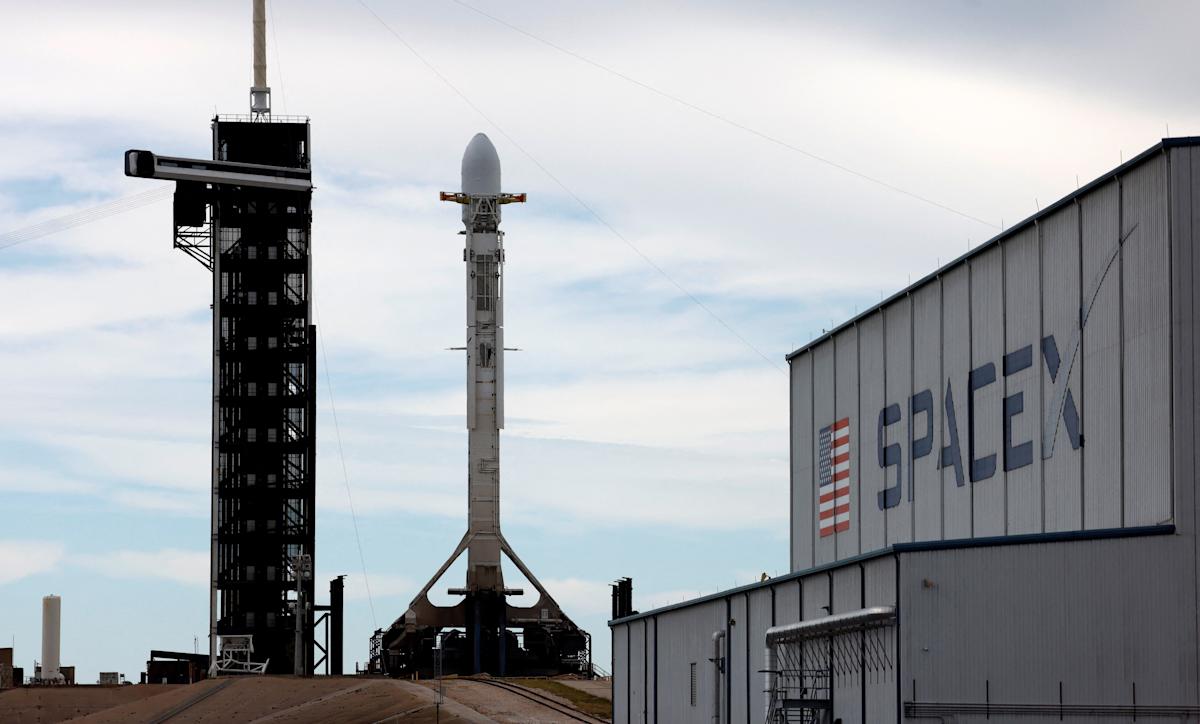
Elon Musk’s SpaceX (SPAX.PVT) is the star attraction. It’s the name that pulls in investors — and the fund’s biggest swing. As of December, Moss’s Private Shares Fund had 13.68% of its $1.1 billion in the aerospace firm, a $151 million stake that made it the fund’s largest holding and, percentage-wise, a bigger bet than the one made by Cathie Wood.
Most Read from Bloomberg
Now, as long-awaited names like Discord, Kraken and Motive Technologies — among the fund’s holdings — prepare to go public, 2026 is shaping up to be exactly the kind of environment Moss’s strategy was built for: when locked-up private bets finally collide with public-market appetite, and valuations face their first open test.
The “Musk Premium” has already shown up in the numbers. After Bloomberg first reported SpaceX’s IPO plans, the fund’s inflows surged 201% above the yearly average — a spike that revealed just how much demand a marquee name can ignite. For Moss, 56, the pitch is simple: lock up your money to access tech’s biggest names before they go public, even if valuations are private, returns are uncertain and the path to exit can be long.
“We saw SpaceX at the time as an emerging leader,” Moss said in an interview, reflecting on his initial 2019 investment of $10 million. That stake has since swelled fifteenfold.
Getting on the company’s shareholder ledger wasn’t easy: Moss said he traveled to the California headquarters, toured the factory floor and met with company representatives before sealing the deal.
This kind of access is rare. Out of more than 130 interval funds tracked by Bloomberg Intelligence’s David Cohne, only at least two — those run by Moss and Wood — hold SpaceX. For now, the rocket and satellite firm is targeting an IPO as soon as this year, in a deal that could value it at $1.5 trillion, Bloomberg has reported — the biggest listing in history.
The fund has lagged the Russell 2000 on a total-return basis over the past one- and three-year windows, according to data compiled by Bloomberg, and was roughly on par over the past five years.
Most funds try to buy into companies like SpaceX through special purpose vehicles or indirect structures. Moss gets in directly — buying shares from the company’s cap table, the official ledger of ownership. That kind of access is tightly controlled: firms like SpaceX reserve the right to vet every shareholder. Bloomberg reported in recent days that SpaceX is considering a potential merger with Tesla Inc. or artificial intelligence firm xAI, another one of Moss’s holdings.
Story Continues
The fund’s structure reflects a broader shift in how companies grow. Today, startups stay private for far longer — often well past their peak growth years — shutting out retail investors. Moss — a former senior portfolio manager who cut his teeth at First New York Securities — uses a specialized wrapper known as an interval fund. Unlike a traditional mutual fund, investors can only withdraw money during quarterly windows. The goal is to avoid forced selling during volatile markets. The minimum to invest is $2,500.

Key details remain out of reach for investors. The fund doesn’t disclose how it currently values its SpaceX stake, what that’s added to performance or how a blockbuster IPO might affect the fund’s value. Like many interval funds, it reports quarterly, citing cost basis, size and fair value of holdings.
And even if investor demand spikes, increasing exposure to hot names like SpaceX isn’t guaranteed. Unlike public markets, private-company shares aren’t always available — and when they are, firms like SpaceX tightly control who gets to buy in. For new investors piling into the fund, there’s no certainty they’re getting more of the crown jewel.
Every Thursday, Moss and his team of four — two portfolio managers and two analysts — meet to assess their nearly 80 holdings, modeling valuations and exit paths. The criteria are strict: companies must have at least $50 million in revenue and grow at 30% a year. This year, Moss expects around 10 of those names to go public — including Kraken, Discord, and Motive Technologies.
“Our strategy is to invest in private companies, have them mature over time, and exit,” Moss said. “If it is an IPO, we do not sell it immediately. But it is the end of that life cycle.”
Meetings can stretch to four hours as the team debates memos that run up to 10 pages. Any investment decision requires unanimous agreement among the portfolio managers.
So far, the fund has had some 162 company investments, 572 transactions and 66 exits since inception, as of December 2025. Originally launched as the SharesPost 100 Fund, it was renamed in 2021, a pivot that marked its deeper focus on late-stage private tech companies.
Among the hits: Circle Internet Group Inc., which returned 8x after pivoting into stablecoins, and exits in Robinhood Markets Inc., Palantir Technologies Inc. and Uber Technologies Inc. Between 2022 and 2023, as rates surged and IPOs froze, exits stalled.
Not all bets paid off. Investments in clean technology — particularly solar — made several years ago delivered weaker results, Moss said. Decisions to exit positions have ranged from persistent underperformance to simply taking chips off the table.
“We try to offload, but it’s not that easy,” he added. “We are never going to always be right. But we have a process in place.”
Now, as Wall Street braces for a fresh IPO wave, Moss is positioned for another run. Beyond SpaceX, potential mega-debuts are waiting in the wings.
“It’s very healthy for companies to be private longer so they can be stronger businesses,” Moss said. But “this year we will see a great exit environment.”
—With assistance from Bailey Lipschultz and Natalia Kniazhevich.
Most Read from Bloomberg Businessweek
©2026 Bloomberg L.P.