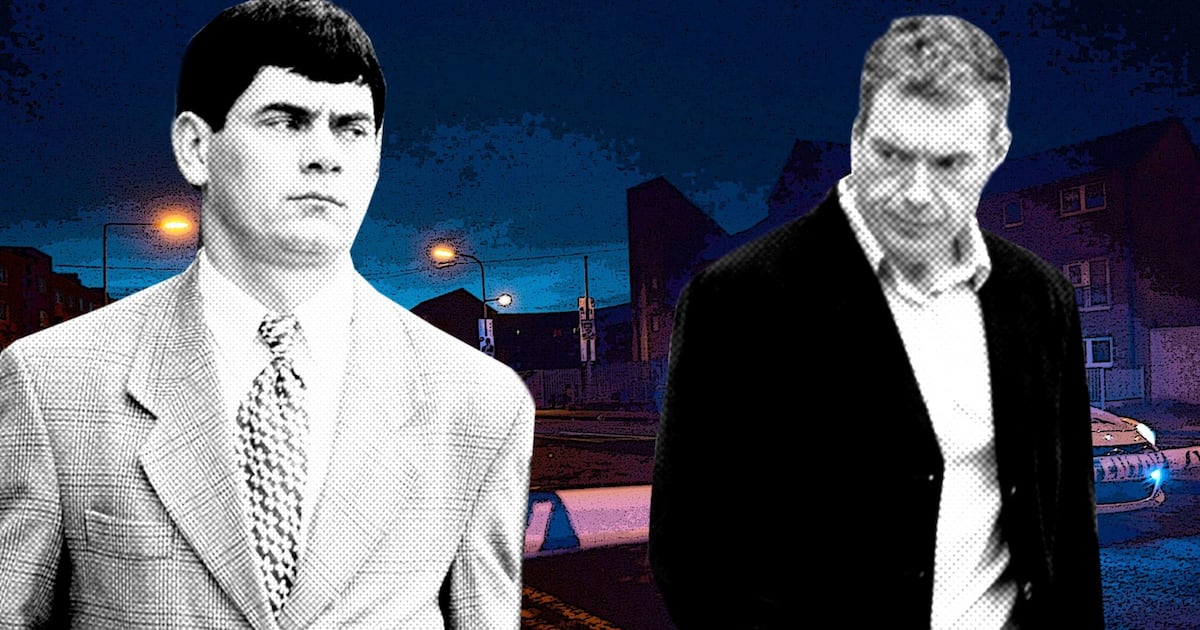
A decade has passed since one of the most brazen attacks in the history of Irish organised crime took place at The Regency Hotel in Whitehall, north Dublin.
David Byrne (33), a Kinahan organised-crime associate from Crumlin, Dublin, was shot dead that day, February 5th, 2016. A senior cartel figure, Dubliner Sean McGovern (39) was wounded, but survived. Kinahan cartel leader Daniel Kinahan (48), who was also present, was the main target, but managed to run to safety.
The attack was designed to avenge the cartel’s gun murder of one-time member Gary Hutch (34) in Spain the previous September.
The killing of Byrne triggered the bloody Kinahan-Hutch feud over the following years. Three days after the Regency attack, Eddie Hutch – Gary Hutch’s uncle and brother of veteran criminal Gerry Hutch, known as The Monk, was shot dead in revenge for Byrne’s murder.
The feud claimed 10 lives in 2016 alone. By late 2018, some 18 people had been killed in related murders. About 90 people were jailed for feud-related crimes, including murder.
Despite the successful convictions, none of the gunmen at the Regency – or those who organised the attack – have been brought to justice.
Patrick Hutch, the brother of Gary Hutch, was suspected of being one of the gunmen, but the case against him collapsed while he was on trial for Byrne’s murder. Another suspect, Kevin Murray, who was photographed wearing a flat cap and carrying a gun as he fled the hotel on the day of the attack, died in 2017.
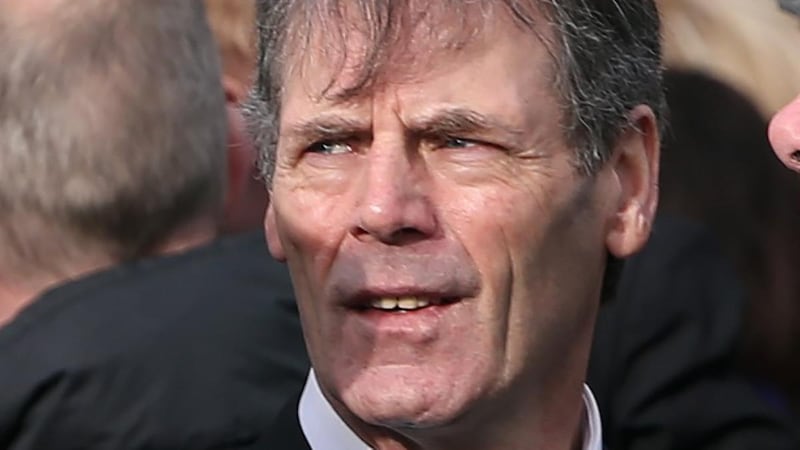 Patrick Hutch. File photograph: Collins Dublin
Gerry Hutch was also charged with Byrne’s murder. The Director of Public Prosecutions put forward the thesis in its case against Hutch that he was one of three men at the scene dressed in mock Garda Emergency Response Unit uniforms and armed with AK47-type guns at the hotel. But they were unable to prove this, and Hutch was acquitted in 2023 after a 13-week trial.
The Special Criminal Court in its judgment said the evidence before the court had proven Hutch was in control of the AK-47s after the Regency attack, raising questions about why he did not face a firearms possession charge. It could easily have been tagged on as an additional charge to the main murder charge, and both prosecuted in the same case.
The Irish Times has established there was an unusual situation inside An Garda Síochána about how the AK-47s – and the people who managed and handled them – were tracked and later seized.
Rather than the information about the guns, and who was trying to move them, being shared in real time, the Special Detective Unit (SDU), which investigates terrorism in the State, retained that information for its own use.
It conducted its own inquiry into the guns as if investigating a stand-alone crime, which other Garda teams investigating the Hutch gang were not even aware of.
Information about the guns could have been shared with other gardaí investigating the Regency and the Hutch gang. It is unclear why the SDU effectively ran a siloed investigation when the intelligence it was gathering would have been of such high value to other gardaí also investigating the Hutch gang’s activities.
Special Detective Unit investigation
Members of the SDU seized the AK47-type guns in Slane, Co Meath, on March 9th, 2016, just over a month after the attack.
The SDU arrested a suspect, Shane Rowan, at the scene. Rowan, then aged 39 years, of Forest Park, Killygordan, Co Donegal, later pleaded guilty to possessing the guns and was sentenced to 5½ years in prison.
The seizure came after a long SDU investigation involving covert surveillance by a large team from the Garda’s National Surveillance Unit (NSU).
The surveillance captured members of the Hutch gang and their associates several times in the company of Rowan, including as the Regency guns were being handed over to him. In addition to NSU members observing these meetings, photographs and CCTV footage were taken.
Despite the availability of this evidence and intelligence, no Hutch gang member or associate were ever arrested for questioning about the guns.
According to sources, it is not unusual in conventional criminal investigations for a Garda unit such as the SDU to gather intelligence for its own investigation, without other Garda units or members being informed.
The surveillance by the NSU and the SDU was considered a success: it resulted in three of the firearms from the Regency attack being seized, and a conviction secured.
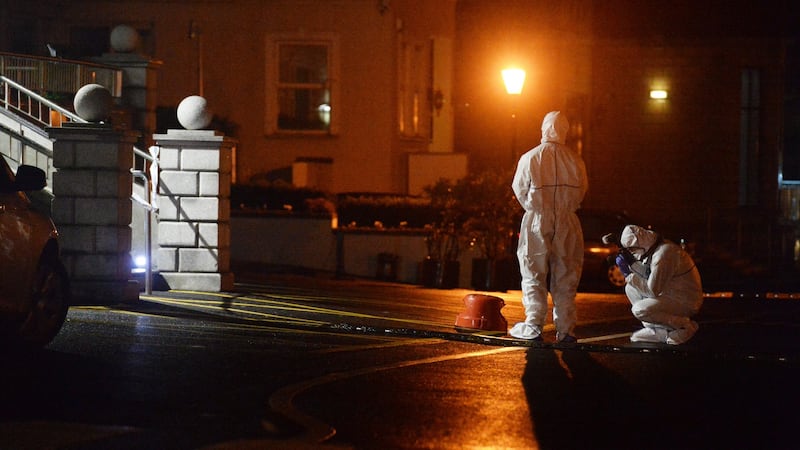 Forensic gardaí at the Regency Hotel after the attack in 2016. Photograph: The Irish Times
There is no suggestion of any wrongdoing by the SDU, but some gardaí believe the intelligence it gathered should have been shared immediately, at a minimum, with the Garda team based at Ballymun investigating the attack.
The Drugs and Organised Crime Bureau (DOCB) is a stand-alone entity that does not involve itself in the investigation of crimes being investigated by other Garda sections, even murders. It was not involved in the investigation of the Regency attack.
However, some gardaí say the intelligence gathered in the SDU inquiry was very valuable at a time when the Ballymun investigation and DOCB were under extreme pressure to target criminals involved in the Kinahan-Hutch feud as it was exploding. For that reason, they believed the intelligence should have been shared.
As a consequence, none of the information linking Gerry Hutch and Jonathan Dowdall – the key State witness in the prosecution case against Hutch over David Byrne’s murder at The Regency – to the guns was ever investigated. That information included evidence of Hutch controlling the firearms and putting a plan in place for their handover to dissidents.
In the wake of Hutch’s acquittal seven years later, the failure to bring firearms charges against him was seen as a big mistake by the Garda and the DPP.
Some Garda members expressed concern that the failure to arrest and charge Hutch gang members when the guns were seized fuelled “toxic” conspiracy theories within the Kinahan cartel that the Hutch gang were co-operating with the Garda.
One source said that if some Hutch members had been arrested and charges on the day in March 2016 when the AK47-type guns were seized, “it’s possible the attacks from the Kinahan side might not have been as bad”.
Other sources say they could have been denied bail and held on remand awaiting trial, which “might have taken the temperature out of things” as the feud was escalating.
Significant surveillance, intelligence
At Gerry Hutch’s trial, it emerged that he had asked Dowdall to arrange a meeting republican paramilitaries to mediate or resolve the Hutch-Kinahan feud.
Dowdall drove Hutch to meet republicans for that purpose.
NSU Garda surveillance for the SDU investigation captured Hutch and Dowdall meeting Rowan in Donegal on February 20th, 2016, two weeks after the Regency attack. Photographs of the meeting were taken as evidence.
More than two weeks later – on Saturday, March 7th, 2016 – a listening device planted by the Garda in Dowdall’s Toyota Land Cruiser 4×4 secretly recorded his conversations with Hutch over a 10-hour period. The conversations took place as they drove from Dublin into Northern Ireland for various meetings, including another with Rowan, who was this time with other dissidents.
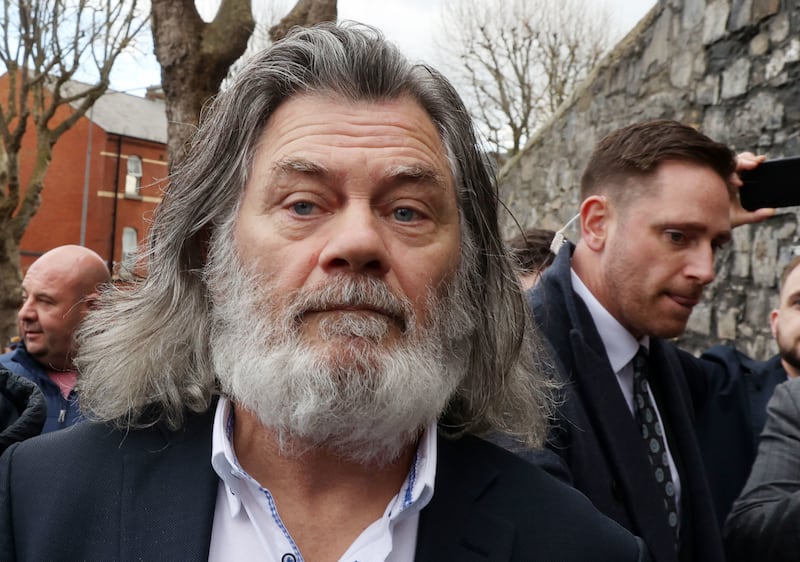 It has been speculated in recent months that Gerry Hutch will make a second attempt at gaining a Dáil seat in the upcoming Dublin Central constituency byelection. Photograph: Sam Boal/PA Wire
The pair were kept under physical surveillance that day. This included being watched as they met in the car park of Kealy’s pub on the Swords Road in north Dublin. They were also followed as they drove north, and watched again as they arrived back in the Republic just before midnight.
Like the surveillance carried out in Donegal, the planting of the device in Dowdall’s vehicle was conducted for the SDU inquiry. Other Garda units investigating the Hutch and Kinahan gangs, or the Ballymun team investigating the Regency attack, were not informed of the SDU inquiry and were unaware there was a device recording conversations during which the feud and the Regency attack were discussed. They had no access to the intelligence gathered at the time.
Hutch’s trial in 2023 was told that, on the recordings, Hutch spoke to Dowdall of a plan to move the three AK47-type weapons with the involvement of Rowan. He said Rowan was supposed to “park his motor, a lad is going to pick it up, go down and take it, bring it back”, with the guns inside.
Two days after that conversation was recorded, the handover of the guns, to Rowan, took place in Dublin. On that day – Monday, March 9th, 2016 – Rowan was under surveillance as he and Patsy Hutch, Gerry’s brother drove two cars in convoy and later one car to a car park in Coolock in north Dublin.
The pair later went for a coffee, while Rowan’s Vauxhall Insignia car was driven to a yard where the guns were placed in the boot and driven to the Coolock car park.
Rowan was then watched as he left in his car and was followed. He was stopped by gardaí outside Slane and the guns were found wrapped in a rug and a shirt in the boot of his car.
Despite the extensive surveillance and available evidence potentially incriminating them – and the subsequent seizure of the firearms – no Hutch gang member or their associates engaged in that elaborate operation were ever arrested for firearms offences.
Following his acquittal for murder, Gerry Hutch remains at liberty. Despite ongoing,criminal investigations into him in Spain and Ireland, he ran in the November 2024 general election, only narrowly missing out on the last seat in a Dublin constituency.
Media speculation in recent months suggests Hutch may have another tilt at a Dáil seat in this year’s Dublin Central byelection.
The 10-year anniversary of the attack on The Regency falls next Thursday.
Despite the Garda surveillance he was subjected to and what it unearthed about his control of the guns used in the attack, Hutch has slipped that particular net.