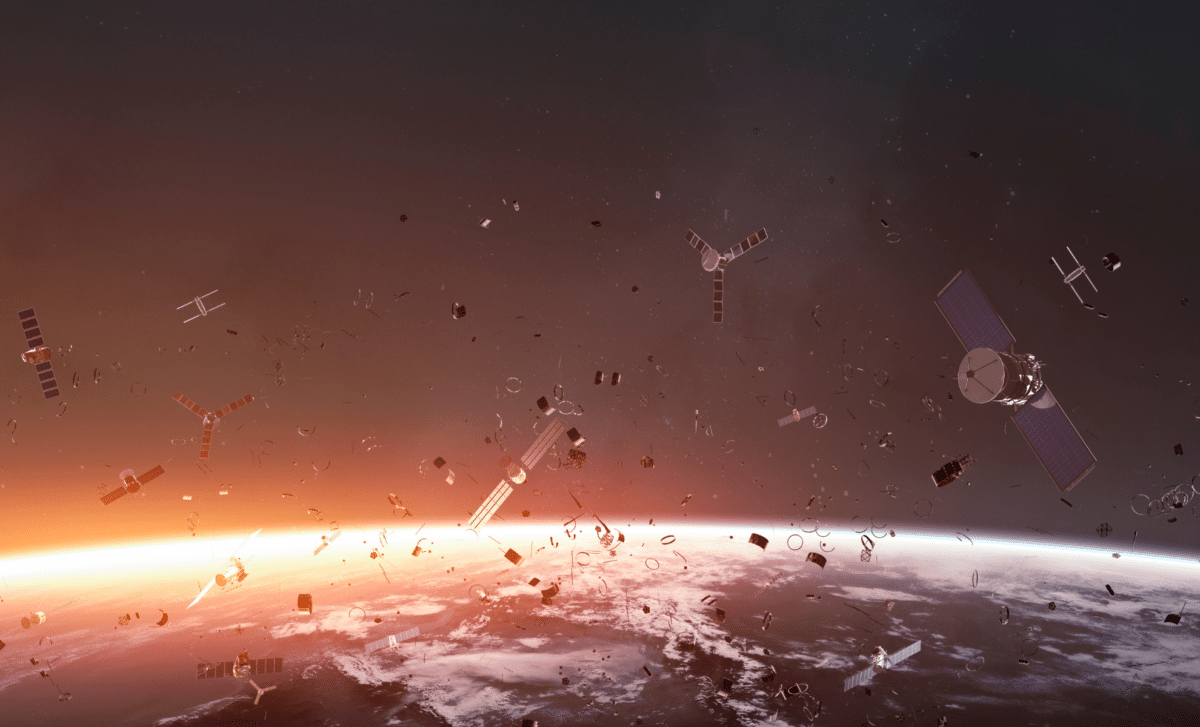
SpaceX has revealed Stargaze, a new space situational awareness system intended to dramatically reduce the risk of satellite collisions in Earth orbit. Detailed in a recent Starlink update and echoed by CEO Elon Musk, the initiative arrives as low Earth orbit becomes increasingly crowded with commercial and government spacecraft. According to SpaceX, Stargaze is built to deliver near-real-time tracking data to satellite operators worldwide, offering a faster and more precise alternative to existing monitoring systems.
Orbital Congestion Is Reaching A Critical Threshold
Earth’s orbit is undergoing a profound transformation. Thousands of active satellites now circle the planet, supporting broadband internet, navigation, weather forecasting, and national security missions. Starlink alone operates a constellation numbering in the thousands, with further expansion planned. This density increases the frequency of close approaches between spacecraft, raising the odds of collisions that could generate long-lasting debris fields. Even small fragments can travel at extreme speeds, posing risks to other satellites and crewed missions. Managing this environment requires faster detection and higher confidence in orbital predictions than legacy systems can reliably provide.
Stargaze And The Limits Of Traditional Tracking
Conventional space surveillance relies heavily on ground-based radar and optical sensors that observe objects intermittently. SpaceX argues this approach leaves operators vulnerable to sudden changes in orbital behavior.
“With so little time to react, this would not have been possible by relying on legacy radar systems or high-latency conjunction screening processes,” SpaceX said.
When data arrives late or with large uncertainties, operators may be forced into rushed decisions or miss the chance to maneuver entirely. Stargaze is designed to overcome these limitations by increasing observation frequency and accelerating data delivery.
Minutes Instead Of Hours For Collision Alerts
A central promise of Stargaze is speed. SpaceX notes that current “conventional methods typically observe objects only a limited number of times per day, causing large uncertainties in orbital predictions, further compounded by volatile space weather.” These uncertainties grow quickly in an environment where atmospheric drag and solar activity can subtly alter satellite trajectories. Stargaze aims to reduce that uncertainty by providing updates far more frequently. According to SpaceX, the system can flag potential collision risks “within minutes, compared to the current industry standard of several hours,” giving operators more time and flexibility to respond safely.
Sharing Orbital Awareness Across The Industry
SpaceX says Stargaze will not be limited to its own fleet. The company plans to make its positional awareness data available to other satellite operators at no cost. “SpaceX is now providing precise positional awareness of objects in Earth orbit to all satellite operators for free,” CEO Elon Musk tweeted. “This will greatly reduce the probability of collisions that create orbital debris (space junk) hazards.” This open-data approach positions SpaceX as a central node in global space traffic management, potentially encouraging broader cooperation among competitors operating in the same orbital corridors.
SpaceX is now providing precise positional awareness of objects in Earth orbit to all satellite operators for free.
This will greatly reduce the probability of collisions that create orbital debris (space junk) hazards. https://t.co/sot6A7HD1v
— Elon Musk (@elonmusk) January 30, 2026
Automation And Near Misses In Orbit
SpaceX has highlighted recent close-call events to illustrate why faster systems are necessary. In at least one case, rapid detection and response helped avoid a potentially dangerous conjunction. The company explained that
“If observations of the third-party satellite were less frequent, conjunction screening took longer, or the reaction required human approval, such an event might not have been successfully mitigated.”
This points to a broader trend toward automated decision-making in space operations, where software can react faster than human-led processes during time-sensitive scenarios.
What Stargaze Signals For The Future Of Space Operations
As satellite constellations multiply and access to orbit expands, maintaining a safe environment will depend on shared, high-quality data and rapid response capabilities. Stargaze represents an effort by SpaceX to address this challenge at scale, blending frequent observations with near-real-time analysis. The system also raises broader questions about governance, standardization, and reliance on private infrastructure for orbital safety. Even so, as Earth’s orbits grow busier, tools like Stargaze may become a defining part of how humanity sustains long-term activity in space.