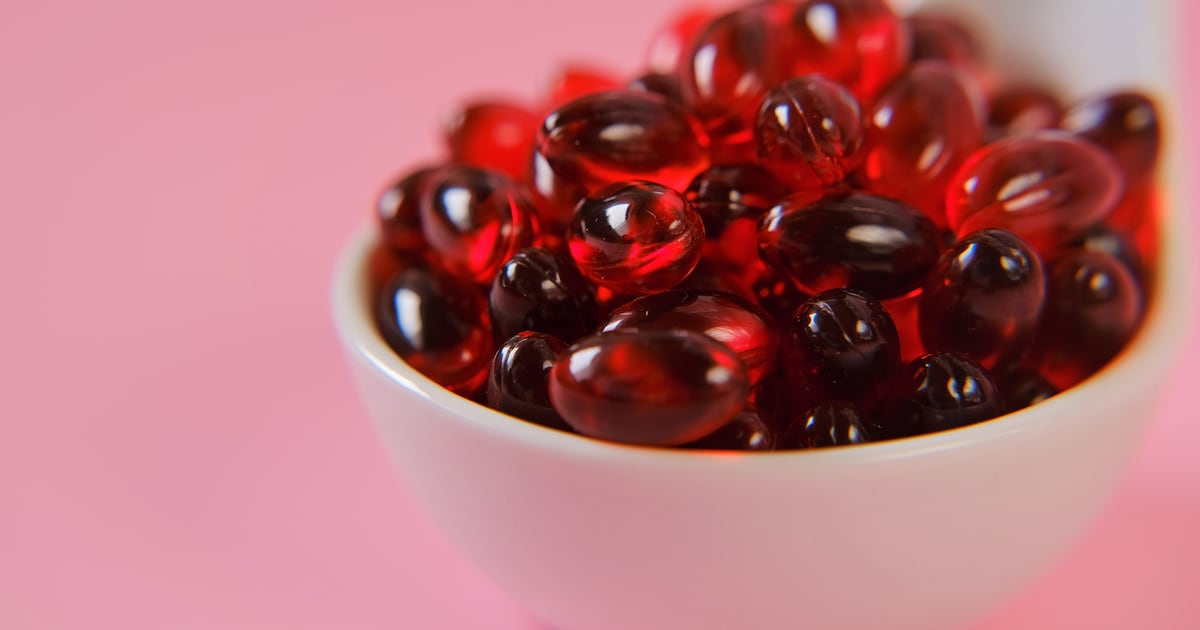
Data published in the Journal of Nutrition, Health and Aging indicated that six months of supplementation with four grams per day of Aker BioMarine’s SuperbaBoost krill oil also increased physical function.
“This finding is important from a public health perspective as it suggests that krill oil supplementation represents a viable strategy to support muscle health in older age, regardless of sex, age or BMI,” wrote researchers from the University of Glasgow (UK), Monash University (Australia), Nottingham Trent University (UK), and Northumbria University (UK).
“Interestingly the effects of krill oil on the M-wave were greater in men than in women, indicating that the mechanisms through which krill oil influences muscle strength may differ by sex.”
M-wave is the electrical signal recorded from a muscle after motor nerve is stimulated. It is a measure of muscle membrane excitability.
Line Johnsen, SVP R&D and Regulatory Affairs, Aker BioMarine, told NutraIngredients that the findings are encouraging, as this suggests the beneficial effects are broadly applicable across different subgroups of older people.
“Maintaining muscle health is important for everyone, and we are pleased to see Superba Boost stand out as a proven ingredient in this area,” she said.
The specter of sarcopenia
The U.S. population is aging, with the 65+ population growing much faster than under-65s. Over 17% of Americans were 65+ in 2022 (32 million women and 26 million men), and this is predicted to reach 23% by 2050, according to the Population Reference Bureau.
Muscle loss is a natural part of aging, and researchers have estimated that, after the age of 50, we lose 1% to 2% of our muscles each year. Strength declines as well, at a rate of 1.5% per year beginning at age 50, accelerating to 3% after the age of 60.
According to a monograph from the U.S. Dairy Export Council, the direct health care cost attributable to sarcopenia (degenerative muscle loss) was estimated to be $18.5 billion in 2000 in the United States, equivalent to approximately 1.5% of health care expenditures that year.
In an accompanying editorial, Riccardo Calvani, Emanuele Marzetti, and Anna Picca from the Università Cattolica del Sacro Cuore and Fondazione Policlinico Universitario “Agostino Gemelli” IRCSS in Rome said that the new analysis contributes, “interesting insights to a rapidly evolving field.
“Nutritional interventions are often planned concomitant to exercise to produce measurable muscle benefits,” they wrote. “Early mechanistic studies showed that LCn-3 PUFA increases muscle protein synthesis rates in older adults, and longer-term fish-oil supplementation increases muscle mass and grip strength without exercise training. However, several trials combining LCn-3 PUFA with resistance training reported potential sex-specific variations, where women appear to derive larger functional benefits from supplementation than men. Against this drawback, the current analysis provides evidence that krill oil supports improvements in muscle size and strength in both sexes in the absence of structured exercise.”
Study details
The study is a secondary exploratory analysis of a previous randomized controlled trial, which included 94 men and women aged 65 and older who were randomly assigned to receive either krill oil (SuperbaBoost, Aker Biomarine) or placebo for six months.
Results showed that krill oil supplementation was associated with increases in muscle strength, size, and physical function across age groups (under or over 70), between men and women, and for BMI (under or over 25 kg/m2).
Mwave measurements were similar for age and BMI, but differences were observed between men and women.
“This indicates that although strength increases were comparable between men and women, the mechanisms underlying these effects may differ and further work should examine this,” wrote the researchers.
In their editorial, Calvani, Marzetti and Picca stated that krill oil supplementation may represent a practical, biologically meaningful strategy to support muscle strength and size in older adults irrespective of sex, age, or BMI.
“As healthcare systems confront growing demands related to mobility impairment in aging populations, accessible interventions such as LCn-3 PUFA supplementation deserve attention, particularly in combination with exercise strategies that may amplify and translate physiological gains into functional outcomes,” they wrote. “Even a handful of benefit deserves serious inquiry when it comes to preserving autonomy in later life.”
Source: Journal of Nutrition, Health and Aging, 2026, Vol. 30, 100747, doi: 10.1016/j.jnha.2025.100747. “Do the effects of krill oil supplementation on skeletal muscle function and size in older adults differ by sex, age or BMI: A secondary analysis of a randomised controlled trial”. Authors: O. Hayman, et al.
Editorial: Journal of Nutrition, Health and Aging, 2026, Vol. 30, 100767, doi: 10.1016/j.jnha.2025.100767. “Krill Oil Supplementation and Muscle Health in Older Age: Broad Benefits Without Boundaries?” Author: R. Calvani, et al.