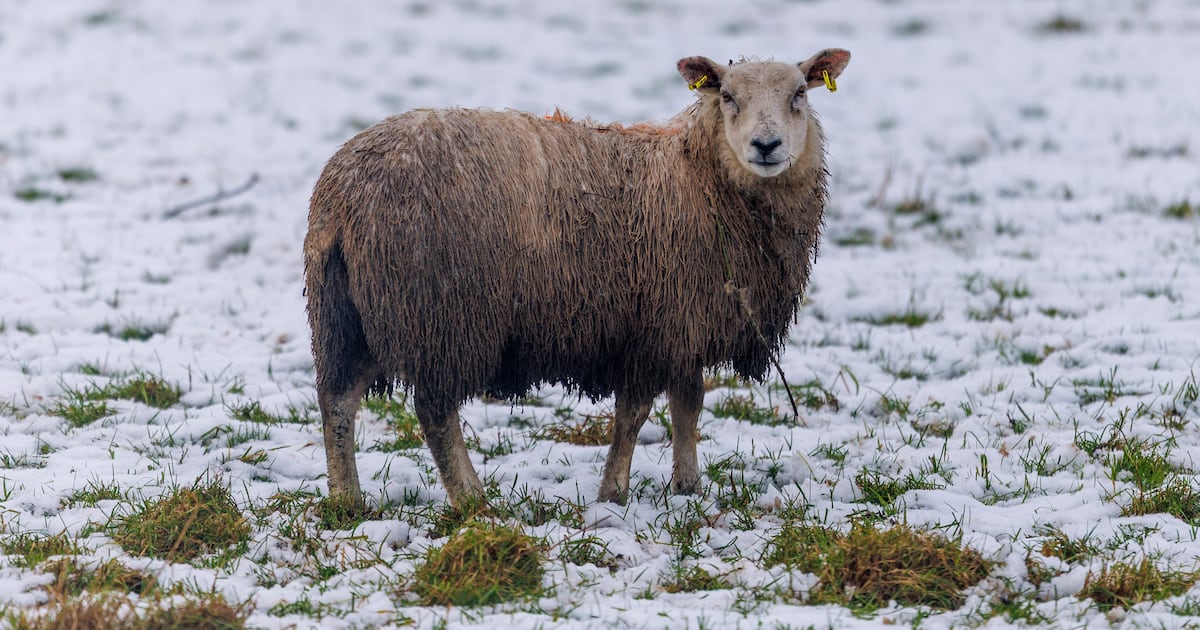
The extremely wet conditions of recent weeks could be replaced by freezing weather and snow by the middle of the month, according to some longer-term predictions.
Much of the weather chaos in the northern hemisphere has been caused by a weaker-than-usual polar vortex this winter. The polar vortex is caused by high-altitude winds that rotate anticlockwise around the North Pole and usually trap extremely cold air in the Arctic region.
This year, the polar vortex has weakened and frigid air has drifted south, causing freezing temperatures across North America and northern Europe.
This has caused a blocking high-pressure area over continental Europe and the jet stream has drifted south of Ireland, dragging up warm air from the Atlantic, resulting in a lot of moisture and the recent heavy rains and flooding.
It is also bringing unprecedented wet weather to Portugal and Spain, with further deluges expected in in the coming days.
Met Éireann climatologist Paul Moore said the latest runs from the advanced weather models show a split in the polar vortex occurring around the middle of the month.
A split occurs when two high-pressure areas push the vortex from either side. In Europe this can cause high-latitude blocking, dragging cold, easterly air over Ireland.
[ How to stay up to date with river levels, flood risk and forecastsOpens in new window ]
Such a weather set-up led to the infamous Beast from the East in 2018, which was preceded by a split polar vortex.
The Beast from the East struck in late February and early March of that year. It brought the coldest temperatures since 2010 and the largest snowfall across the island since 1982.
“We have the cold air in place if we do get a situation where the blocking high moves to the north of us. There is a possibility of cold air being pulled west over us,” Moore said.
“The forecast has been showing that happening at the end of the medium-range forecasts. The forecast has been hinting at this for the last few weeks, but the low pressure has always fought back.”
Moore said a weakened polar vortex is part of natural variability, but there is evidence the vortex is weakening because of warming in the Arctic region, though this is a theory rather than an established fact.