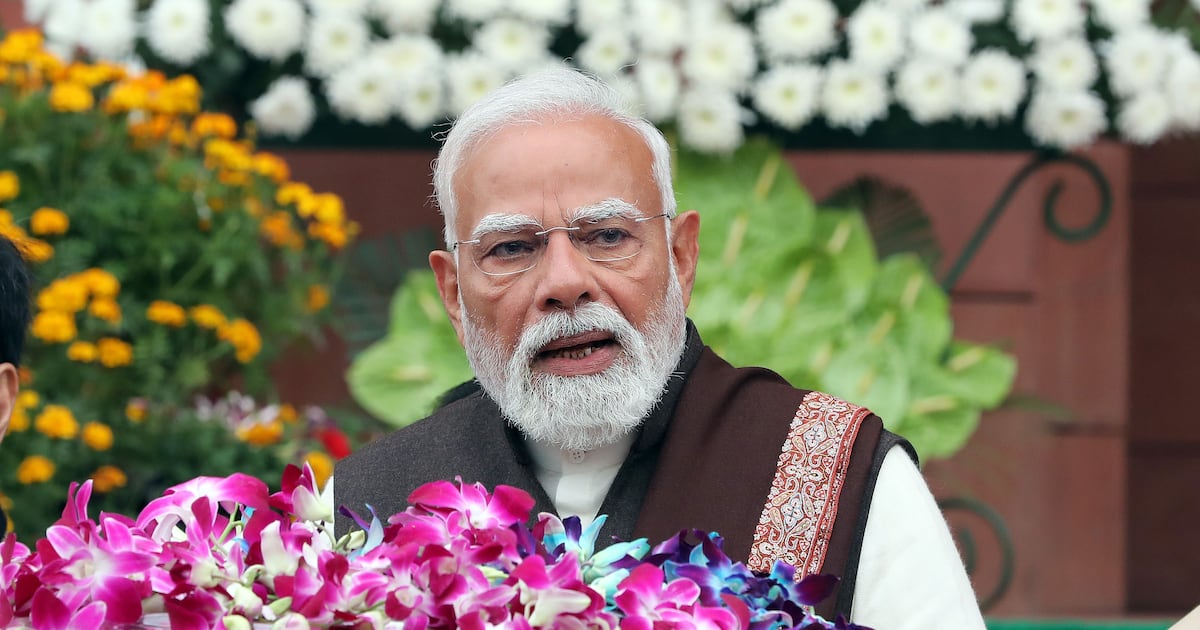
The US will reduce tariffs on India to 18 per cent after prime minister Narendra Modi agreed to stop buying Russian oil. The development marks a further easing in tensions between the two countries.
On Monday, US president Donald Trump posted on social media that he would lower his 25 per cent tariff on Indian goods to 18 per cent, emphasising that India buying less oil from Russia would help end the war in Ukraine. Trump is also removing the extra 25 per cent duty on Indian goods he applied in response to India’s purchases of crude oil from Russia, according to officials familiar with the matter.
Modi confirmed the pact, posting on social media that “Made in India products will now have a reduced tariff of 18%”. He didn’t mention oil purchases in his post.
India emerged as a key destination for discounted Russian crude after trade flows were upended by Moscow’s 2022 invasion of Ukraine. While the Trump administration’s efforts to choke off Russia’s flows to India have so far slowed shipments, they are yet to completely halt.
In October, a similar announcement from Trump claimed Modi agreed to halt purchases of Russian oil but Indian refiners continued to buy crude from Moscow. Later the same month, the US imposed sanctions on Russia’s biggest oil producers, Rosneft PJSC and Lukoil PJSC, which led to appetite from India diminishing more significantly.
The move announced by Trump will reduce the overall levies on many Indian goods to 18% from 50%, representing a significant reduction on textiles, machinery and other goods. In a social media post, the US president said India will also “move forward to reduce their Tariffs and Non Tariff Barriers against the United States, to ZERO”, while purchasing “over $500 BILLION DOLLARS of U.S. Energy, Technology, Agricultural, Coal, and many other products”.
The new figures offer significant relief for New Delhi, which has sought for months to negotiate a lower rate with Washington. India ships almost a fifth of its total exports to the US and Trump’s tariffs of 50 per cent amounted to the highest rate on products from any major trading partner.
The high tariff rate had impacted almost 55 per cent of India’s exports to the American market and threatened to unravel its ambitions of becoming a manufacturing powerhouse.
“While devil is in the details, it removes a hanging sword over rupee, equity and rates market,” said Nilesh Shah, managing director at Kotak Mahindra AMC. “Let us hope that it is a win-win deal for both the countries as they have lot to gain through cooperation.”
It wasn’t immediately clear a deal was imminent before Trump and Modi’s phone call. US trade representative Jamieson Greer said last Tuesday that while India had “made a lot of progress” on curbing Russian oil buys, “they still have a ways to go on this point”.
India was among the first to open trade talks with the Trump administration, but ties soured after the US president repeatedly claimed credit for a ceasefire between India and Pakistan, an assertion that rankled officials in New Delhi. The tariffs further strained relations.
Signs of a thaw between the two economies emerged after Trump called Modi on his birthday in September, easing tensions and seeing the countries resume stalled trade talks.
The US president in November said he could visit India next year at the urging of Modi.
The deal comes as tariffs weigh on India’s economy. The US is its biggest export market and the new levies have hurt labour-intensive industries including textiles, leather, footwear and jewellery. The latest trade figures show exports down nearly 12 per cent last October from a year earlier, with the trade deficit hitting a record.
Still, India has taken steps to appease Trump. India’s oil minister said recently that state refiners had signed their first long-term deal to import American liquefied petroleum gas.
In his Truth Social post on Monday, Trump said Modi had also agreed to potentially buy more oil from Venezuela. Indian Oil Corp., the country’s largest refiner, could add Venezuelan crude to its diet, an executive at the state-owned firm said last week. The company is looking to buy at least 24 million barrels of Brazilian crude this year and next year as it continues to diversify supplies, the executive said.
Modi didn’t address Venezuelan oil purchases in his post. – Copyright Bloomberg 2026