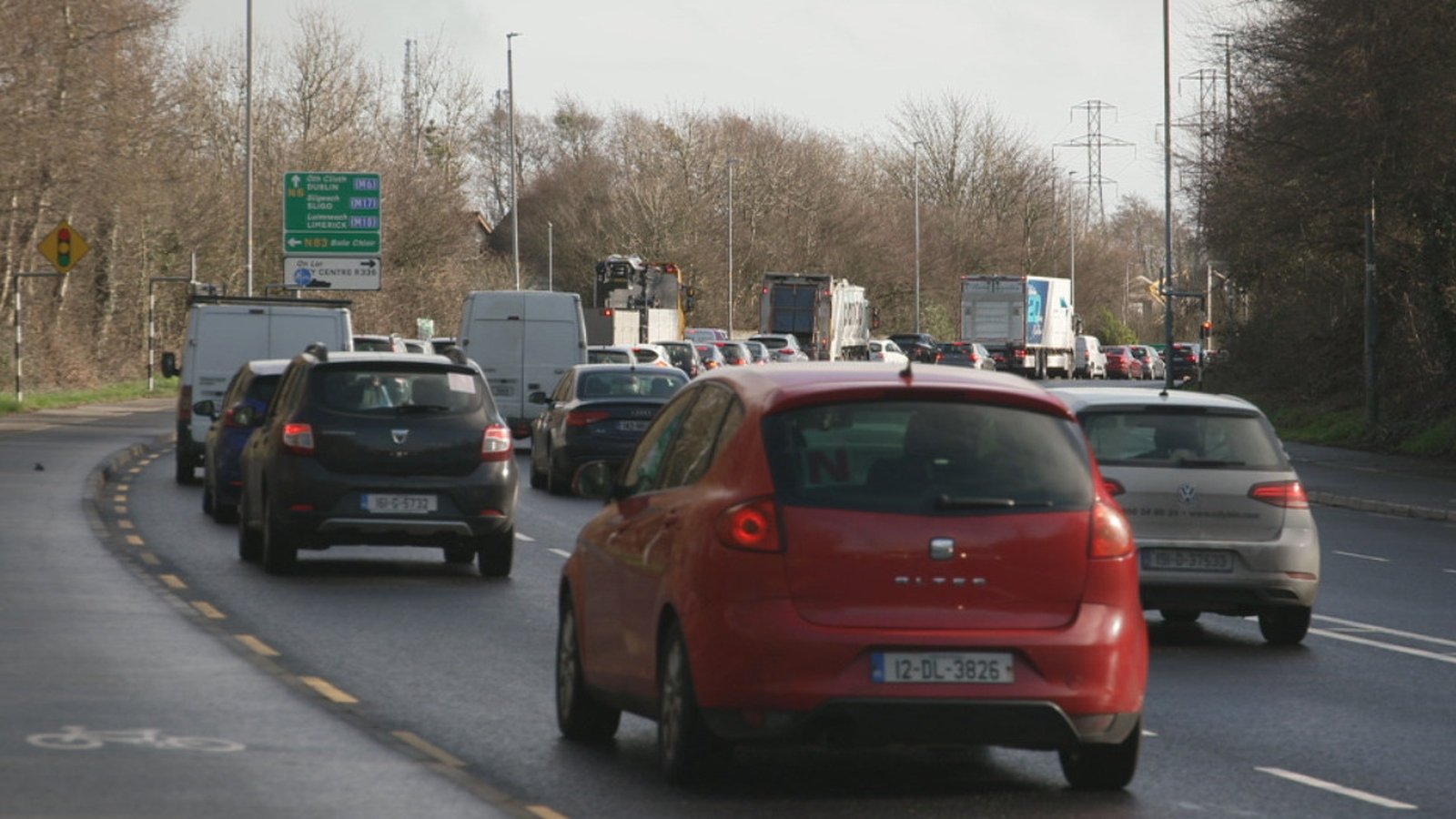
Business leaders in Galway have called for urgent clarity on whether a proposed ring road for the city will be approved.
The local Chamber of Commerce says continuing traffic gridlock is inhibiting the growth of the Galway and threatening further inward investment.
An Coimisiún Pleanála says there is still no timeframe for when a decision on the planned ring road for Galway city will be made.
The 18km route was initially approved over four years ago, only for permission to be quashed when it emerged the impact the road would have on the State’s Climate Action Plan had not been considered.
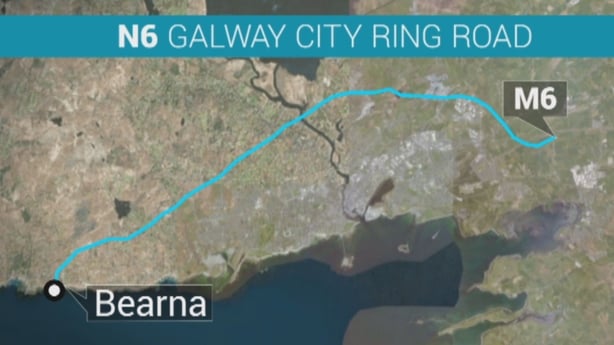
The proposed dual and single carriageway road would run from the end of the M6, to a location west of the village of Bearna
A revised application was made by Galway City and County Councils in 2023, when additional information was provided to the planning authority.
Responses to public submissions in relation to the updated data are now being analysed, after which a final report will be compiled by an inspector. The planning authority says a second oral hearing will not take place and that a final decision is anticipated “in the coming months”.
The proposed dual and single carriageway road would run from the end of the M6, to a location west of the village of Bearna.
The Government has committed more than €1 billion in funding for the road, under the National Development Plan. But such funding is contingent on the project being approved in the first instance.
In documents submitted as part of the revised application, the local authorities set out projections, based on an assumption that work on the road could begin in 2028.
It’s estimated that the construction phase of the project would result in 126,000 tonnes of carbon emissions into the atmosphere.
Officials are describing their forecasts as “short-term major adverse effects on climate” and say these “are inevitable for any transport infrastructure development”.
But they also concede the project would have “a permanent moderate adverse residual effect on climate” over its lifecycle.
Throughout the additional documentation that has been submitted, planners strenuously emphasise the road as forming part of a wider Galway Transport Strategy (GTS), which combines a range of other initiatives.
These include new bus corridors, increased pedestrian and cyclist routes, traffic restrictions in the city centre and other measures to encourage and promote greater use of public transport into and around the city.
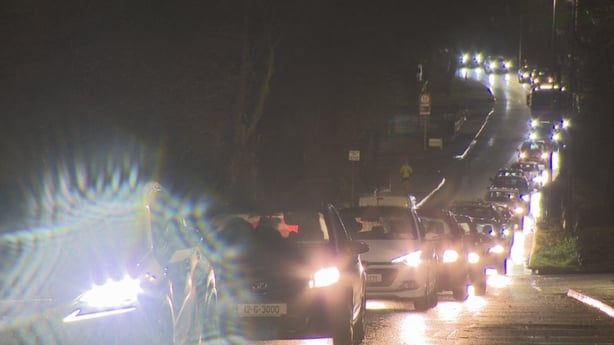
The local Chamber of Commerce says continuing traffic gridlock is inhibiting the growth of the Galway
The submission claims that when the road is considered in this broader context, there would be a 43% reduction in carbon emissions from transport by 2030, “within the area of influence” of the project, compared to 2018 levels.
However, Friends of the Irish Environment says the plan “fundamentally conflicts with national climate objectives”. It contends that the road would facilitate continued growth in private car use, locking in long-term carbon emissions.
In a submission to An Coimisiún Pleanála, the charity said the proposals did not address or provide for the reduction of traffic congestion in and around Galway city.
Chief Executive of Galway Chamber Karen Ronan says clear timelines and strong oversight are needed from central Government.
She argues that the development should be an integral part of a State effort to prioritise balanced regional development, as part of a “joined up” plan for the future of the western capital.
Ms Ronan says transparency and trust are central, so businesses can plan for the coming years with confidence.
The Chamber says a failure to deliver “transformative projects” is having a major impact across all sectors in the region, and that action is needed to address this issue.
If approved, she wants the Government to give the road the same level of priority as the Dublin Metrolink and says the project must be “shovel ready” to proceed as soon as there is clarity.
The assessment of the road plans continues, as efforts to introduce an enhanced bus network for Galway remain on ice.
The NTA had hoped to have extensive changes in place by this year, but some of the proposals are subject to a judicial review.
The authority now says it will be next year, at the earliest, before the redesign of the bus network is in place.
Amid the waiting, a local group campaigning for better transport planning has relaunched in recent months.
The Galway Commuter Coalition says it is “agnostic” about the N6 ring road but that shorter term measures should be prioritised, in the absence of a formal decision about the project.

Karen Ronan says a failure to deliver “‘transformative projects’ is having a major impact across all sectors in the region
The group’s chairperson Lochlann Gallagher says those travelling through or across Galway cannot wait any longer for some positive actions to be taken.
His organisation is calling for incremental “easy win” steps, that might aid the movement of people around the city.
“Any of the important measures that are coming down the line in terms of active travel, in terms of public transport investment [or] network redesigns. They can be done now. They can be done when the road is put in. They can be done if the road is never put in,” he said.
“We shouldn’t be all stuck in our cars waiting for something to change. We should be making active changes all the time.”
The coalition says simple steps, like opening side doors on buses to improve passenger flow, or ensuring pedestrians can access routes that shorten journeys, could incrementally lead to positive change.
“A lot of the things we could do aren’t terribly expensive, aren’t politically very difficult. They just need ambition, and a bit of funding,” says Mr Gallagher.
“If you look at other European countries, they decided 40 years ago to do this, and they are seeing the results now. They’re seeing that their cities are less congested, their people are healthier, you know, they are getting around in faster, more convenient and safer ways.
“And that’s what we would love to see investment put behind.”