Less than an hour’s drive from Parma lies the city of Modena, where the great Italian tenor Luciano Pavarotti was born. Among life’s true pleasures is listening to his arias and his memorable duets.
However, Ben Whitehouse and TMO Keith David delivered a different class of duet when Parma hosted the Zebre v Connacht match on Saturday. Played in the sparsely populated Stadio Sergio Lanfranchi, it was anything but a listening pleasure. They were in constant touch with each other, with Whitehouse spending much of his afternoon relaying reasons for decisions to the players. Long-winded explanations were the annoying order of the day.
At international level, Whitehouse is a TMO. But for the United Rugby Championship, he is needed, from time to time, to referee. It’s important to say that the match officials did not have any negative influence on the result. However, the tiresome over-involvement of the TMO is exactly why World Rugby has tasked former New Zealand Rugby chief executive Mark Robinson to carry out a root-and-branch review of the role.
Rather him than me. The current TMO involvement has become so deeply embedded in the game that it’ll be a mighty job to pull things back across both hemispheres.
Fortuitously, Connacht didn’t need the denied first-half try by Chay Mullins, which was chalked off for an invisible knock-on by teammate Josh Ioane. It is true to say technical problems didn’t help, but with a tad more patience, the correct outcome should have been reached.
As the clock eventually wound down, it was way into the red by all of 10 minutes when Connacht secured a precious bonus point. Otherwise, Mullins’s disallowed try would have been hugely relevant. Several of the Connacht backs joined the drive, ensuring that the maul crossed the line, as Oisín McCormack touched down. Whitehouse awarded it himself, this one without recourse to his TMO.
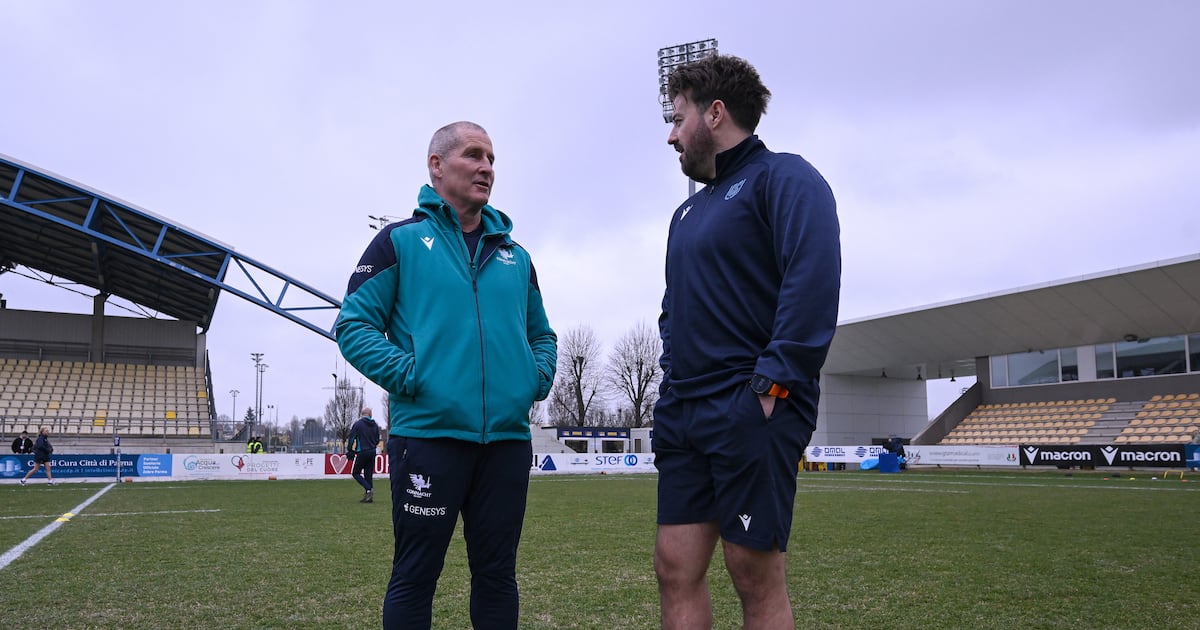
Connacht recently have had Bundee Aki suspended for verbal abuse of the referee. There was also, of course, Mack Hansen last season. In Parma, Whitehouse told the Connacht captain – and the rest of us – that screaming at him was not acceptable, describing the level as “off the charts”.
 Should Irish players have been wrapped in cotton wool ahead of the Six Nations?
Allied to that description, a no-sanction warning was an incredible call. It was very surprising that it was not, at least, an immediate penalty. Stuart Lancaster has a serious issue to address here and Andy Farrell knows very well that he must also call a halt, as Ireland are at high risk in this context.
The immediate sanction will come one day and perhaps at a very inopportune moment. Screaming in annoyed objection at a penalty award should be punished appropriately – with the penalty advanced 10 metres. This is an important sanction as it also acts as a deterrent.
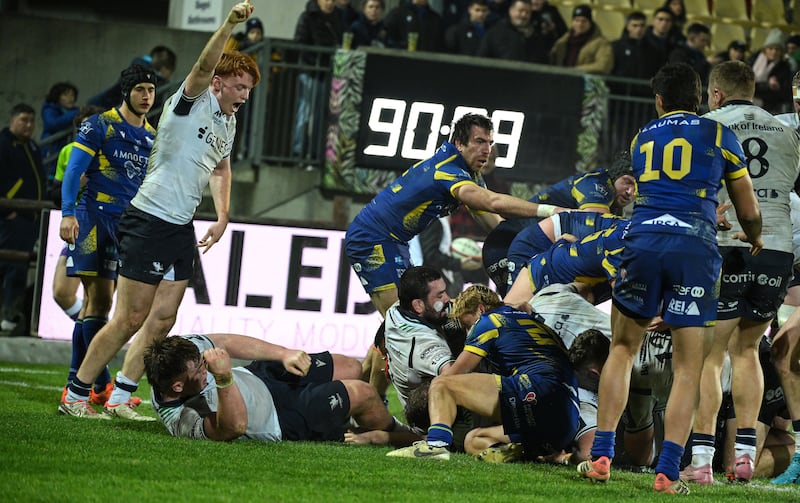 Connacht’s Shane Jennings celebrates Oisín McCormack late try against Zebre at Stadio Sergio Lanfranchi last Saturday. Photograph: Giuseppe Fama/Inpho
It will be interesting to see if Robinson has concluded his TMO deliberations in time for World Rugby’s upcoming ‘Shape of the Game’ conference.
It’s not the only item on the agenda. The new chair, Australian Brett Robinson (they are not related), is keen to reach agreement on new law trials with a view to having them in place for the World Cup.
South Africa head coach Rassie Erasmus and Jaco Peyper – the former international referee who is now an adviser to South African Rugby – have declared their opposition to this idea, as has been reported recently. Overall, I agree with their position, which points to the present process of trialling as being key to fully understanding all the consequences of change. Particularly, those which are of the unintended variety.
It seems Brett Robinson does not have full support in the southern hemisphere and if South Africa stick to their guns, it could prove a major stumbling block. France, too, are taking a hard line against changes which they believe could damage their successful Top 14 league; they have jam-packed stadiums, which is not a feature in Australia. France are also adamant that the 20-minute red card replacement is not fit for purpose, with everything but the most horrible fouls qualifying for it.
The game of rugby has unique characteristics and these must not be lost. The laws must fit the charter, which has also been mentioned by Peyper. The current global trial for the lineout is showing serious cracks, a fact which backs up the necessity of adhering to the trialling process.
Here’s the problem with the lineout. The team throwing in the ball drops several men out of the lineout as the ball is thrown. This is contrary to law but, apparently, nobody cares. These players then drive on their catcher as he lands on the ground. It creates more mauling, instead of fast ball “off the top” going quickly to the scrumhalf, who then releases the backs.
It is not too late for this trial to be voted down, to ensure that the lineout is a structured contest for possession – which is what it’s supposed to be – and that is enshrined in the charter of the game.
Furthermore, while players are given a maximum of 30 seconds to form a lineout, it’s not compulsory. In fact, teams are supposed to line up without delay, rather than slow-walking into position. It’s a very easy fix with no law-change required, just referees who are determined to keep things moving.
Karl Dickson is in charge for the Six Nations opener in Paris on Thursday night. His performance will be carefully monitored by Ireland, as they will see him once more against Wales. The breakdown, in particular, will be key.
Referees are now told to call “use it” much sooner, once the ball is secure, and not wait until it is at the back of the ruck. Slow ball will be kicked, whereas fast ball leads to running rugby. Here’s hoping for a cracker and maybe, just maybe, an unlikely Ireland victory.