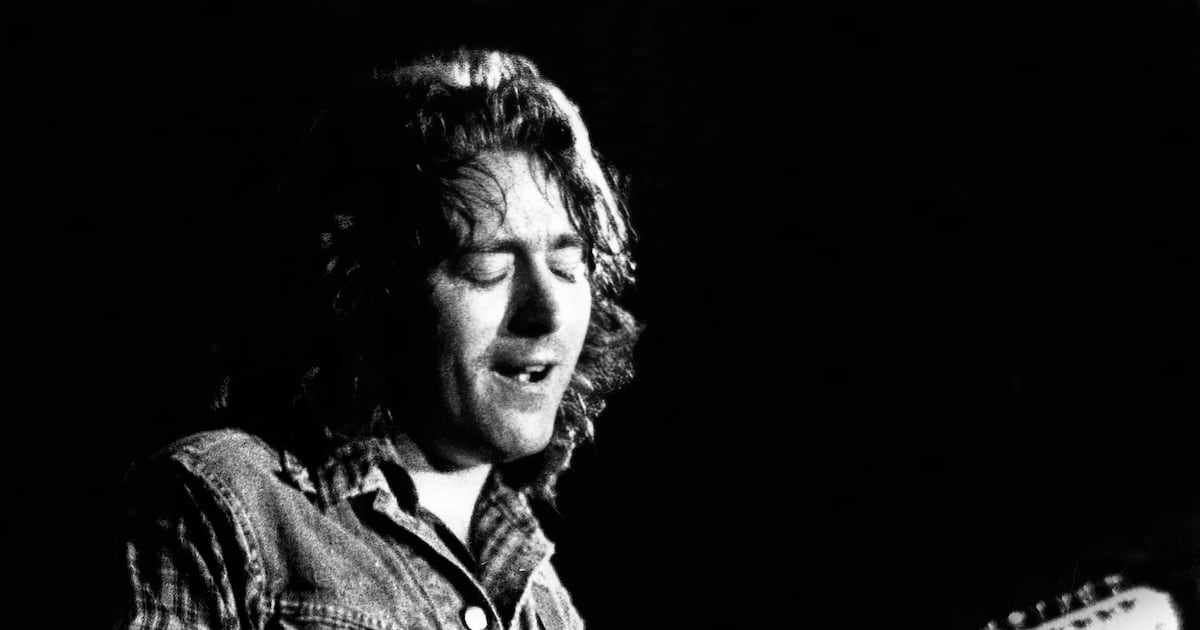
Eric Clapton, Stevie Ray Vaughan, Rory Gallagher: Garry Brandon is listing off some photographs stuck to the wall in front of him as he speaks from his rural New Zealand home.
The Dún Laoghaire native is not name-dropping but casually make a point about how these live music photos from his extensive archive have a jet black backgrounds while nowadays most stadium show photos have a vibrant video wall backdrop.
Brandon, who is semi-retired, moved three years ago from Auckland to Thames, a small coastal town. Having worked for four decades as press and event photographer, he has caught some of world’s biggest touring acts with his lens.
Despite having musicians such as Lady Gaga, David Bowie to Dizzee Rascal in his New Zealand portfolio, some of the most eye-popping acts are from the early 1970s and 1980s in Ireland. In the era before fans taking smartphone snaps would plague concerts, Brandon was starting out in the career that would become his life’s work and would often sneak his camera into gigs.
The images he took in these early Irish concerts include The Clash, Bo Diddley, Mick Jagger and a photograph of what turned out to be the last ever Thin Lizzy concert in Ireland. This experience got the guitar enthusiast “hooked”.
But photographing in the pre-digital era gave Brandon one of his most jawdropping misses, when a roll of film was expensive and he’d only have 24 or 36 chances to get a shot. In July 1980, Brandon and his friends went to see Bob Marley and the Wailers play in Dalymount Park. He only captured Marley’s image “the size of an ant” because he couldn’t get close to the front.
As a disappointed Brandon made his way home down O’Connell Street, Marley’s bus pulled up outside the Gresham Hotel. “Him and his whole band got out.” Brandon and friends got chatting to Marley and even “touched his dreads”. But Brandon “had no film left”. It was the reggae legend’s only Irish concert before his death the following year.
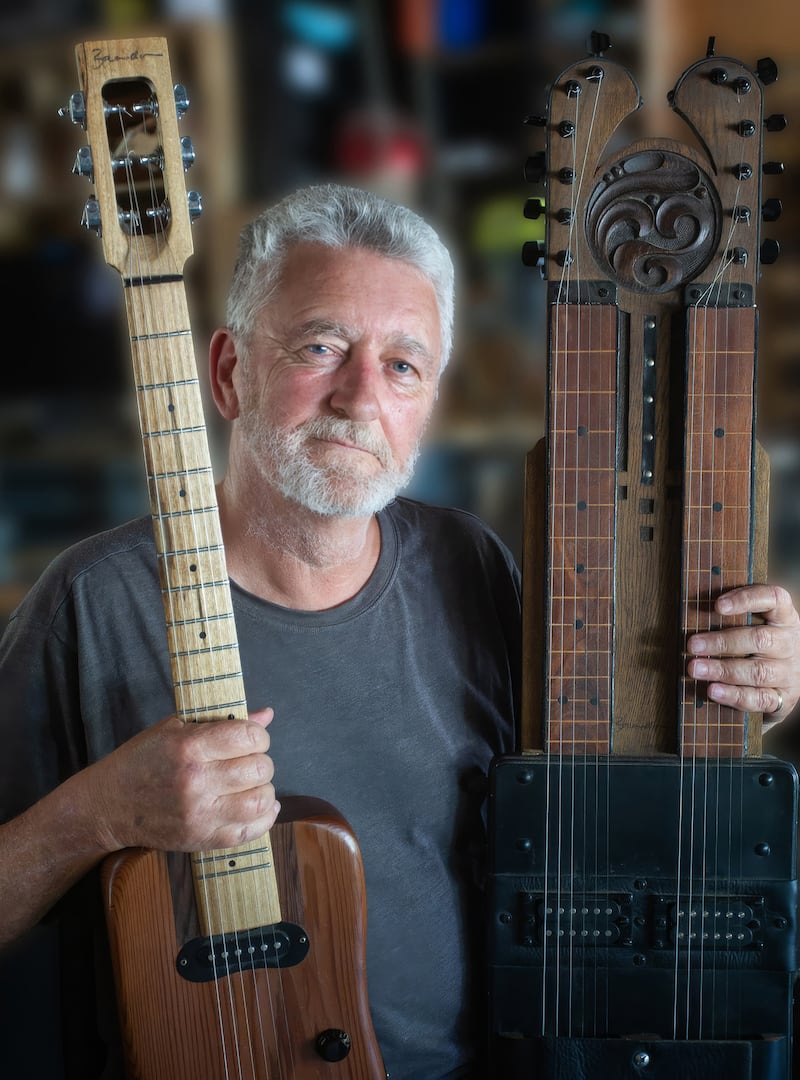 Garry Brandon with the guitars he makes with his son Josef
Brandon’s passion for music was sparked years earlier by a teacher at Oliver Plunkett Primary School in Monkstown Farm who organised Brandon and his friends into a band. After school he worked as a civil servant but he got into photography on the side. He comes from a family of 11, and he built a photography studio with his dad and brother at their home and began dabbling in some paid work.
[ Music: 84 gigs to catch, including The Cure, CMAT – and one with €690 ticketsOpens in new window ]
Brandon’s journey to New Zealand started when he met Denise, a Kiwi, now his wife, in The Purty Kitchen. “Ever supportive”, she was key to one of his first paid photography jobs, loaning him the money to buy a roll of film to shoot a fashion show in Dún Laoghaire Shopping Centre.
The couple moved to New Zealand where Brandon worked in a dark room, then “bluffed his way” into a newspaper and photographed for decades for one of the country’s largest newspaper groups.
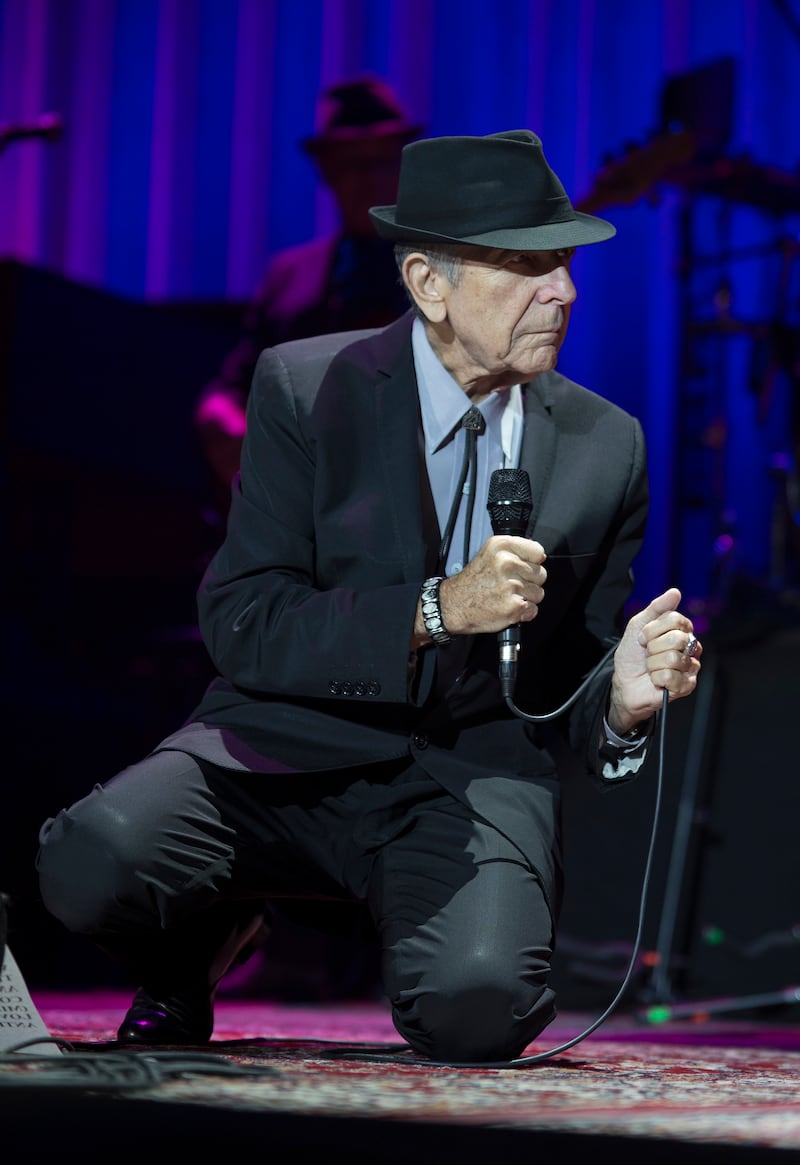 Leonard Cohen’s last ever show, Auckland 2013. Photograph: Garry Brandon
 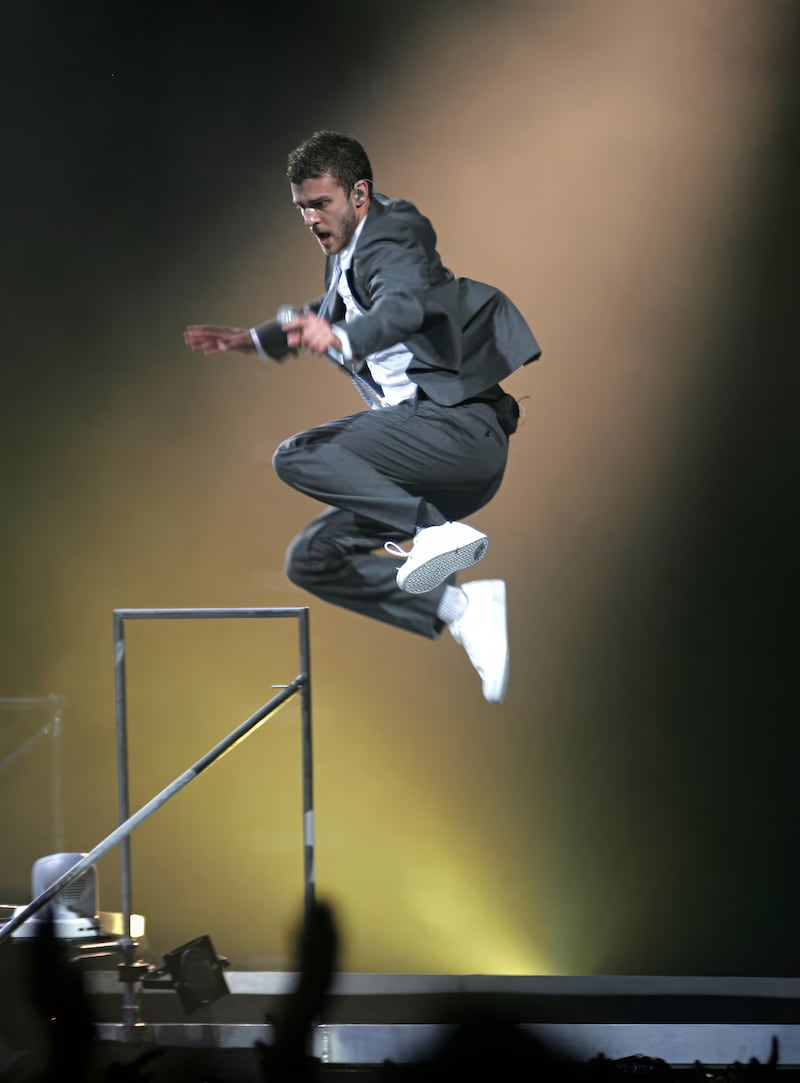 Justin Timberlake performs in Auckland. Photograph: Garry Brandon
 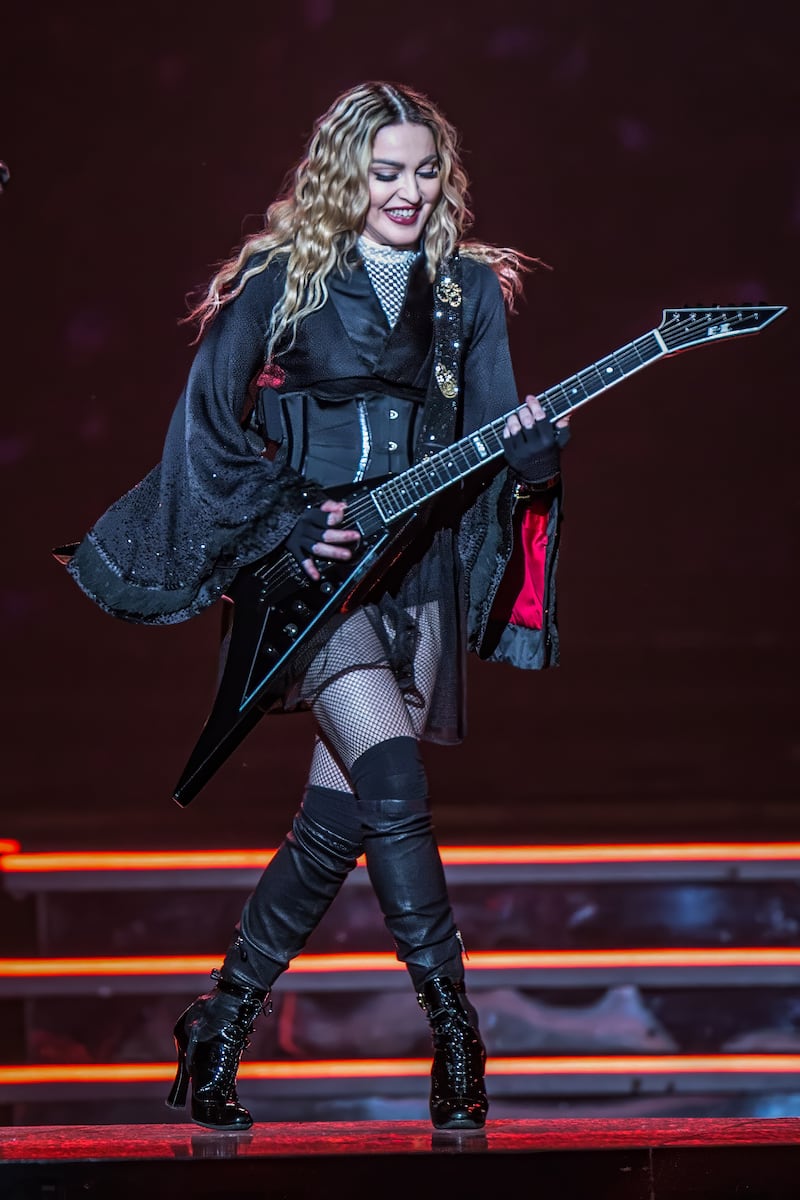 Madonna in Auckland, 2016. Photograph: Garry Brandon
Being Irish has been a “big benefit … As soon as people hear you’re Irish, they want to talk to you, they instantly like you”. Many Kiwis have Irish heritage, he says.
Brandon became house photographer at the Spark Arena, with a capacity of 12,000, for 15 years.
He has “never really been bothered about meeting” all the famous acts. The live photography “is what I’m really into”. Some work involved taking photographs of acts with fans as part of a package. “Especially with those meet-and-greets, I’m just paid to do a job. It doesn’t really bother me who it is.”
But much of that backstage experience gave him sharp insights into what many of the world’s biggest acts are really like, “when they’re talking to underlings, not just when they are on the TV looking lovely”.
“The biggest measure of a person is how they treat other people,” he says. He found that the “heavier the metal, the nicer the people” and they “really appreciate their fans”.
Céline Dion was one of the acts who impressed him the most when he worked with her for three days.
“I had never let Celine Dion occupy any space in my head,” he says of his diverging musical tastes with the Canadian singer. “But honestly, she was so nice to everyone. She’d go along the corridor, have a chat to the bouncer, talking to ordinary people.”
But he has noticed with some of the newer artists at meet-and-greets, “there is next to no interaction, no ‘thanks for coming to the show’ … It’s really weird”.
Brandon has been in a room taking photographs for “some people you’d know” and they will “ignore” him or talk to him through their management. “Some of them are not nice,” he says frankly.
He says the world of live music photography has changed. “They don’t need press photographers any more. The have 20,000 kids putting stuff on social media before they leave the venue.”
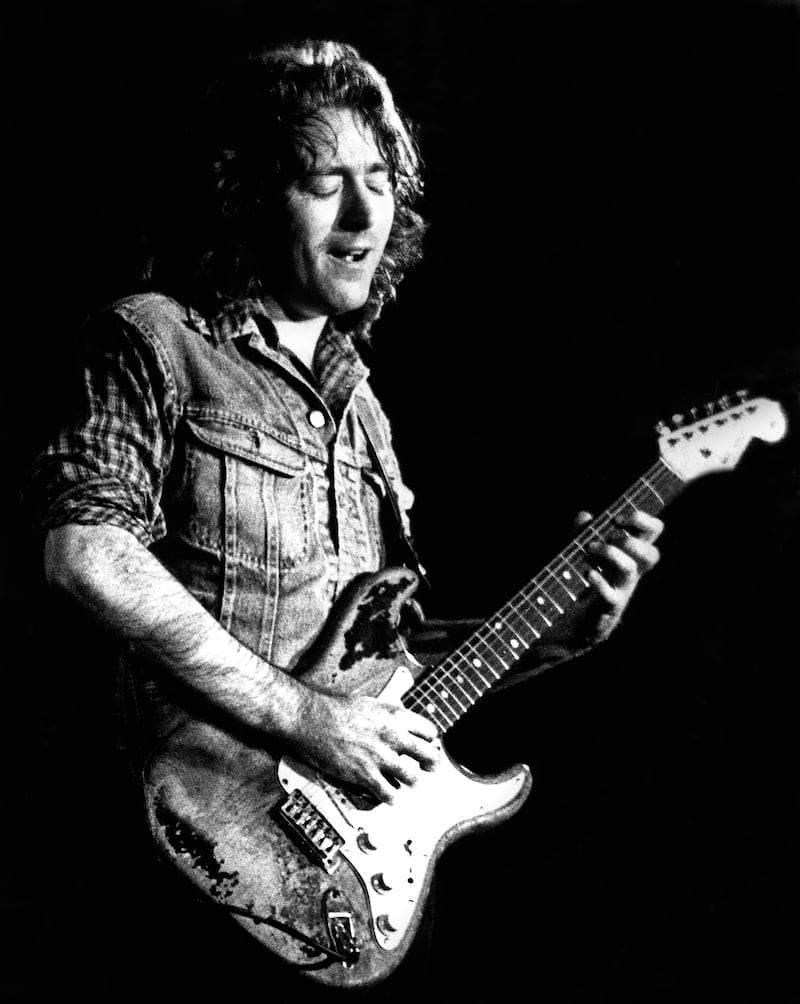 Rory Gallagher performs at Dublin’s SFX in 1982. Photograph: Garry Brandon
 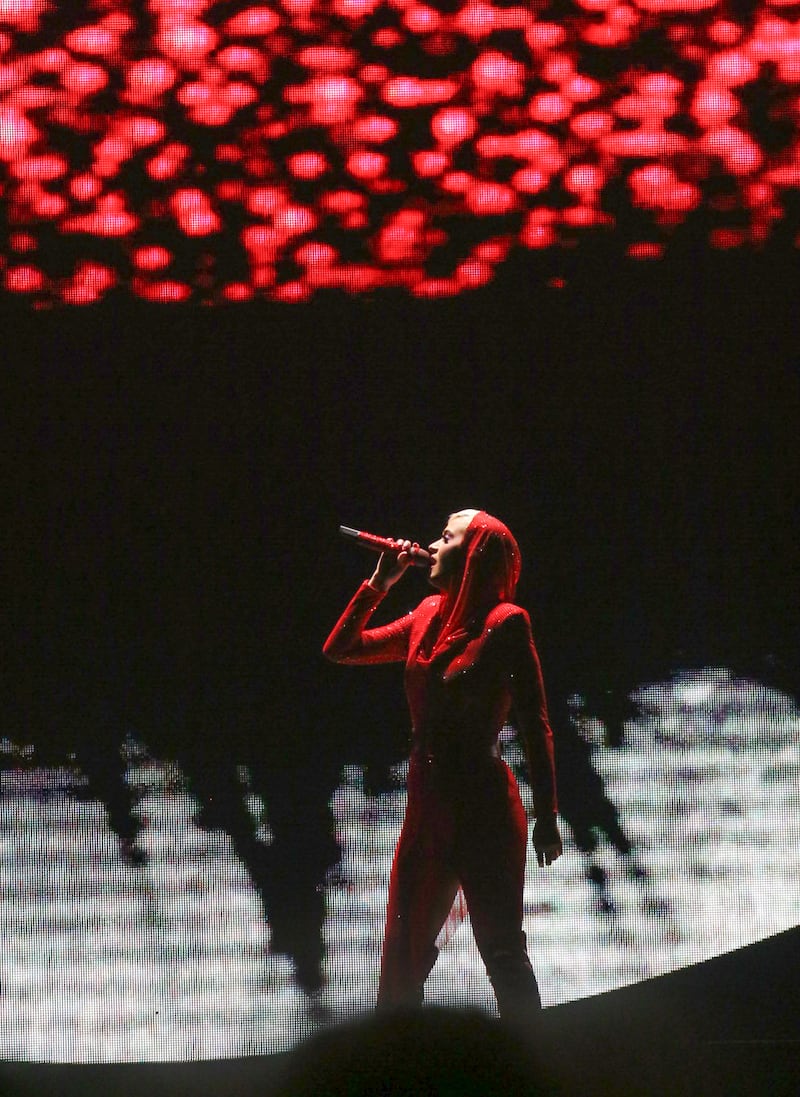 Katy Perry in Auckland, 2018. Photograph: Garry Brandon
Brandon left Auckland just as the Spark Arena was being take over by Live Nation and “things changed”.
It something he is “sorry he didn’t do years ago … I know three times more people here [than in Auckland] that I consider friends” he says, “It’s really friendly,” and, he adds, “the beer is only $6.50 [€3.20].”
New Zealand has a “similar feel” to Ireland and the people are laid back without any “airs and graces”, he says.
His three sons live in Auckland, just an hour away, and while they don’t see themselves as Irish they do feel a connection with their Irish cousins.
Hundreds of Brandon’s negatives are boxed in his attic, and he plans to pull them together into a book when not spending time making guitars.
And he has found another passion, as a music facilitator for people who have gone through mental trauma, helping them to play ukulele and sing. “I really like doing that,” he says.