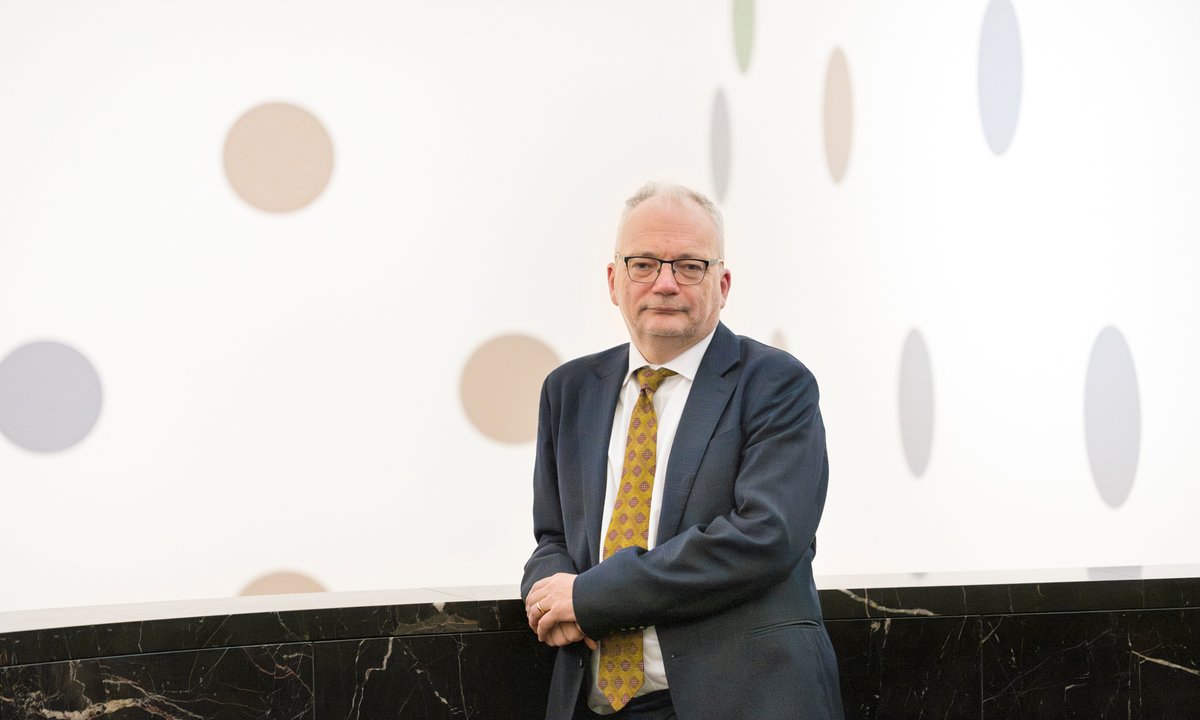
The National Gallery in London is planting its flag on 20th-century art with the announcement of Patrick Elliott as its new curator of Modern paintings. Elliott joins the National Gallery after 36 years at the National Galleries of Scotland in Edinburgh where he was the chief curator of Modern and contemporary art.
Elliott’s appointment is part of Project Domani—the expansion of the gallery’s collection into the 20th and 21st centuries. Last September, the London-based institution announced plans to raise a total of £750m for the development of a new wing to house such works. The new building is expected to open in the early 2030s on the site of St Vincent House to the north of the Sainsbury Wing.
The move signals the National Gallery’s intent to start collecting paintings from across the entire 20th century. Until now its cut-off date has been around 1900, although since the 1990s it has occasionally acquired early 20th-century works. Gabriele Finaldi, the National Gallery director, has said that the new acquisition strategy will be enacted in “collaboration” with Tate, which has long collected international art from around 1900.
“As part of his remit, Elliott will develop the collection of post-1900 painting through acquisitions, institutional exchanges—particularly with Tate—gifts and long-term loans,” a gallery statement says. He will take up the position at the end of March.
During his tenure at the National Galleries of Scotland, Elliott acquired works by artists such as Jenny Saville, Wangechi Mutu, Damien Hirst and Peter Doig. He also assisted with the acquisition of two major collections of Surrealist art in 1995 (the Keiller Bequest and the Penrose Collection purchase).
Elliott says in a statement: “I am very conscious of the need to collect the very best: modern paintings that can hold their own in a gallery full of Rembrandts and Titians. It’s an exciting challenge.”