Making your home fossil-fuel free is good for the planet, but is it good for your pocket? Lower heating bills, protection from oil and gas price spikes and a more valuable home are the financial upsides. With bigger grants just announced, how much will it cost to do the work and what’s the pay-off?
Having a fossil-fuel free home will be more achievable for middle-income households, the Government said as it announced more grant assistance for those looking to make their homes greener. New grants announced last week mean that, from this month, you can claim up to €12,500 to swap out a fossil-fuel heating system such as an oil or gas boiler, or a solid-fuel system, for a heat pump.
This would mean cheaper energy bills and a warmer home.
A €6,500 stand-alone heat pump grant was always available but you could only claim an extra €2,000 towards new radiators or underfloor heating, and a €2,000 “heat pump bonus” if you went the “one-stop-shop” route.
This meant committing to spending on a suite of other retrofit measures simultaneously – such as attic and wall insulation or window and door replacement – before you could unlock the full €10,500 in heat pump grants.
Attic, walls, windows, a heat pump, solar panels … going the one-stop-shop route to retrofitting your home to an A rating, for example, means spending about €40,000 of your own money after grants, according to Sustainable Energy Authority Ireland (SEAI) estimates presented to the Committee of Public Accounts (PAC) in 2023.
That’s a prohibitive expense for many middle-income households – the sort of criteria that makes good policy bad in practice.
Now, you can get a full €12,500 in heat pump grants, which includes a doubling of the “heat pump bonus” from €2,000 to €4000, without doing everything at once.
Houses built before 2007, however, will still need to achieve a specific energy rating before they can access the full heat pump grant – which could mean spending on attic and wall insulation first.
But at least you can now do the work in stages, at a potentially more affordable pace now, and still get the full grant money, unlocking €6,000 more than before.
If your home was built after 2007, there’s no need to prove your home’s building energy rating (Ber) to get the full grant.
Based on 2025 figures, the median cost for a heat pump and its installation – excluding any insulation works – in a detached or semidetached house would be €16,000 to €17,000 without grants, says Brian McIntyre, high-performance building technologies manager with the SEAI.
The new grant will reduce that cost to somewhere between €3,500 and €4,500, shortening the return on your investment.
The Government is hopeful the new grants will spur 70,000 householders to do energy upgrades this year, an increase of 12,000 on last year.
Reducing demand
When it comes to lower heating bills, there are two sides to the coin, and reducing your energy usage is always the first step, says McIntyre. “The more you insulate, the less energy you need to keep your house warm because you are losing less heat,” he says.
You do this by having a better insulated attic and walls, and doors and windows that are more air tight for example.
Grants for cavity wall insulation are now going up by €100 to a maximum of €1,800 for a detached house. Money for attic insulation is going up by €500 to a maximum of €2,000, or €2,500 for first-time buyers.
“By insulating, the heat is kept in your house for longer, so you don’t need to use more energy to top it up as regularly,” says McIntyre.
What’s also new is that from March 2nd, grants for new doors and windows, once only available through the one stop shop scheme, will also be available as stand-alone grants.
The grant amounts remain the same as before – €800 each for two doors and up to €4,000 maximum for replacing all your windows, based on your house type, says the SEAI.
But again you can only access the stand-alone door and window grants where your attic and wall insulation meets, or will meet a minimum standard – so you may have to spend there first.
And your house must have been built before 2011.
Those who fancy money off a new front door, but don’t give a hoot about insulation are out of luck.
Lower bills?
Once you’ve insulated and made things more airtight, you’re ready for a heat pump, which is the next step towards lower bills, says McIntyre.
Heating accounts for about 80 per cent of the energy used in our homes. We use about 60 per cent of the energy for space heating with the remaining 20 per cent for heating water, he says.
Anything you can do to reduce the amount of energy you use, or switch to a cheaper source of energy is going to save you money.
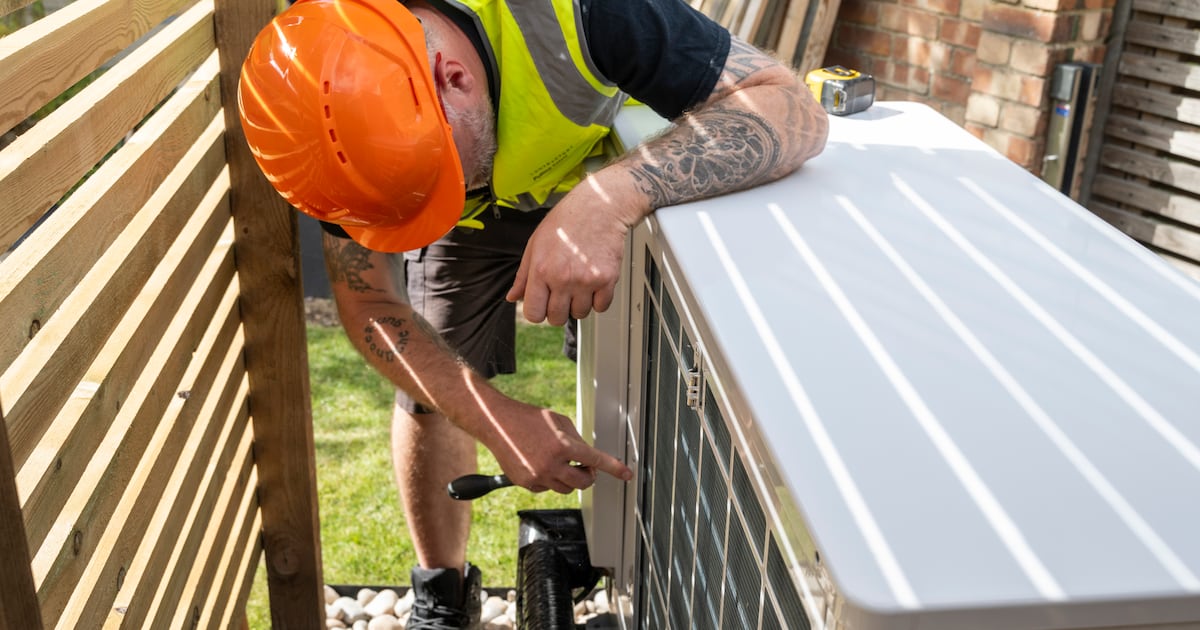
Air to water is the most common type of heat pump – basically a unit in your garden extracts heat from the outside air, compresses it to a high temperature and then uses that to heat water that circulates to your radiators or underfloor pipes to provide heating, and also provides hot water.
“Typically we would use a figure of about 300 per cent efficiency when we talk about a heat pump. So for every one unit of electricity you use, you get three units of heat out,” says McIntyre.
“When you compare that to top end oil or gas boilers, they would be 93 or 94 per cent efficient, so less than 100 per cent efficient. So a heat pump would be at least three times more efficient. It would use about a third of the energy.”
With solid fuel heating, using stoves or ranges, efficiency is lower again.
“At best you are getting 75 per cent efficiency, probably less,” he says.
If your gas boiler is more than 10 years old, a heat pump would seem a no-brainer. A boiler’s efficiency declines over time, he says. “You need more gas or more oil to generate the same amount of heat.
“You are kind of looking at an end of life situation in the next couple of years, so now is the time to start looking at something like a heat pump,” says McIntyre.
“Heat pumps require a lot less energy to run, so your need for electricity is much lower.”
By replacing your old oil or gas boiler with a heat pump, you’ll use less energy to heat your home, have a warmer home and a near endless supply of hot water. It means better air quality and lower emissions too.
It also means no more oil and gas bills, ever. Your energy usage can be reduced by up to 20 per cent by using a heat pump, according to the home retrofit report from AIB published in 2024.
The lifespan of a heat pump, if it’s running efficiently, is about 30 years, says McIntyre.
“But if you have higher levels of heat loss, you are losing more heat, you have to replace that heat more rapidly and that could put strain in your heat pump.”
Talk at a European level of not being able to buy a new gas or oil boiler after 2035 will also focus minds.
Fossil fuel free?
Should you care about how you heat your home? Using gas, oil or solid fuel to heat your home plays a role in climate change. Burning them releases stored carbon into the atmosphere in the form of greenhouse gases, which trap heat and increase global temperatures. We are already seeing increased storms and flooding.
Homes in Ireland are, after farming, the sector with the highest greenhouse gas emissions, according to CSO data from 2022. Some 41 per cent of household emissions in 2022 were directly attributed to fossil fuels used for heating.
Phasing out gas and oil home heating is one of the biggest steps the State can make towards lowering its emissions. Change that and households become part of the solution, not the problem.
In 2014, just 21 per cent of Ireland’s electricity came from renewable sources: in 2024 it was 41 per cent, says Brian McIntyre.
“The target for the next couple of years is to get 80 per cent of our electricity from renewables,” he says.
“The carbon content of our electricity is going down, and you are coupling that with the fact a heat pump uses a third of the energy of a boiler,” he says.
Fossil fuels impact our health, and our household finances too.
Households here pay “environment” taxes, consisting mainly of energy taxes on fuels and transport taxes, such as motor tax and vehicle registration tax. The bill for households amounted to about €2.4 billion in 2022, according to the CSO.
The flip side is the environmental subsidies aimed at households of which energy efficiency grants are the main ones.
In 2022, Irish households were the source of 23 per cent of greenhouse gas emissions, they paid 55 per cent of environment taxes and received 18 per cent of environmental subsidies, according to the CSO.
Oil used to be the most common type of fuel used for central heating in Ireland, but this is shifting. Some 99 per cent of audited homes built between 2020 and 2024 were given an A energy rating, as were 95 per cent of those built between 2015 and 2019.
But just 36 per cent of audited dwellings built between 2010 and 2014 were given an A rating, and only 4 per cent of those constructed between 2005 and 2009.
The Government will be hoping its new grants tempt those in older homes to make the switch.