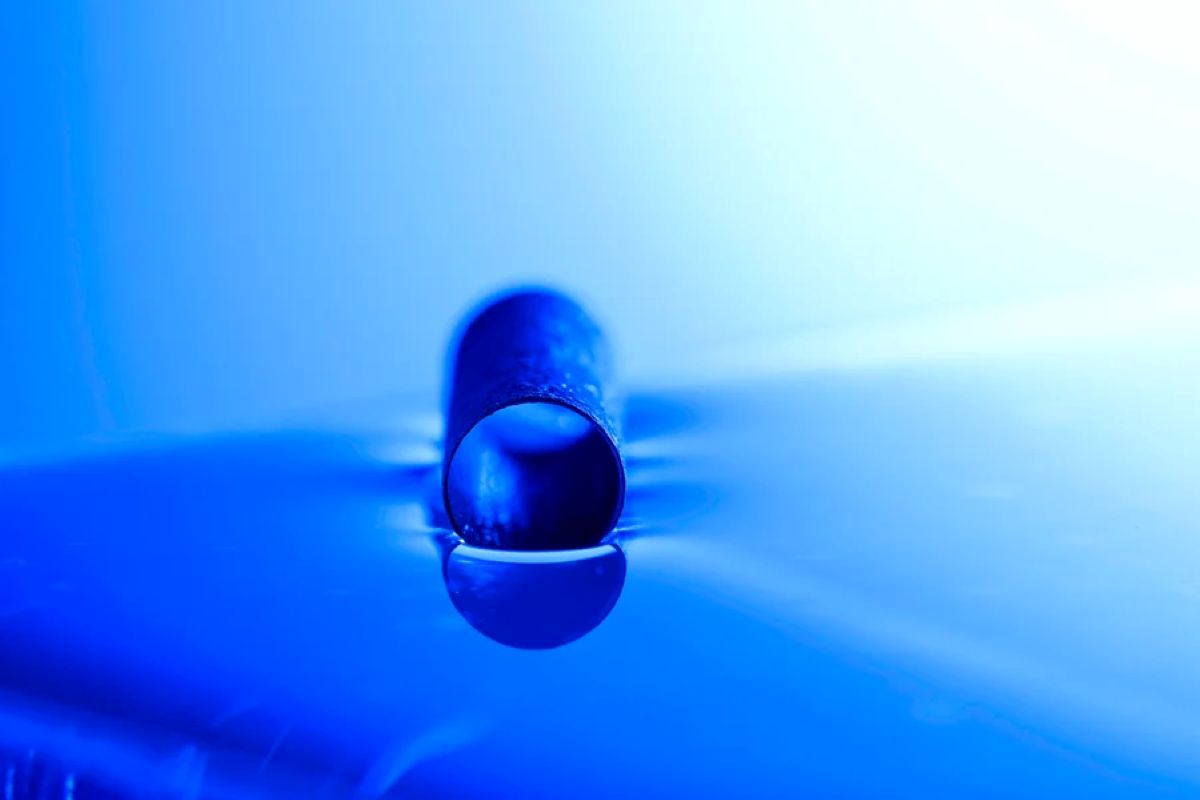
 “Unsinkable” metal tube damaged with holes floats in distilled water at the lab of University of Rochester. Credit: J. Adam Fenster/University of Rochester
Metal structures usually have one simple rule: stay sealed or start sinking. Once water breaches the barrier, it’s game over. But a team of researchers in upstate New York is proving that this age-old assumption is officially dead in the water.
A team at the University of Rochester has built a small, counterintuitive miracle: an ordinary-looking aluminum tube that refuses to stay submerged. You can shove it underwater, tilt it at impossible angles, or even riddle it with holes—it still bobs back to the surface. The secret isn’t a magic alloy; it’s air trapped by a surface that absolutely loathes water.
The Spiders’ Secret
Nature figured this one out long ago. Take the diving bell spider. It spends its life underwater by trapping a bubble of oxygen against its body using tiny, water-repelling hairs. Fire ants do something similar, linking their bodies to form living rafts that survive floods by capturing air between their legs.
Researchers started from these abilities, but tweaked the material. They focused on metal engineered to behave like a water-repelling biological surface; but they also made sure the metal can take a beating. In practice, this means laser-made pits and ridges too small to see without powerful microscopes. The team etched grooves that trap air and keep water from spreading along the surface.

Once water meets that micro-textured surface, it tends to bead up and recoil. Surface tension helps keep the boundary between water and air intact, so the bubble persists. The tube keeps its internal pocket of air, and the air keeps providing buoyancy.
“We tested them in some really rough environments for weeks at a time and found no degradation to their buoyancy,” said Chunlei Guo, the senior author, in a statement. “You can poke big holes in them, and we showed that even if you severely damage the tubes with as many holes as you can punch, they still float.”
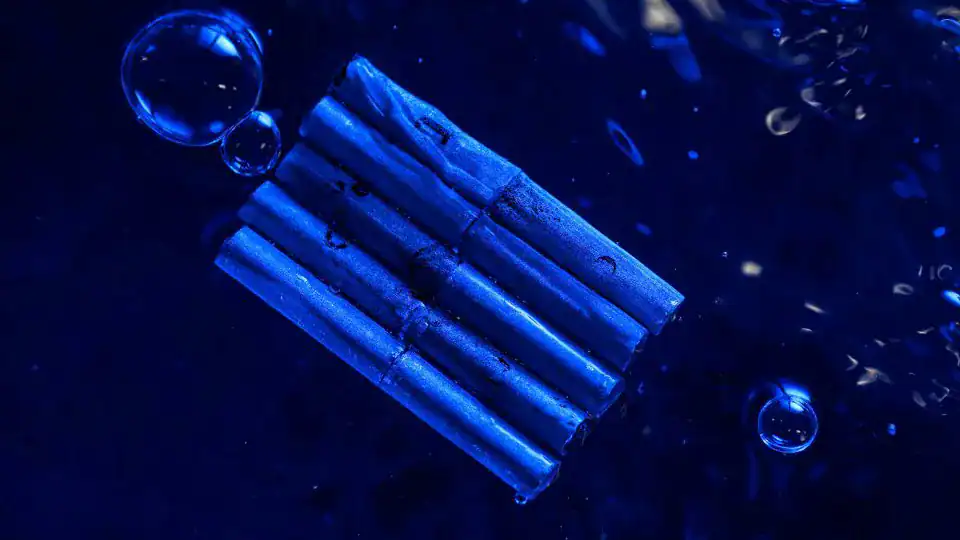 Multiple unsinkable metal tubes linked together in a raft formation could be the basis for the ships, buoys, and floating platforms of the future. Credit: J. Adam Fenster/University of Rochester
While “unsinkable” is a heavy word in a post-Titanic world, these structures are remarkably durable. They survived weeks of turbulent water and heavy impacts without losing their ability to bob back up. The new metal tubes continue to float after heavy impacts, prolonged turbulence, and extensive structural damage.
The Rochester tubes are meant to be a building block, not a ready-made ship hull. You build several of them together and link them into larger structures. The team has already shown that multiple tubes can be bound into raft-like assemblies.
×
Thank you! One more thing…
Please check your inbox and confirm your subscription.
The new study builds on an earlier design from Guo’s lab: sealed, laser-etched disks that floated thanks to superhydrophobic surfaces. But turbulent water could flip the disks into orientations that let air escape. The tubes solve that with an internal divider that helps keep the air pocket confined even when the tube is pushed downward.
The design may also have uses for energy purposes. The researchers showed that rafts made from the tubes could be paired with simple generators to convert the motion of water into electricity. As waves or tides move the floating structure, that motion can be used to produce power.
For now, the tubes have been tested only in laboratory settings. An open question is whether their air-trapping surfaces would remain effective in real marine conditions, where salt, organic growth, abrasion, and long-term wear could interfere with performance.
The study was published in the journal Advanced Functional Materials.