The subject line of an email from my teenage daughter’s school on Monday afternoon caught my attention: “Student safety in the local area.”
The missive warned that over the past week “there have been several reported incidents of mugging or attempted mugging involving our students” near the local Tube station. They were mostly phone snatchings, a notoriously endemic crime in London.
“All students involved are safe, but these incidents are naturally concerning and can cause a lot of distress,” said the head teacher.
“If approached by someone attempting to steal a phone or item, they should not resist. Objects can be replaced; their safety is the priority.”
Our neighbourhood in London isn’t especially salubrious, but nor is it a hellhole. It is gentrified and settled. Yet this was the third such warning from the school in 18 months. A previous email described a spate of “brazen” early-morning muggings.
For addled parents, it adds to the perception – real or imagined – that London is a crime hotspot. A politically charged debate over this issue rages in Britain.
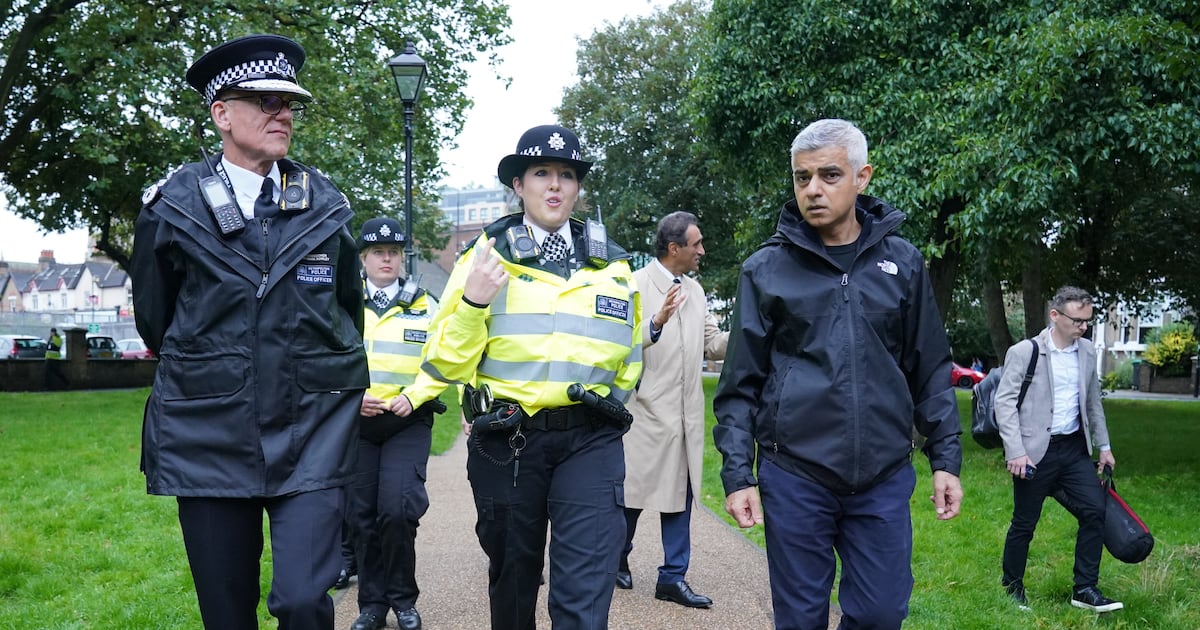
Labour’s London mayor, Sadiq Khan, has launched a fightback over recent months against claims by populist right-wing figures online that crime is out of control.
He stepped up the effort in November when US president Donald Trump – an enemy of Khan’s – told reporters that everybody in London risks being “stabbed in the ass”. Whenever crime statistics are mentioned, populist figures usually rename the city “Sadiq Khan’s Lawless London”. But is it really?
Worries over teenager-targeting phone snatchers aside, my personal experience of London has, thankfully, been rather tame so far. I haven’t been mugged yet or beaten up, although Sod’s Law suggests I have probably now tempted fate on both counts.
I was once cornered by a homeless man at Victoria Station, but he was easy to evade. I saw a vicious mugging on a train platform in east London, but they left me alone. In our borough, it is true, there have been a few shootings and murders and whatnot, but that is a fact of life in any big city of global standing.
The Tube feels safe. My immediate locale is as quiet as a country village. My most frequent workplace – the Palace of Westminster – is protected by a phalanx of officers toting hardware straight out of Call of Duty. It’s one of the safest places in Britain.
This is, of course, evidence of good fortune. London becomes a crime hellhole the day it lands at your door.
The Daily Mail, that great bastion of understatement, declared London this week to be the “Capital of Crime”.
The story was based on footage of a Richmond jewellery shop having its windows smashed in with a sledgehammer in broad daylight last Saturday. A day earlier, thieves smashed up a jewellers in Shepherd’s Bush. A week before that, thieves raided a luxury handbags store on Bond Street.
As part of its long campaign to win control of the mayor’s office from Labour, Nigel Farage’s Reform UK plays up the hellhole narrative. He says London is “in a state of collapse”.
Laila Cunningham, Reform’s mayoral candidate, told the “anti-woke” Triggernometry podcast last week that “every crime metric is through the roof”. She told the Daily Express that London is “no longer a safe city”.
That position is broadly held by most Britons. A YouGov poll from November found that 61 per cent of people felt London was unsafe, up from 53 per cent in 2014. Yet barely a third of Londoners agree – 63 per cent of the city’s residents said it was safe.
What do the statistics say? The short answer is: whatever your side wants them to.
Both sides slice and dice information from three sources: official figures from city authorities, crime data from the Office of National Statistics, and the Crime Survey for England and Wales, which is based on qualitative interviews.
Farage dismisses the latter, probably because it suggests violent crimes are decreasing.
Khan and London’s Metropolitan Police say the murder rate is the “lowest since records began”, which actually means since the data was first collated in its current format in 2014. But objectively, there are fewer murders in London than in Paris or New York.
Reform cites data showing incidents of knife crime up 68 per cent over a decade. Khan and the Met say this doesn’t take into account London’s population growth. They say knife crime per capita was down 12 per cent last January to August. Hospitalisations from stabbings are down 29 per cent over five years.
Sex crimes are up, but this may be due to less inhibition around reporting. Everybody agrees, however, that burglary and shoplifting are still serious problems. I’ve seen shoplifters walking off with everything from steaks from Sainsburys to hair tongs from Boots.
Then there are the phone snatchings. Everybody knows that when you take out your smartphone in London, you grip it for dear life while keeping an eye out for snooded young men dressed all in black on electric bikes.
My daughter’s school has started putting teachers on sentry at the Tube station in the mornings.
The debate continues.