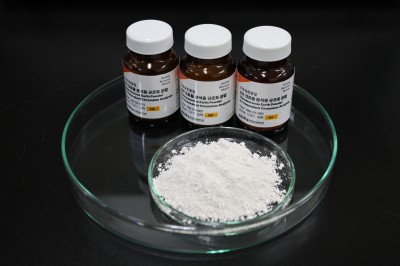
Newswise — A team of Korean researchers has developed a reference material that significantly improves the accuracy of analyzing hexavalent chromium, a Group 1 carcinogen that can be present in groundwater and soil.
The Korea Research Institute of Standards and Science (KRISS, President Lee Ho Seong) has collaborated with the Pohang Accelerator Laboratory (PAL, Acting Director Park Jaehun) to develop a diatomite-based Certified Reference Material (CRM) that enables accurate measurement of hexavalent chromium concentrations in environmental samples. This CRM is the first in the world to apply synchrotron-based X-ray absorption spectroscopy (XAS) to analyze hexavalent chromium in environmental samples without the need for sample pre-treatment, a key innovation that ensures accurate measurements and eliminates species transformation that could otherwise lead to biased results. The new CRM is expected to enhance the accuracy and reliability of hazardous substance testing by providing an objective benchmark for evaluating and calibrating measurement results produced by environmental analysis laboratories.
Hexavalent chromium, due to its strong toxicity and oxidizing properties, is classified as a Group 1 carcinogen by the International Agency for Research on Cancer (IARC) under the World Health Organization (WHO). It can be found not only at industrial facilities but also in everyday environments, such as drinking groundwater and sand in public playgrounds. Accordingly, Korea strictly regulates and monitors the presence of hexavalent chromium in groundwater, soil, and living environments under its environmental management laws.
However, despite variations in measurement results among environmental testing laboratories, there has been no adequately standardized reference to objectively verify and calibrate hexavalent chromium analyses, limiting improvements in the accuracy and consistency of test results.
A research team led by Dr. Cho Hana of the Inorganic Metrology Group at KRISS collaborated with a team led by Dr. Choi Sun Hee of the PLS-II 7D beamline at PAL to successfully develop a diatomaceous earth (diatomite) powder CRM for hexavalent chromium analysis. This CRM serves as a reference material used to verify the accuracy of measurement results and analytical methods—often likened to an answer key for analytical testing. By using a CRM, analytical laboratories can independently validate the performance of their measurement instruments and the validity of their analytical procedures, thereby ensuring the reliability of measurement data.
The development of a CRM for hexavalent chromium analysis has long been challenging due to species transformation that occurs during the measurement process, making accurate quantification fundamentally difficult. Conventional wet analysis methods require solid samples to be dissolved during a pretreatment step, during which hexavalent chromium can be converted to other oxidation states or measured at concentrations lower than their true values.
KRISS addressed this challenge by becoming the first in the world to apply XAS to the development of an environmental CRM for hexavalent chromium analysis. Using synchrotron radiation that is hundreds of millions of times brighter than sunlight, the joint research team successfully captured the characteristic energy absorption signals of hexavalent chromium without destroying the sample. This approach fundamentally eliminated systematic errors arising from pretreatment processes and enabled correction of even subtle measurement biases in the data. Similar to MRI, the newly adopted non-destructive analytical method secured both the accuracy and reliability required for CRM development.
This CRM is expected to improve the accuracy, traceability, and reliability of groundwater and soil contamination monitoring, providing a stronger foundation for the credibility of national environmental policies. It is also anticipated to enhance the analytical reliability and competitiveness of Korean export-oriented companies that must comply with global environmental regulations, including the European Union’s Restriction of Hazardous Substances (RoHS) directive.
Dr. Heo Sung Woo, Head of the Inorganic Metrology Group at KRISS, said the joint research represents a novel application of synchrotron-based techniques to research on measurement standards, overcoming the limitations of conventional analytical methods. He added that the newly developed CRM, with its accuracy and reliability ensured through the new approach, is expected to become an essential reference for environmental analysis.
The newly developed CRM is available for purchase through KRISS Measurement Standards Services, the institute’s official platform for certified reference materials (https://eshop.kriss.re.kr).