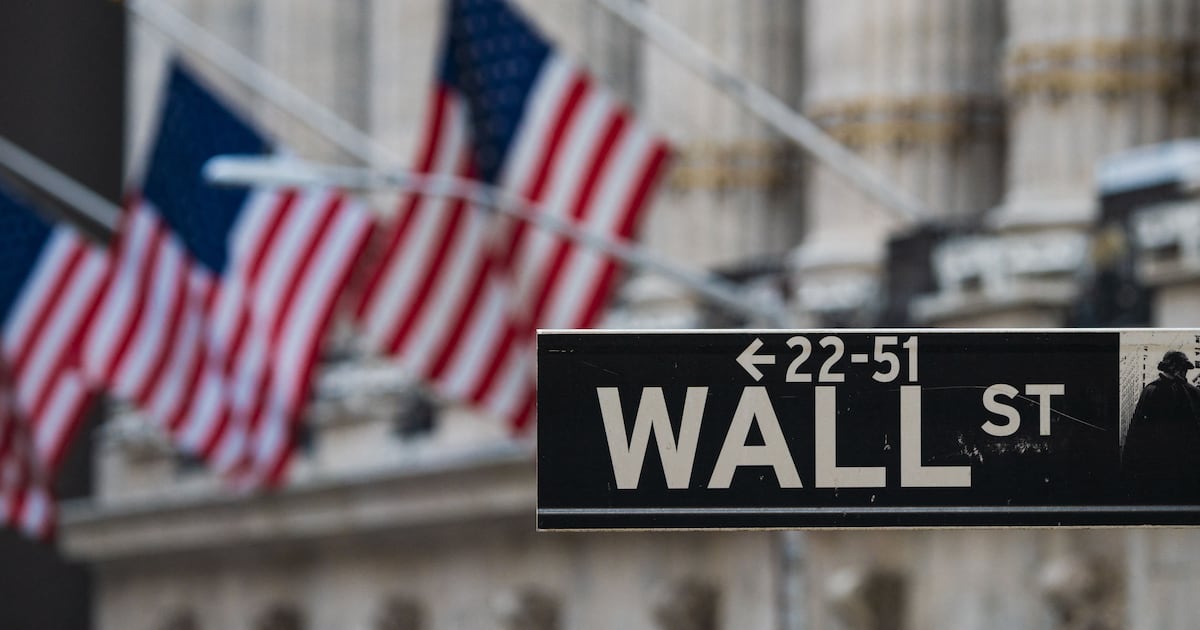
Minutes before Donald Trump signalled a pause last Monday on strikes against Iranian power plants, Wall Street had already moved ahead of him, by more than half a billion dollars.
About 15 minutes before Trump’s post on Truth Social, roughly $580 million (€503 million) in oil futures were traded in a sudden spike of volume, while S&P 500 futures also jumped sharply, prompting speculation about unusually well-timed bets.
Coincidence, or a tip from someone in the know? That remains to be seen, but the episode is not an isolated one.
Prediction markets have seen very profitable bets on an imminent US strike on Iran just before the war began; on the capture of Venezuelan president Nicolás Maduro immediately before the event; and on long-shot picks for top US cabinet roles hours before announcements.
There have also been reports of suspicious call-option trading preceding last April’s White House tariff reversal.
Before drawing firm conclusions here, two points are worth noting. First, insider policy information has probably always seeped into market prices on occasion, something observed not just today but across past US administrations.
Second, the issue is not confined to politics or markets: bets on everything from Google’s search rankings to Taylor Swift announcements indicate that well-timed wagering is a modern, widespread challenge.
Still, today’s political environment looks especially concerning. The Trump Action Tracker, run by University College London’s Prof Christina Pagel, lists 2,816 actions under the second Trump administration, 188 of them classified as “corruption and enrichment”, reflecting a broader weakening of ethical guardrails and erosion of oversight mechanisms.
Even if no rules were breached this time, the broader context of eroded oversight and norms makes such episodes harder to dismiss as mere coincidence.