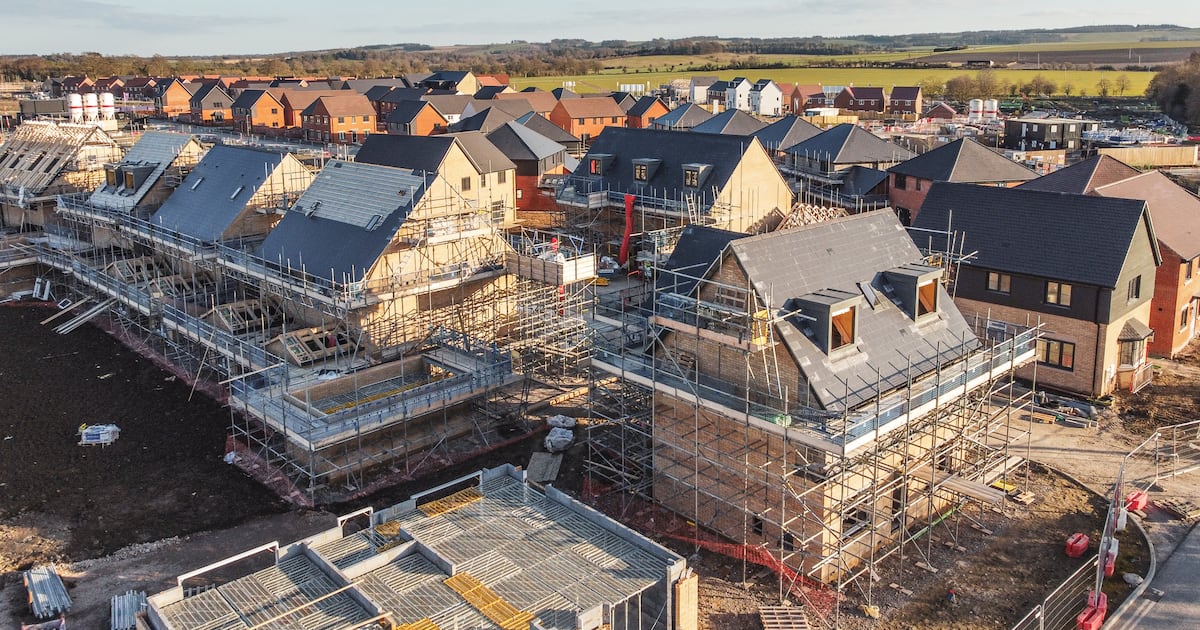
Housing remains the main economic concern for tens of thousands of aspiring homeowners, with every nugget of information analysed for insight into future prospects.
Right now, there are several possible trends that could dampen house prices in the coming months.
These include higher interest rates on the back of the current energy price shock; the ongoing price squeeze that has many households put to the pin of their collective collars; and geopolitical uncertainty which can deter prospective buyers.
These potential negatives are, of course, being offset by ongoing supply shortages and strong demand, particularly in the starter home segment of the market, which is dominated by first-time buyers armed with Government supports.
But this could change.
The latest official barometer from the Central Statistics Office put the annual rate of growth at 6.5 per cent in March, down from 6.7 per cent the previous month, and the lowest since February. The rate of price growth in Dublin was 5.7 per cent.
A prolonged energy price shock could result in another sequence of interest rate hikes. Markets are already pricing in two or three quarter point increases by the European Central Bank this year, potentially starting next month.
The elevated level of inflation here is – in part at least – a reflection of higher mortgage interest rates and rents.
[ Irish house price growth slows to lowest rate in more than two yearsOpens in new window ]
On where house prices go from here, Sherry FitzGerald’s Marian Finnegan said it was a “hard one to call” and that the trends were “definitely very location specific”.
“Dublin has eased off but [is] still quite robust at starter to mid-range prices,” she said while noting that regional Ireland was still quite strong.
Regardless of where prices go, supply does seem to be on an upward trajectory, if not fast enough to accommodate demand in the short to medium term.
AIB forecasts that new home completions will rise to 39,000 this year – from just under 36,300 last year – and to 41,000 and 45,000 in 2027 and 2028 “underpinned by a sustained uplift in the apartments category”.
Delivery on key infrastructure in relation to water, sewerage and energy will be crucial, it says.
Increased supply should also – in theory – dampen price growth.