
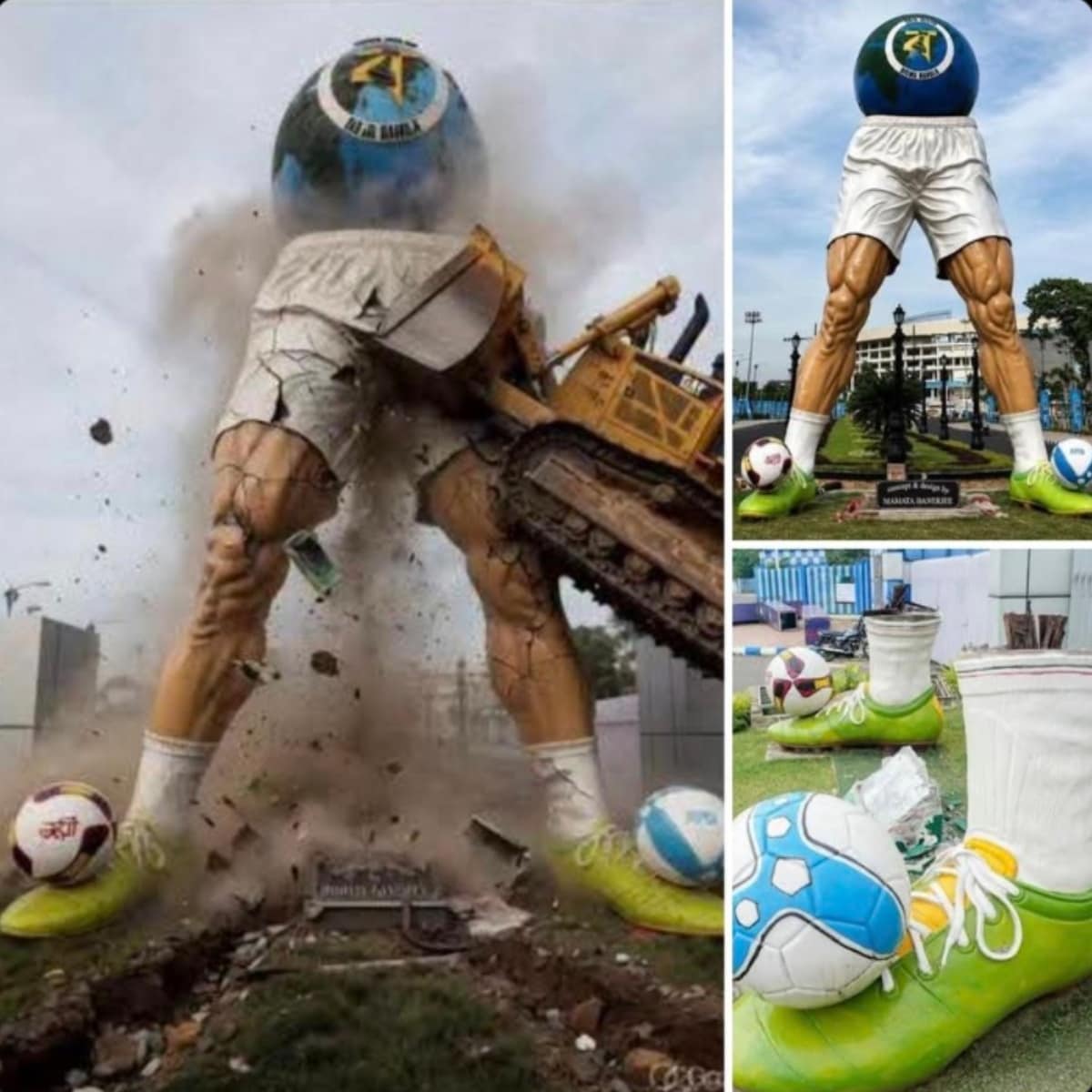
One of the most recognisable landmarks outside Kolkata’s Salt Lake Stadium underwent a dramatic transformation overnight after authorities partially dismantled the giant football-themed installation that had stood at the venue for years. The structure, originally conceived during the tenure of former West Bengal chief minister Mamata Banerjee, was taken apart between late Saturday night and early Sunday following the state government’s decision to replace it with what officials described as a “more artistic” design. The move marks another visible change in the appearance of the stadium complex and has sparked mixed reactions among football fans, residents and political observers. (Twitter/@tvsikkim)
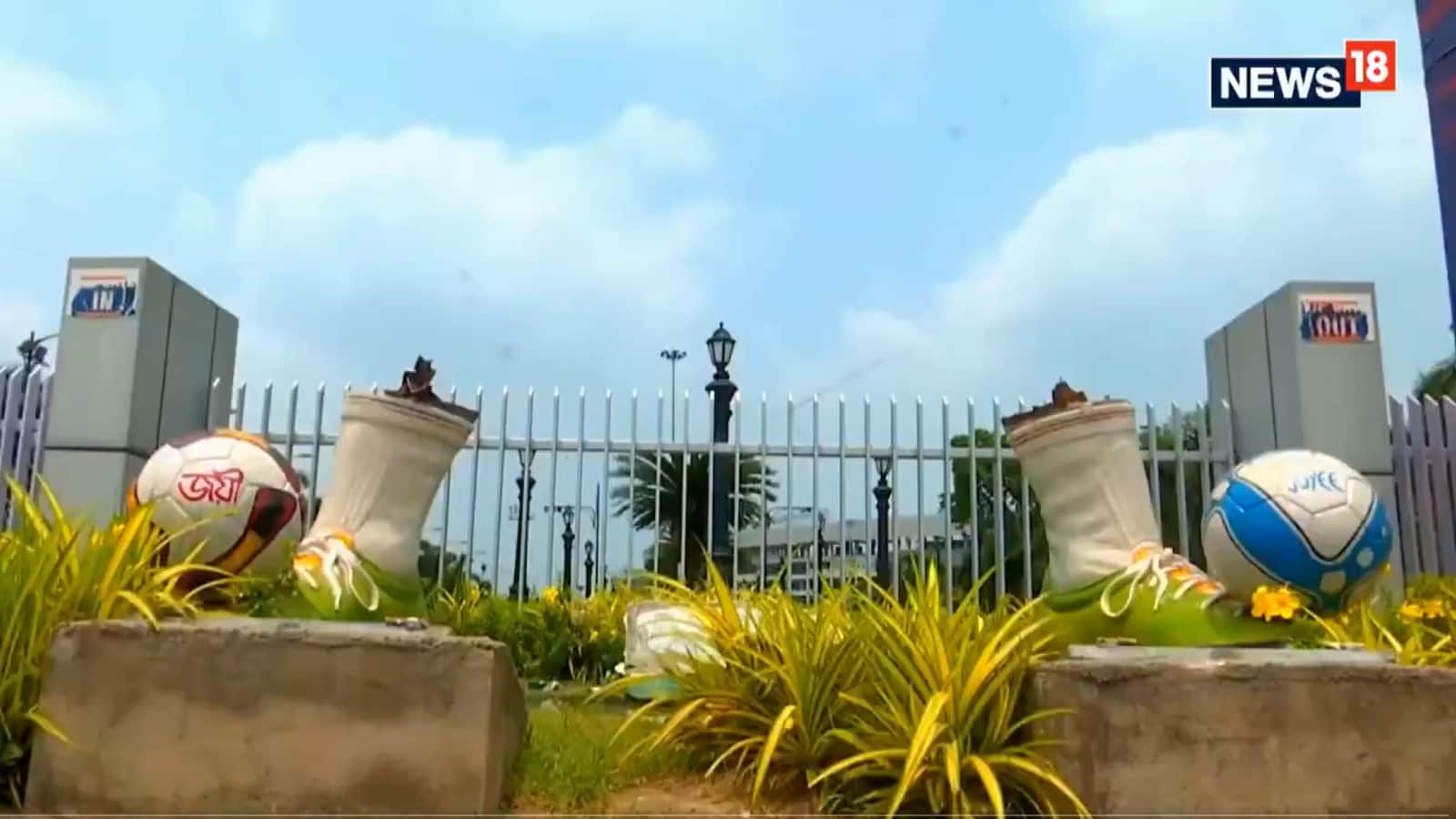
Workers entered the Vivekananda Yuba Bharati Krirangan premises shortly after midnight under directions from state sports and youth affairs minister Nisith Pramanik. The dismantling process continued through the night, although officials indicated that the entire structure could not be removed in a single operation. During the exercise, crews removed the upper section of the installation, including the globe carrying the Biswa Bangla emblem and the portion extending above the footballers’ socks. By Sunday morning, only the lower half, consisting of oversized boots, socks and footballs attached to the base, remained at the site. Authorities said the remaining portions anchored to the concrete foundation would also be cleared in the coming days.
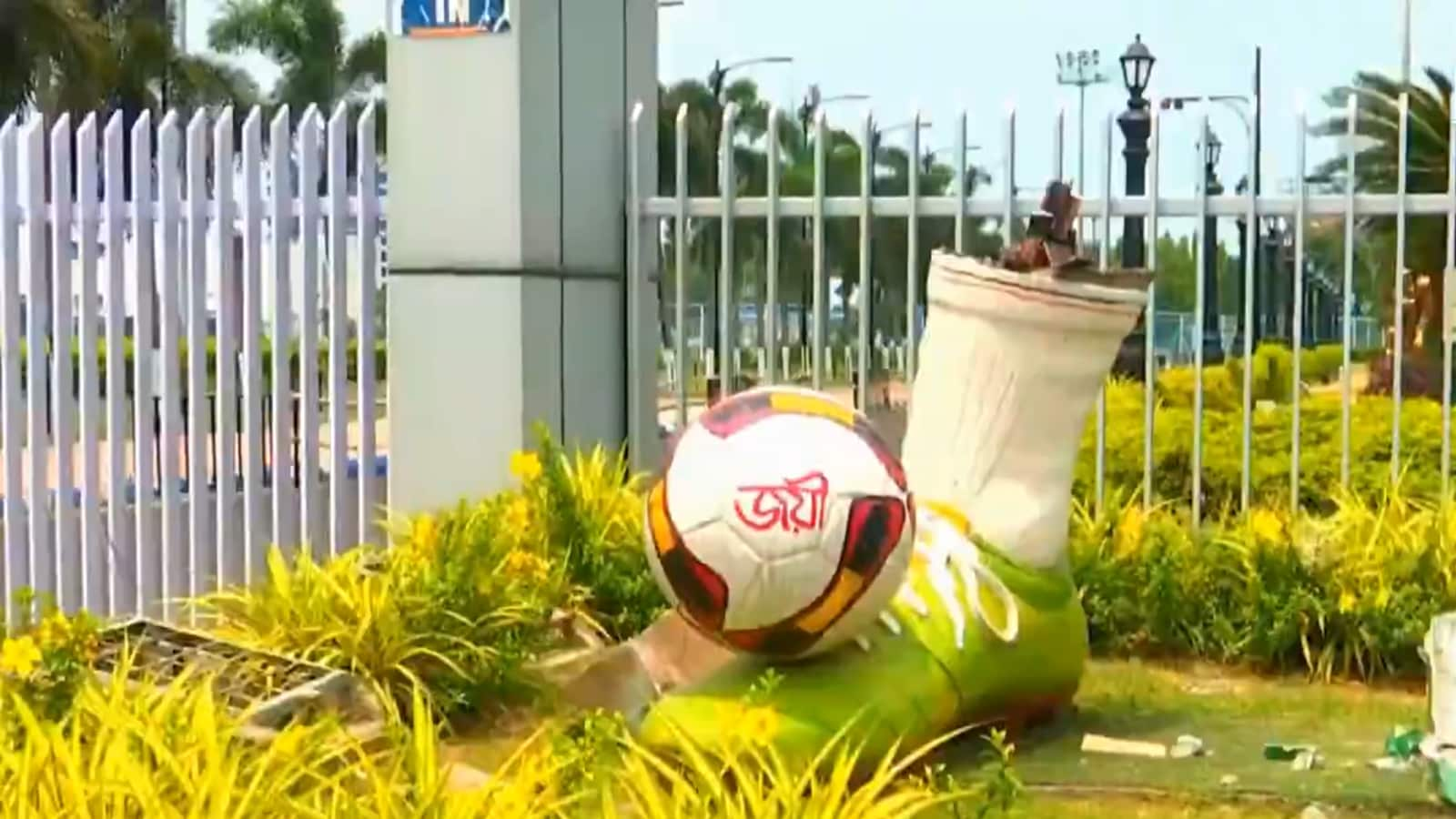
The installation was erected near the VVIP entrance ahead of the 2017 FIFA U-17 World Cup and quickly became a prominent visual feature outside the stadium. Designed around a pair of giant footballers’ legs supporting a globe instead of a torso, the structure also carried the word ‘Joyee’ on the football. Over the years, it became closely associated with the stadium experience for supporters attending matches, although its unconventional appearance often divided public opinion.

The overnight demolition extended to elements surrounding the installation as well. A plaque fixed near the base, which credited Mamata Banerjee with conceptualising and designing the structure, was also removed during the operation. Workers reportedly used hammers to break apart the plaque before taking it away. The Biswa Bangla lettering attached to the installation was uprooted too and was later seen lying beside the road outside the stadium.

The demolition followed repeated criticism of the sculpture by sports minister Nisith Pramanik, who argued that the installation did not align with Bengal’s artistic identity. Speaking earlier in the week, the minister described the structure as visually unappealing and said the government intended to replace it with something more meaningful and aesthetically appropriate. The issue gained attention after comments made by Pramanik following the Indian Super League derby between Mohun Bagan Super Giant and East Bengal FC on May 18, which ended in a 1-1 draw. At the time, the minister questioned the symbolism of the installation and suggested that a statue honouring a renowned football personality could eventually take its place.

The removal of the sculpture comes amid broader changes taking place across the stadium complex. Just before the Kolkata derby, Biswa Bangla logos displayed at several locations around the venue, including the main entrance and all six gates, were replaced with the National Emblem featuring the Ashok Stambha. The latest developments are being viewed as part of a wider effort to reshape the visual identity of the stadium under the new administration.
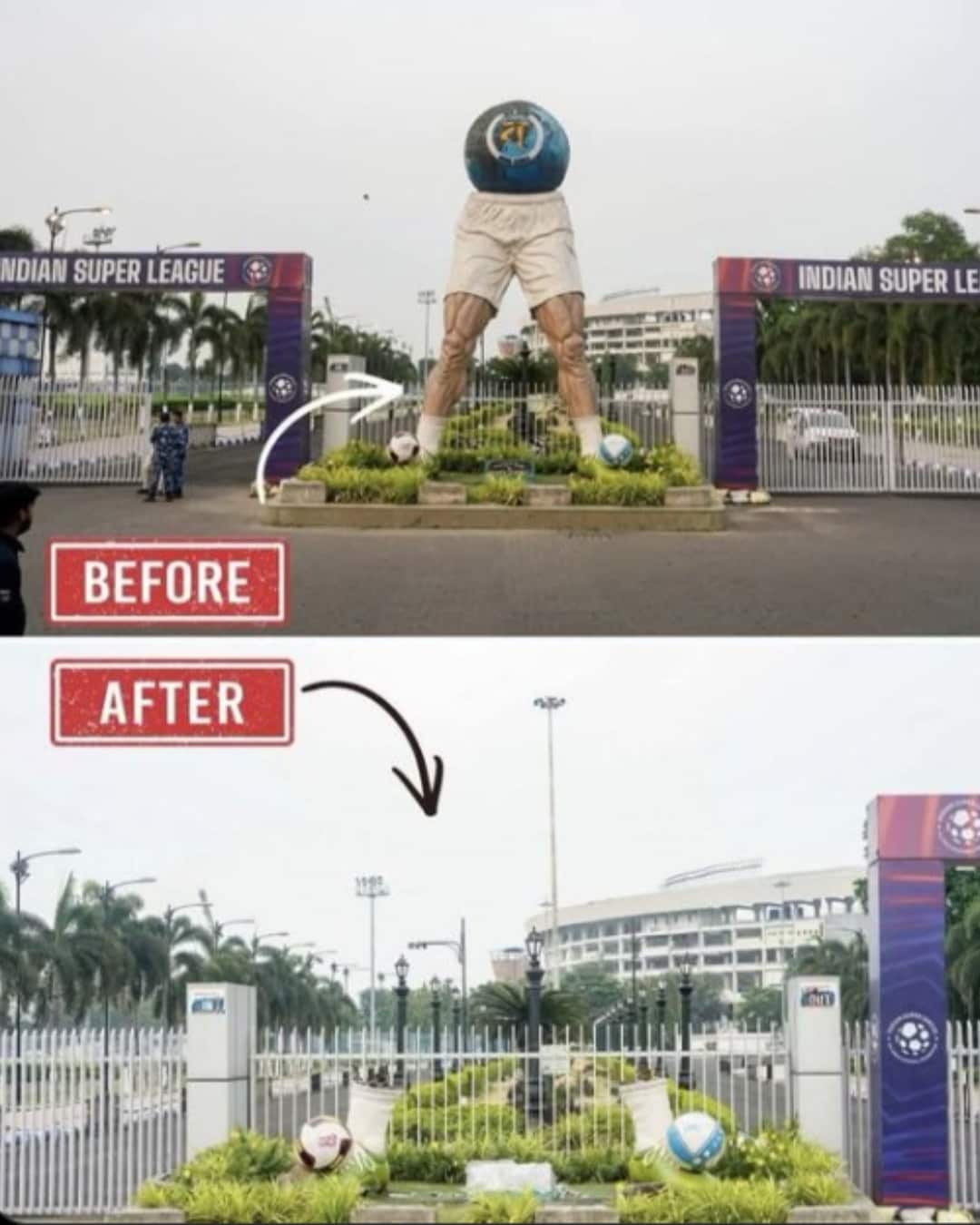
Public reaction to the demolition has remained divided. According to a report in The Times Of India, some residents welcomed the move, saying the installation had long appeared awkward and visually out of place. Others argued that, despite its unusual design, it had evolved into a distinctive symbol of the city’s football culture. One of the residents supported the removal, remarking that many people considered the structure an eyesore. Referring to the remaining boots left at the site, he joked about whether another football legend would eventually “fill those shoes”. He also said the National Emblem appeared more fitting than the earlier branding displayed around the stadium. However, some residents criticised the decision and viewed it as politically motivated. Some argued that artistic creations are often unconventional by nature and said governments should prioritise work that directly benefits ordinary citizens rather than engaging in political rivalry. (Twitter/@ZbnX5n)