
Actors seem to transform their bodies in the blink of an eye. One day they have a fairly relatable physique, the next they’re starring in an action film and look like a Greek statue.
But what happens behind the scenes to make these rapid changes possible? To find out, I went straight to the source: Media Physiques founder Tim Blakely.
Blakely is a trainer with more than 25 years of experience, and the man behind Paul Mescal’s muscled torso in Gladiator 2 – not to mention his work with Glen Powell, Gerard Butler, Joe Quinn and many more.
As someone described by Mescal as “the biggest man I have ever seen in my life,” Blakely is also a master of building muscle, with bulging biceps that double as a supplementary CV.
The methods behind his A-list clientele’s impressive physical transformations are surprisingly simple. But simple doesn’t mean easy.
Why boring basics work
You might expect a celebrity trainer to bombard their clients with exercises you’ve never heard of, high-tech training equipment and pricey recovery tools. Not so with Blakely.
“This is a boring answer, because everyone’s always looking for that shiny new thing, but it’s the basics that will get you more results than any fancy new exercise or supplement,” he says.
Novel methods are easy to sell; that is why you see so many of them on social media. But the brawny person you see demonstrating a new exercise on Instagram most likely built it with good old fashioned strength training, says Blakely, then filmed this visually interesting exercise as an afterthought.
“I’ve been in this industry for 25 years and I’ve been involved in bodybuilding at quite a high level, and nothing has really changed all that much,” he says “People are still pretty much doing the same stuff.
“Compound exercises [multi-muscle movements like squats, rows and presses] are important. You can do high volume training or you can do low volume training at a high intensity. They both work, as long as the nutrition is there to support it and you’re recovering adequately.”
Read more: I did goblet squats every day for a month – the results surprised me
The power of consistency
This approach has staying power because it works. Mescal’s goal was to replicate the look of a back row rugby player – strong and athletic, rather than a cartoon-like Marvel hero. He trained for 45-60 minutes, five to six times a week, and gained eight kilogrammes of muscle in three months, all while performing in A Streetcar Named Desire on the West End.
How can the rest of us undergo a similar uptick in our fitness and physique? “Do exactly the same things,” Blakely says. “Focus on the 95 per cent, not the 5 per cent.
“Lift weights with good form, apply progressive overload, do some cardio, hit your protein goals every day, make sure you get enough rest and eat whole foods where you can – all the basics. If you keep stacking weeks of doing these nuts and bolts, you wouldn’t even have to do it all that well and you would still get impressive results.
“Six months of average eating and training will leave you looking way better than the guy who just had three amazing weeks somewhere in the middle.”
However, there are a few caveats which give actors a headstart in the quest to build muscle and burn fat.
“The thing with actors that people don’t usually factor in is that a lot of them are genetically gifted anyway – that is part of the reason they are actors; they look a certain way,” says Blakely.
Most of us have hectic routines to contend with when trying to get in shape. Actors do too. Although, as Mescal acknowledges, they are afforded other advantages: “You have one of the best trainers in the world. You have your food delivered to you. It’s fun.”
Actors also have a bonus dose of extrinsic motivation, Blakely points out. They are going to be blown up to the size of a cinema screen in a few months time, and their physique will be immortalised in film – a persuasasive impetus for cleaning up your diet and hitting each workout with renewed vigour.
Read more: Do these three things each week to be fitter than most Brits
 Rotten Roman: Paul Mescal in Ridley Scott’s ‘Gladiator II’ (Paramount Pictures)
Paul Mescal’s trainer’s simple three-step method for guaranteed muscle growth
Blakely says people often become bogged down in the minutiae of strength training while remaining blind to the fundamental principles that make it effective.
“All you need to do for hypertrophy [muscle growth] is stabilise the target muscle, activate it and then put intensity through it,” he says. In other words: lift a weight, lift it well, and lift it to the point it feels challenging.
“The other thing I think most people miss out on is: don’t concentrate on moving a certain weight, concentrate on activating a specific muscle,” he adds.
This means being cognisant about the muscle that is meant to be working. As an example, if you are doing a dumbbell bench press, rather than thinking about pushing your hands away or pressing the weight towards the ceiling, think about squeezing your chest. This way, you’ll get the activation you need to stimulate growth in the area you want.
“I teach my actors to train really efficiently,” Blakely continues. “Each rep should look the same – the dumbbell or barbell should always follow the exact same path. You’re drilling in on that working muscle and you’re not letting off until the set is over.”
For beginners, however, he recommends doing more sets and reps per muscle. This is because they are new to the exercise and “not generating the same intensity through the muscle” with each rep.
And what does this requisite intensity for muscle growth look like?
“The movement will slow down as you get towards the end of your set,” Blakely says. “If it stays the same speed, you are not training close enough to failure. The last couple of reps should be slow, grinding to a halt, and then you’re done.
“…You’ve got to get comfortable with being uncomfortable. That goes against our survival mechanisms, so you’ve got to learn how to do that.”
Why you shouldn’t follow Paul Mescal’s workout plan and diet for Gladiator 2
Having seen the pictures you might be left feeling like taking Mescal’s workouts and diet plan for a spin. That’s understandable, given the actor was in enviable shape for Gladiator 2. But Blakely advises against it – and not for the reasons you might expect.
“You could do worse,” he says. “But people respond differently to different exercises – they have different biomechanics. People also process macronutrients differently. You can’t give everyone the same cookie cutter plan. You have to learn your client, learn their metabolism and work out what they respond well to.”
Appearing on the Graham Norton show, Mescal recalled his first meeting with Blakely, and it demonstrated this approach.
“I’m standing there in my underwear and he just starts circling me like a shark,” Mescal says. “He goes, ‘OK, there’s a canvas to work with’. Then he starts grading my body parts and goes, ‘The arms, we’re going to struggle with’.”
“He has quite long limbs, so we focussed on bringing his arms up as much as possible,” Blakely explains. “Just by looking at someone’s physique, their [muscle-building] genetics are obvious because of their shape, their muscle, bellies and their levels of body fat, relative to what they’ve been doing already.
“If Paul said he had been training his arse off already, I would have been worried. But the fact he hadn’t been doing anything [strength training-wise] and already looked like that was promising. He already had an athletic background which I could factor in too.”
Read more: This is the most boring fitness article you’ll ever read – but also the most useful
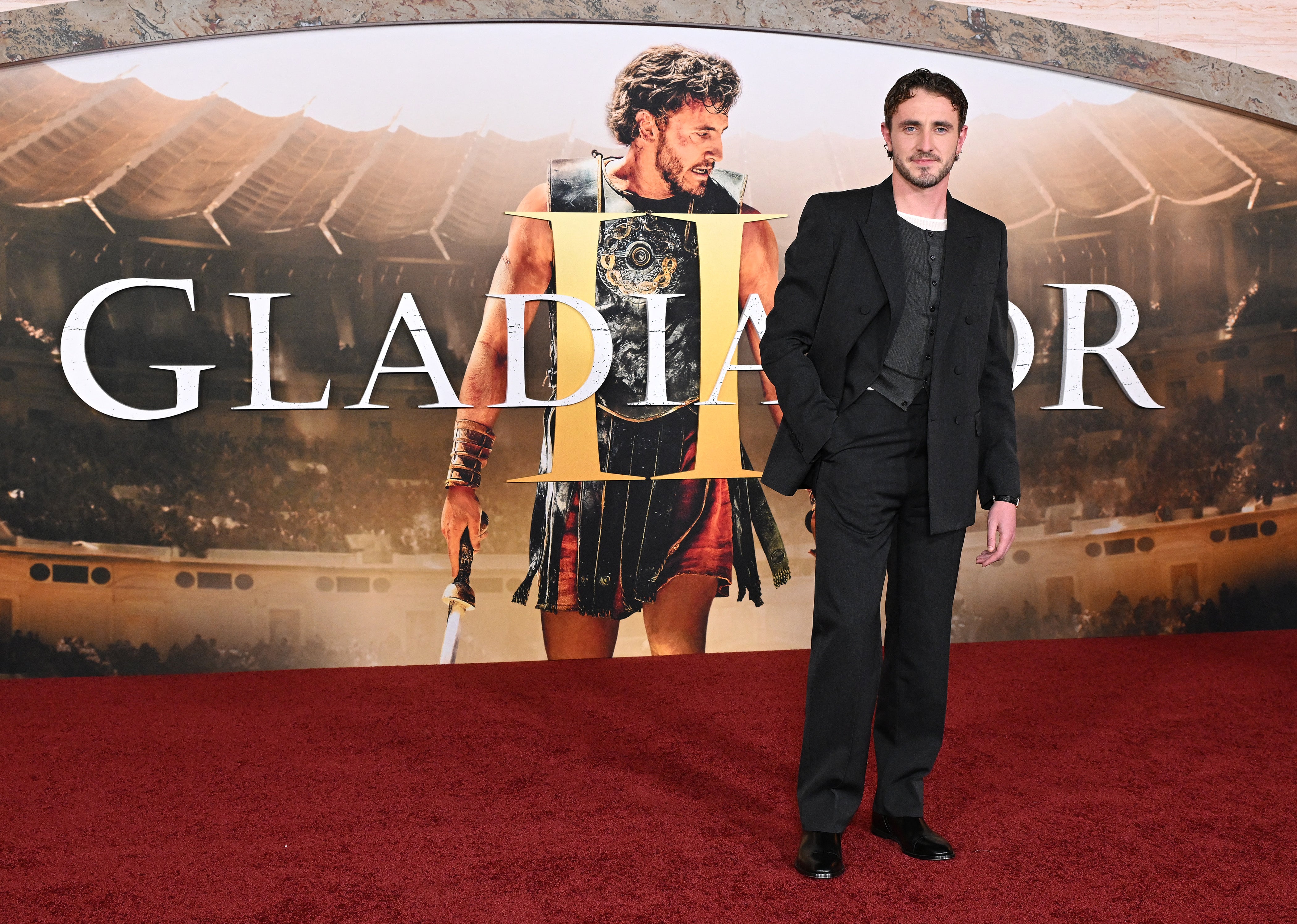 (AFP/Getty)
The takeaways that will upgrade your training
There is no workout plan for you to follow in this feature. That might disappoint some people. But you are probably familiar with the old adage about teaching a man to fish versus simply handing him a fish.
Blakely has provided a fishing lesson for those looking to build muscle. If you can nail the nuts and bolts of your workouts and nutrition – “lift weights with good form, apply progressive overload, do some cardio, hit your protein goals every day, make sure you get enough rest and eat whole foods where you can” – you will be on the right track.
If you can do these things consistently, your health, fitness and physique will transform.