Benzinga and Yahoo Finance LLC may earn commission or revenue on some items through the links below.
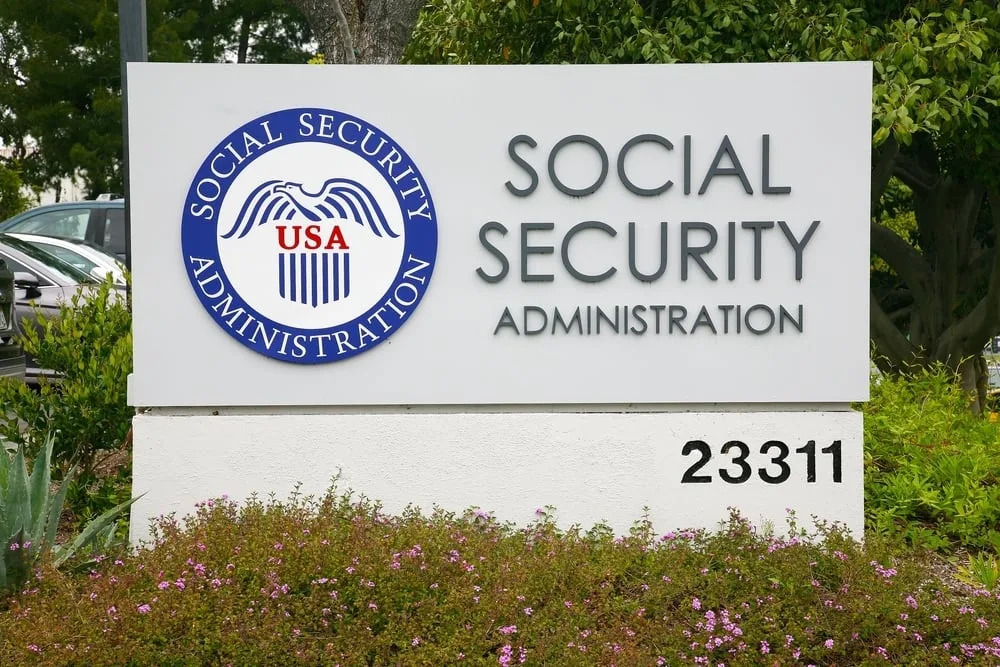
Social Security has long been called the third rail of American politics, but a survey suggests a growing divide between generations over who should bear the cost of keeping the program afloat.
A survey from the Cato Institute think tank published in December found that 89% of Americans age 65 and older believe current retiree benefits should be protected even if that means higher taxes on younger workers. Meanwhile, only 11% of seniors said benefits should be reduced to shield younger workers from additional taxes.
The findings come as Social Security faces mounting financial pressure. According to a recent annual report by the Social Security Board of Trustees, benefits could be cut by about 22% starting in 2032 if Congress doesn’t act.
Don’t Miss:
A Growing Generational Divide
The survey asked Americans to choose between two options: protecting current retirees’ benefits even if it means higher taxes on younger workers, or protecting younger workers from higher taxes even if it means reducing benefits for current retirees.
Younger Americans answered very differently than seniors.
Among respondents ages 18 to 29, 53% said younger workers should be protected from higher taxes, while 47% said retiree benefits should be protected. The balance shifted steadily with age. Among those ages 45 to 54, 74% favored protecting retiree benefits, 55 to 64, 84% and among those 65 and older, support climbed to 89%.
The survey also found that many younger Americans are skeptical about the program’s future. Nearly 8 in 10 under 30 expect future benefit cuts, and only about one-third believe Social Security will still exist when they retire.
Trending: Most AI Robotics Companies Are Still Building. This One Is Already Working In Restaurants.
That skepticism may help explain why younger people were more willing to consider reforms that older generations largely oppose, including benefit reductions and other structural changes.
At the same time, retirees often see Social Security as something they earned through decades of payroll tax contributions. The survey found that 60% view Social Security as a retirement savings program they paid into rather than a welfare program.
Americans Want Benefits Preserved But Reject Most Fixes
The survey found another challenge for policymakers: Americans generally want Social Security preserved but oppose many of the reforms needed to close the funding gap.
Seventy-seven percent oppose cutting benefits for current and future retirees. Another 77% oppose paying an additional $1,300 a year in payroll taxes, even though analysts estimate larger increases may ultimately be required to maintain current benefit levels.
One proposal that received broad support was creating an independent bipartisan commission to address the program’s finances. Seventy-one percent of respondents backed the idea.
Worryingly, many Americans already expect future benefit cuts, and confidence in the system appears to be fading among younger generations. At the same time, Americans are living longer, making it even more important to stay healthy throughout retirement.
One of the biggest threats to quality of life is osteoarthritis, a condition that affects more than 500 million people worldwide and currently has no cure. Cytonics is developing a therapy designed to stop cartilage damage and help repair joints instead of simply masking pain. Its first-generation treatment has already been used in more than 10,000 patients with zero adverse events, and it has now developed a version that is 200% more potent as it works toward FDA approval.
More than 7,000 investors have already backed Cytonics, with shares currently available at $4 each. Invest today in a company working to tackle one of the world’s most common chronic diseases.
For now, the survey highlights a difficult reality: Americans overwhelmingly support Social Security, but generations increasingly disagree about who should pay to keep the promises the program has made.
Read Next: See if you can cut your monthly debt payments by 40% — check your eligibility in minutes.
Building Wealth Across More Than Just the Market
Building a resilient portfolio means thinking beyond a single asset or market trend. Economic cycles shift, sectors rise and fall, and no one investment performs well in every environment. That’s why many investors look to diversify with platforms that provide access to real estate, fixed-income opportunities, precious metals, and even self-directed retirement accounts. By spreading exposure across multiple asset classes, it becomes easier to manage risk, capture steady returns, and create long-term wealth that isn’t tied to the fortunes of just one company or industry.
Arrived
Backed by Jeff Bezos, Arrived Homes makes real estate investing accessible with a low barrier to entry. Investors can buy fractional shares of single-family rentals and vacation homes starting with as little as $100. This allows everyday investors to diversify into real estate, collect rental income, and build long-term wealth without needing to manage properties directly.
Realberry
Institutional-quality real estate has traditionally been difficult for individual investors to access. Realberry gives accredited investors direct access to private real estate opportunities backed by a team with 35 years of experience, $3.4 billion in assets under management, and $481 million in cumulative distributions paid to investors as of Q4 2025, according to the company. With a portfolio spanning 13 million square feet across seven U.S. states, Realberry focuses on acquiring, developing, and managing real estate with an emphasis on long-term value creation while its principals often invest alongside clients to help align interests.
FarmTogether
Farmland has historically held its value through market volatility and delivered returns uncorrelated to stocks and bonds. For accredited investors, FarmTogether offers direct access to high-quality U.S. farmland starting at $15,000 — fully managed, with no landlord headaches.
Immersed
Immersed is building technology for the future of work through spatial computing. Known for its AR/VR productivity platform that enables users to work across multiple virtual screens, the company has grown to more than 1.5 million users worldwide. Immersed is also developing Visor, a lightweight headset designed specifically for professional productivity, positioning the company at the intersection of remote work, extended reality (XR), and next-generation computing.
Fundrise
Private real estate and private credit can add income and stability to a stock-heavy portfolio. Fundrise offers access to diversified private real estate and credit strategies through an easy-to-use platform, with professionally managed portfolios designed to generate passive income and long-term growth.
Mode Mobile
Mode Mobile is changing the way people interact with their phones by letting users earn money from the same apps and activities they already use every day. Instead of platforms keeping all the advertising revenue, Mode Mobile shares a portion back with users who engage with content, play games, and scroll on their devices. Named one of Deloitte’s fastest-growing software companies in North America, the company has built a large beta user base and is scaling a model that turns everyday smartphone usage into a potential income stream.
EquityMultiple
For accredited investors looking beyond stocks and bonds, EquityMultiple provides access to vetted commercial real estate deals starting at $5,000, with only ~5% of opportunities passing their due diligence process.
Image: Shutterstock
This article Nearly 90% Of Seniors Support Higher Taxes On Younger Workers To Maintain Current Social Security Benefits, Survey Says originally appeared on Benzinga.com
© 2026 Benzinga.com. Benzinga does not provide investment advice. All rights reserved.