
ⓘ NASA – Unsplash
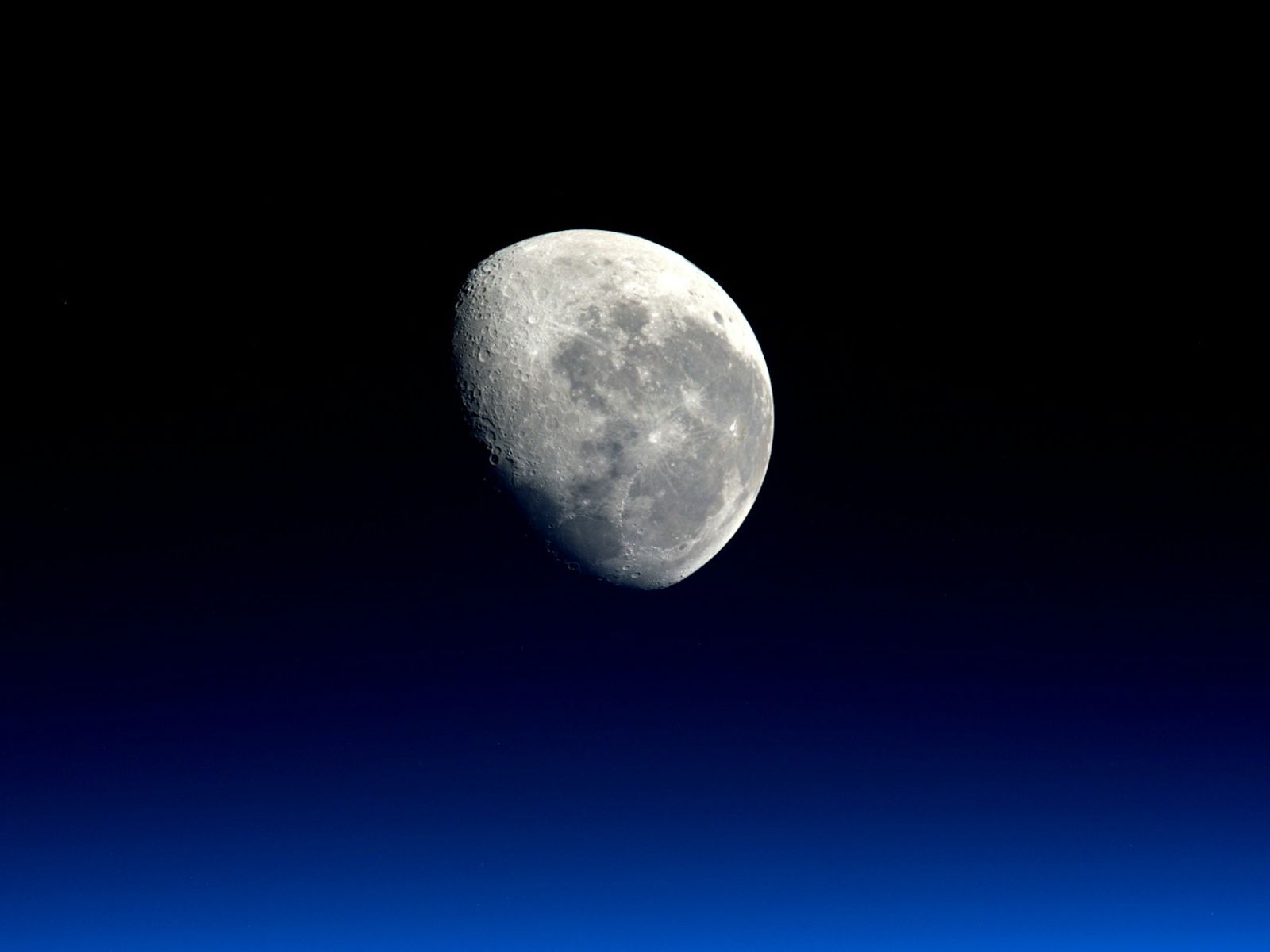
An image showing the Moon.
In the coming days, the upper stage of a SpaceX Falcon 9 rocket will collide with the Moon. And while scientists will be able to observe and study this event, you may also be able to see it from Earth under favorable conditions.
SpaceX conducts numerous launches each year to carry out various missions. However, in the coming days, an upper stage of a Falcon 9 rocket will hit the Moon, and it will also be possible to observe this event from Earth.
Indeed, on January 15, 2025, SpaceX launched two lunar landers toward the Moon. But while the mission was successful, the rocket’s upper stage was left in space after completing its mission. As a result, it remained in orbit around our natural satellite.
As for this object, the upper stage measures about 12 meters long and 4 meters wide. It also has a mass of about 4,000 kilograms and should hit the Moon on August 5, 2026, at a speed of about 8,700 km/h. According to scientific estimates, this impact could create a crater with a diameter of 30 meters and a depth of 5 meters. In addition, a large amount of debris is expected to be ejected across the Moon’s surface.
Therefore, to observe this event, you’ll need to be in an area with no light pollution and clear skies. A telescope will also be needed to see the flash caused by the collision. Nevertheless, astronomers will conduct observations to study this type of phenomenon and its consequences. Furthermore, the Korea Pathfinder Lunar Orbiter may also observe it using its onboard instruments.
 Alexis Stegmann – Tech Writer – 700 articles published on Notebookcheck since 2025
I’ve been working in the field of web writing for several years, and I’m passionate about keeping readers up to date with the latest news on astronomy, technology, the world of video games and other exciting subjects. In particular, I’ve had the opportunity to work on a number of websites, which has enabled me to cover a wide range of subjects. In my personal life, I’m passionate about a wide range of subjects, including astronomy, video games, history and science. I’m also drawn to psychology, which is a subject that deserves greater documentation and recognition.