
ⓘ Yevhenii Dubrovskyi, Unsplash
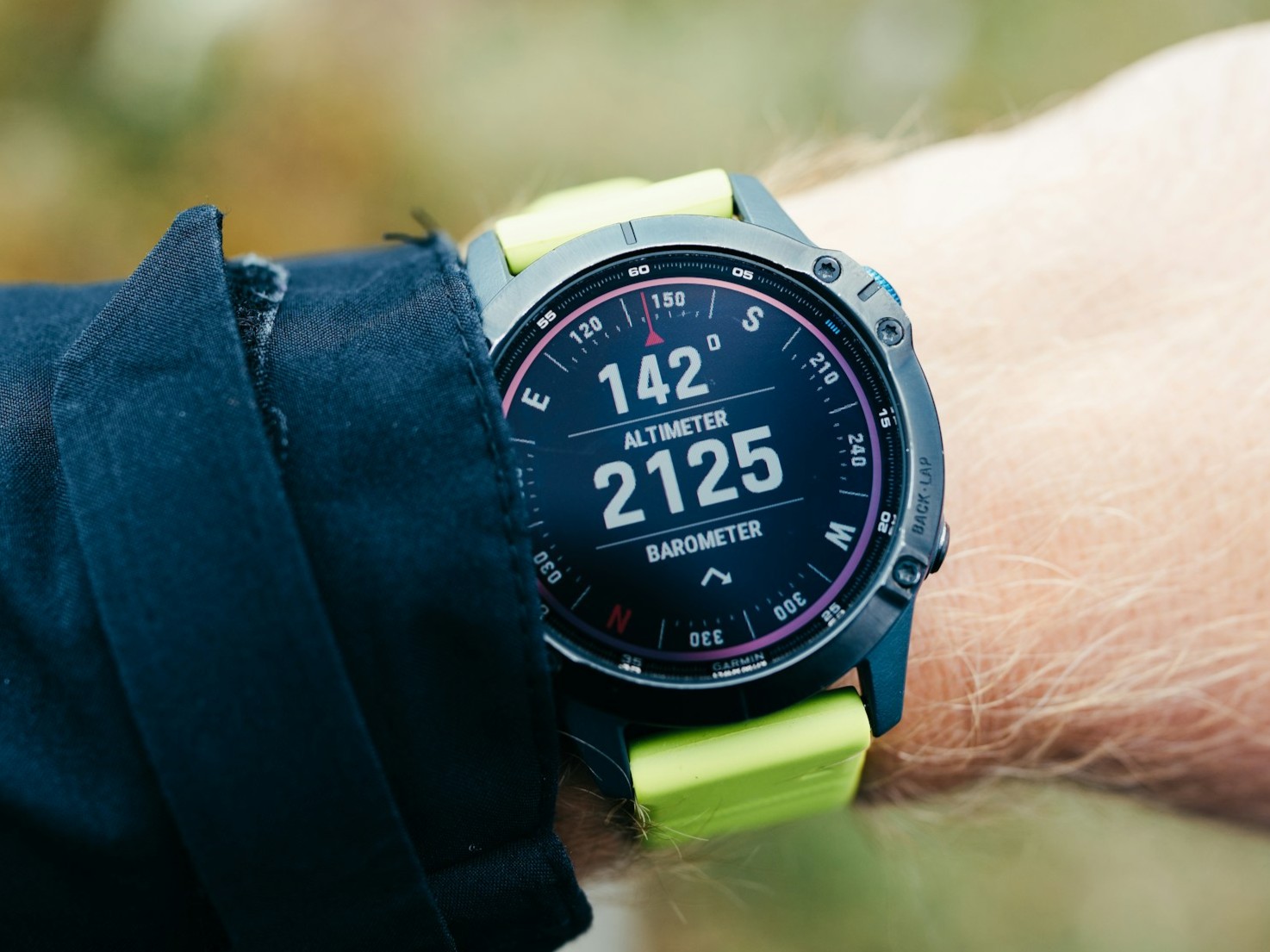
The successor to the Fenix 8 shown here is likely certified
A new Garmin smartwatch featuring both LTE and satellite connectivity has surfaced in official documentation. Offering premium features and interchangeable straps, all signs point to the upcoming launch of a high-end flagship—likely the Garmin Fenix 9.
A new Garmin smartwatch has appeared in an FCC filing. While the documentation omits the official commercial name, it reveals several key technical details. Carrying model number A05170, the certification strongly suggests an imminent market release.
The filing explicitly classifies the device as a wearable—specifically a smartwatch—rather than an inReach handheld. It is described as an extremity-worn device intended for use in front of the mouth or head, which typically corresponds to handling voice calls directly on the wrist.
Connectivity is a key highlight, combining cellular LTE with 3GPP-standard satellite communication to allow messaging and connectivity well beyond the reach of cell towers. Unsurprisingly, the watch also features 2.4 GHz Wi-Fi, Bluetooth Low Energy, ANT/ANT+, and NFC. Wi-Fi enables faster data transfers than Bluetooth alone, ANT facilitates pairing with external sports sensors, and NFC powers Garmin Pay for contactless transactions.
The inclusion of NFC alongside interchangeable straps confirms this is a full-fledged smartwatch rather than a basic fitness tracker or dedicated inReach communicator. According to the certification, Garmin tested the device with silicone, nylon, and titanium bands. Given these premium materials and feature set, it is very likely that this model will launch as the Garmin Fenix 9.

I have been active as a journalist for over 10 years, most of it in the field of technology. I worked for Tom’s Hardware and ComputerBase, among others, and have been working for Notebookcheck since 2017. My current focus is particularly on mini PCs and single-board computers such as the Raspberry Pi – so in other words, compact systems with a lot of potential. In addition, I have a soft spot for all kinds of wearables, especially smartwatches. My main profession is as a laboratory engineer, which is why neither scientific contexts nor the interpretation of complex measurements are foreign to me.