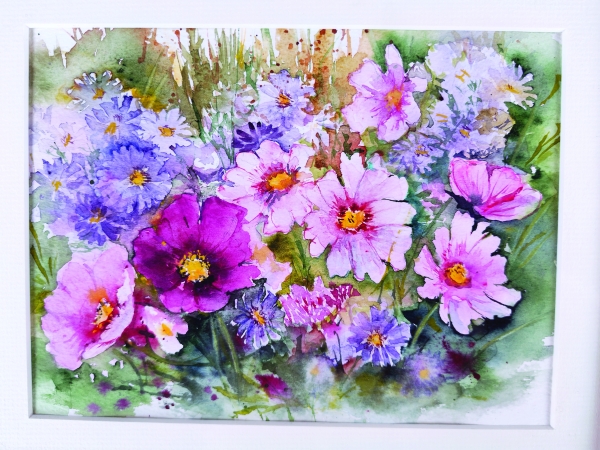
Every winter, as the light fades early over Sweden, Lubica Ritzl packs her watercolours and flies south, to the green, flower-scented city on Dhofar coast she calls her second home.
It began almost by accident. Over twenty years ago, Lubica and her late husband Antal — who spent years on Ericsson projects in Riyadh — heard about winter trips to Oman, curious about a part of the country they had never seen.
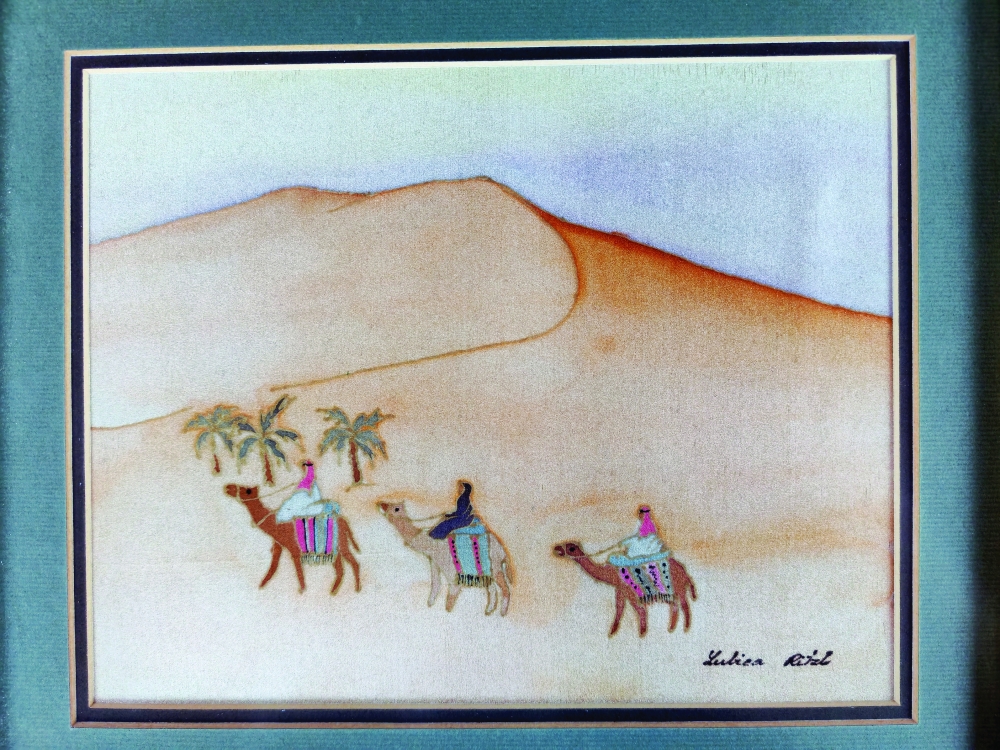
A camel caravan journeys across golden desert dunes. Medium Silk painting
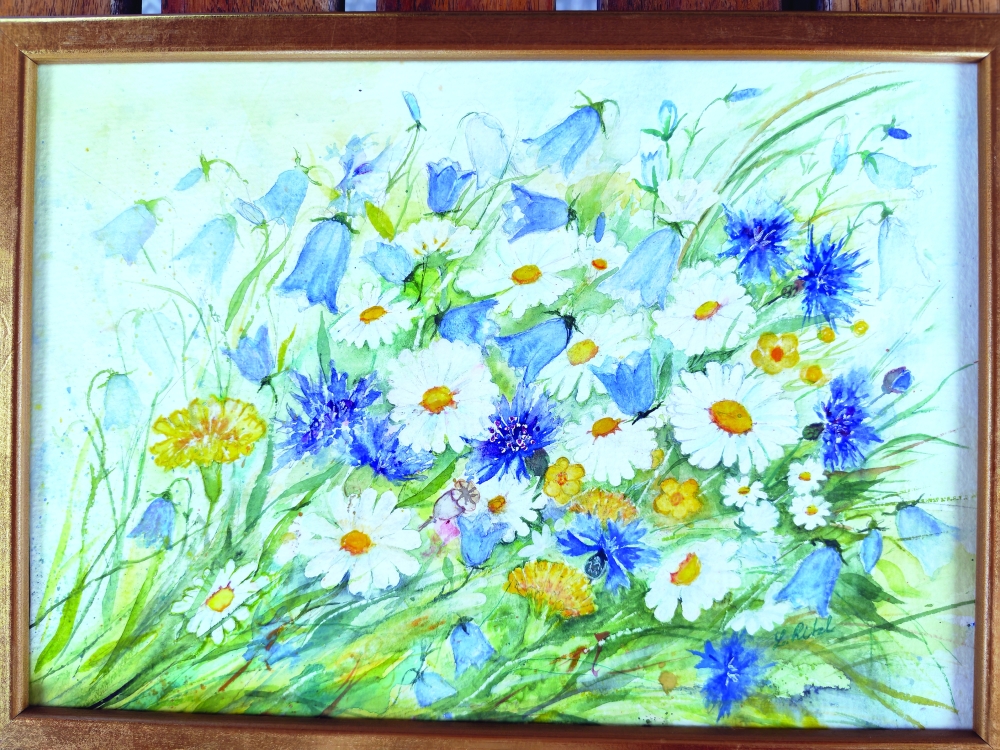
A cheerful meadow of bluebells, daisies, and cornflowers. Medium Silk painting
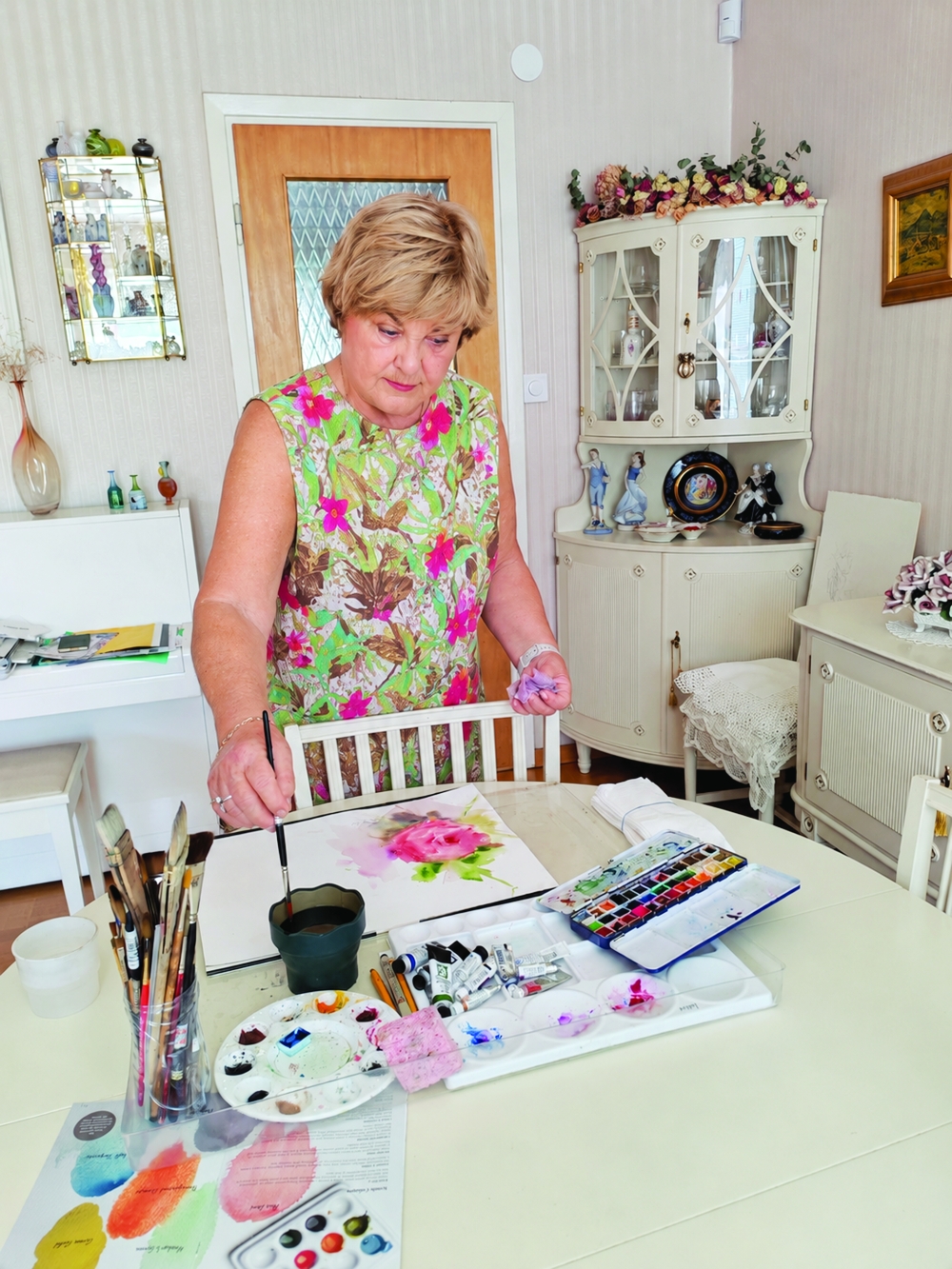
Artist Lubica Ritzl at work in her home studio
“It sounded exciting and tempting to go to the warmth”, she recalls. “It was really a surprise when we arrived — what a wonderful place, a paradise on earth!”. A single trip became an annual ritual, drawing them back to an oasis city of bananas and palm trees, its bougainvillea spilling in bright pink cascades among the first sights she reached for her brush to capture.
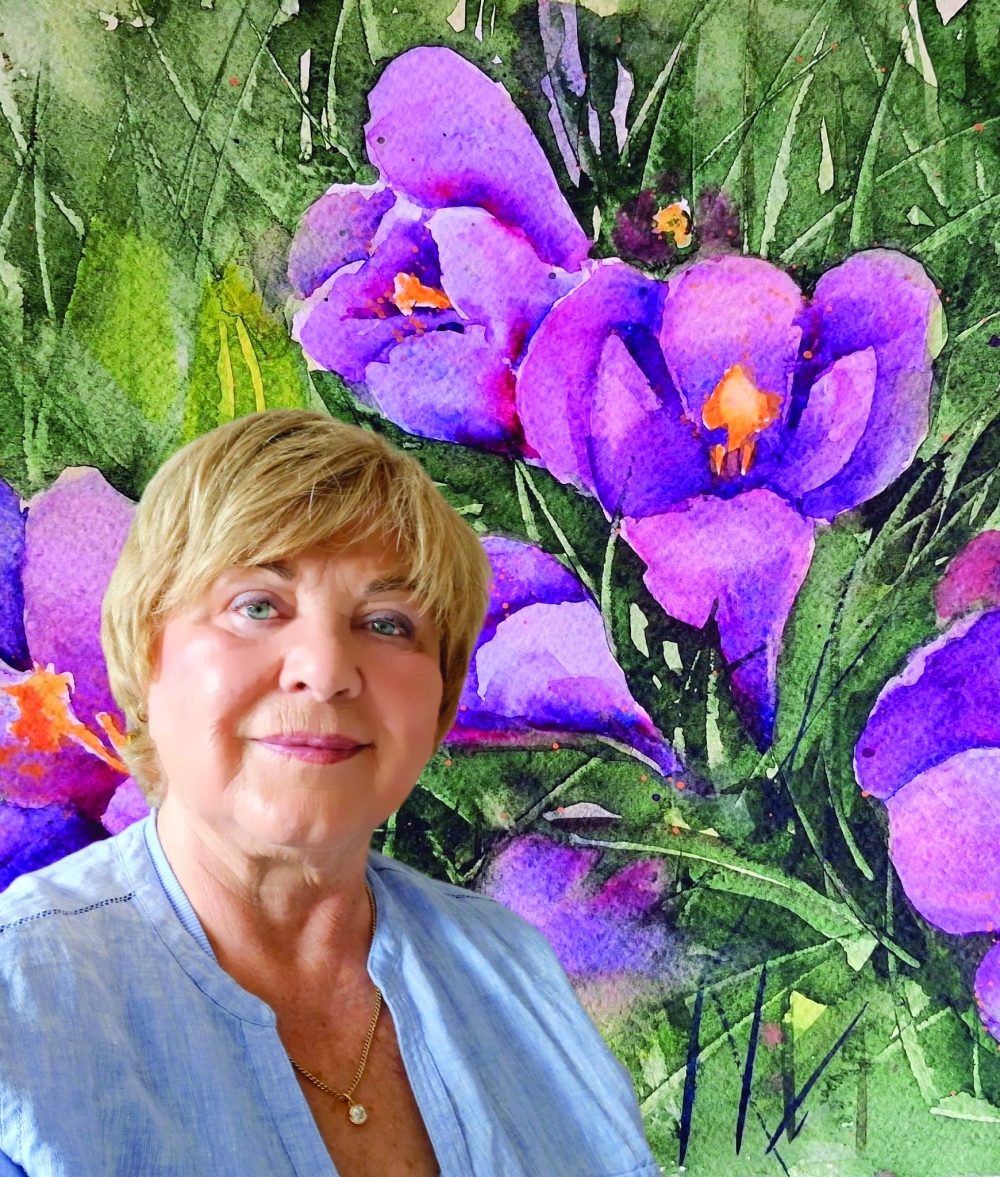
Artist Lubica Ritzl with her vibrant watercolour of purple crocuses
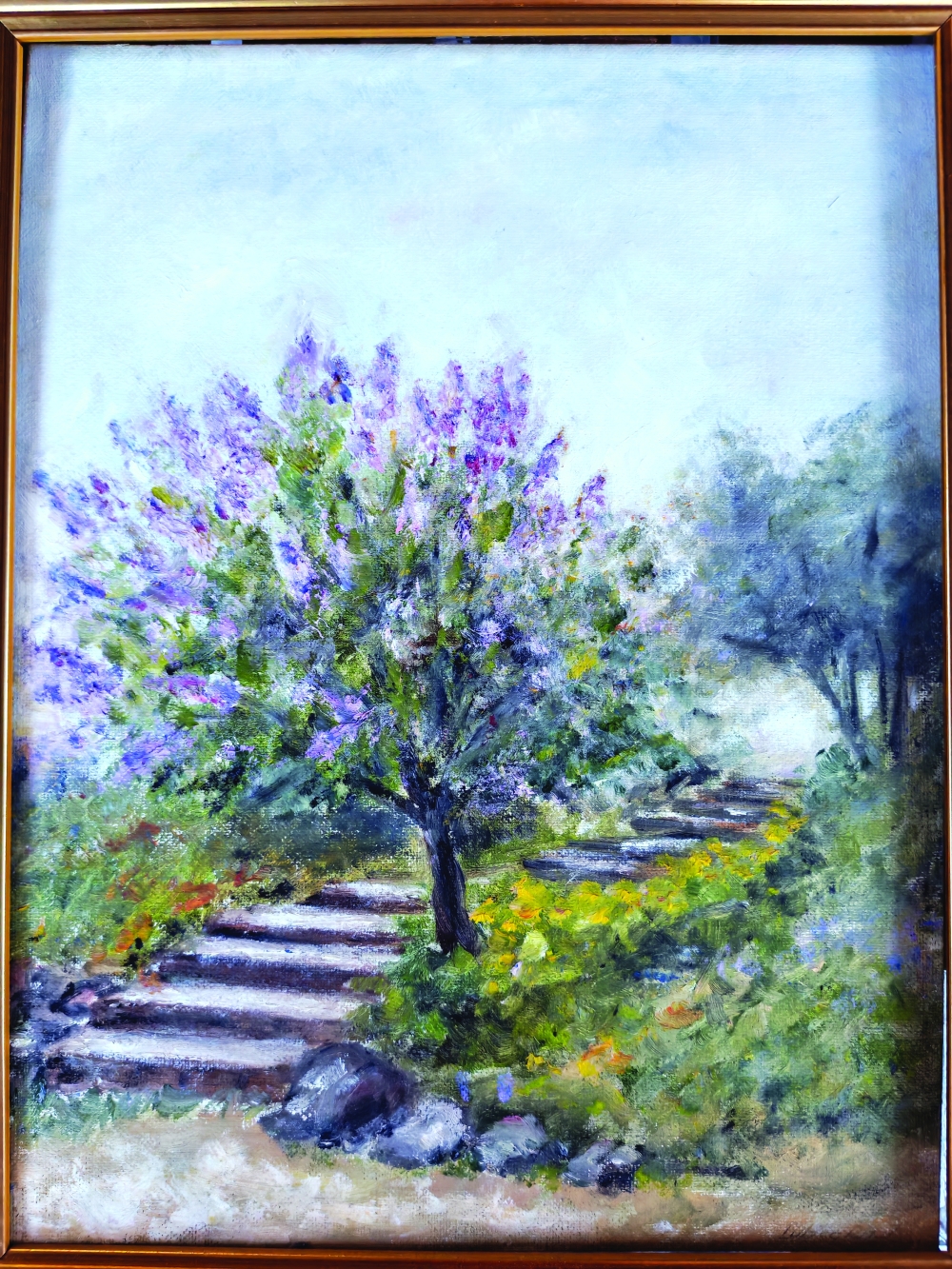
Artwork showing stairs in the garden (Oil Painting)
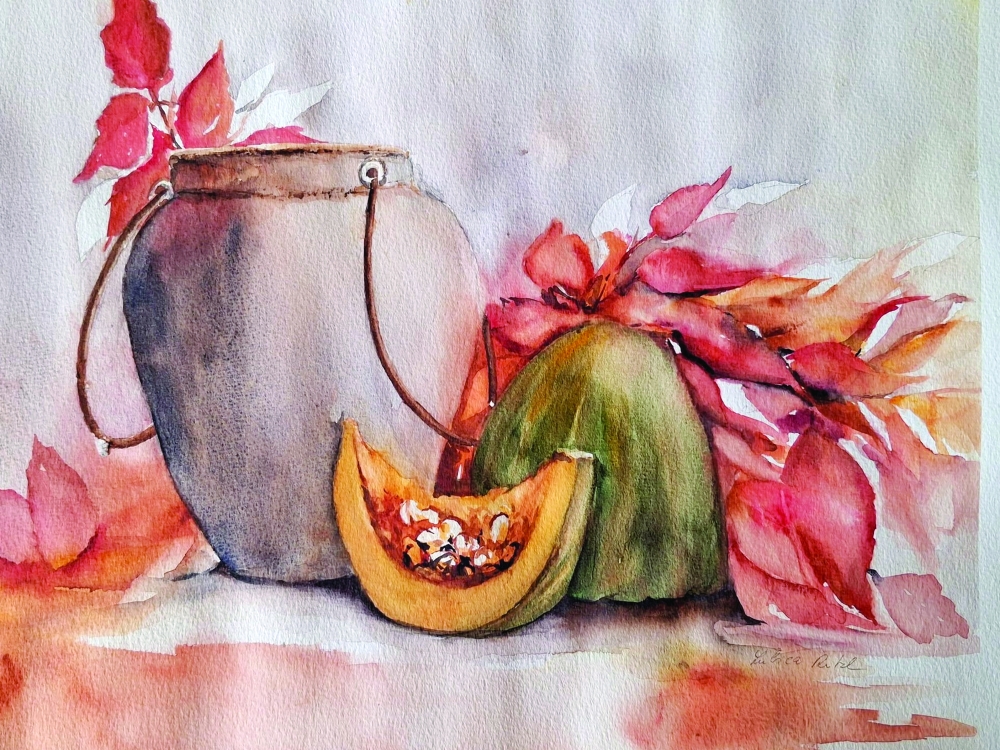
Autumn still life with a rustic pot, ripe papaya and warm falling leaves
Ask Lubica to describe Salalah and she does it in colour: beige like the sand dunes, turquoise like the water, green because that is simply what Salalah is and a splash of red and pink — the flowers that first caught her heart, later filling her sketchbooks as cosmos and full-blown roses.
Her painting began years earlier in Saudi Arabia, where long days called for something to fill them.
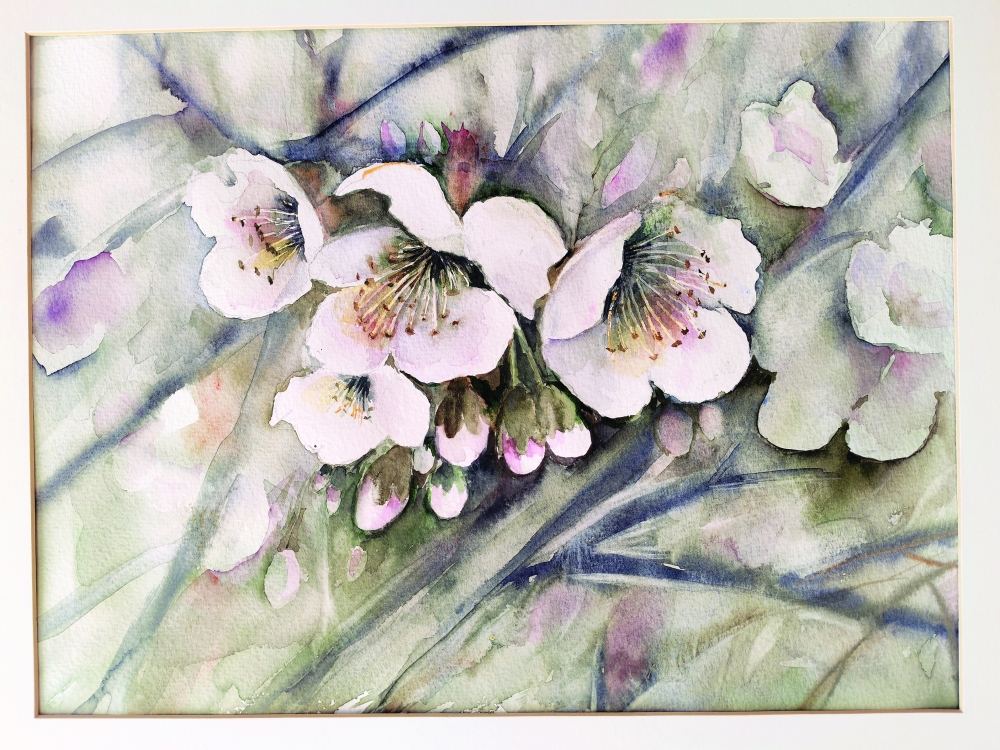
Delicate white cherry blossoms on soft spring branches
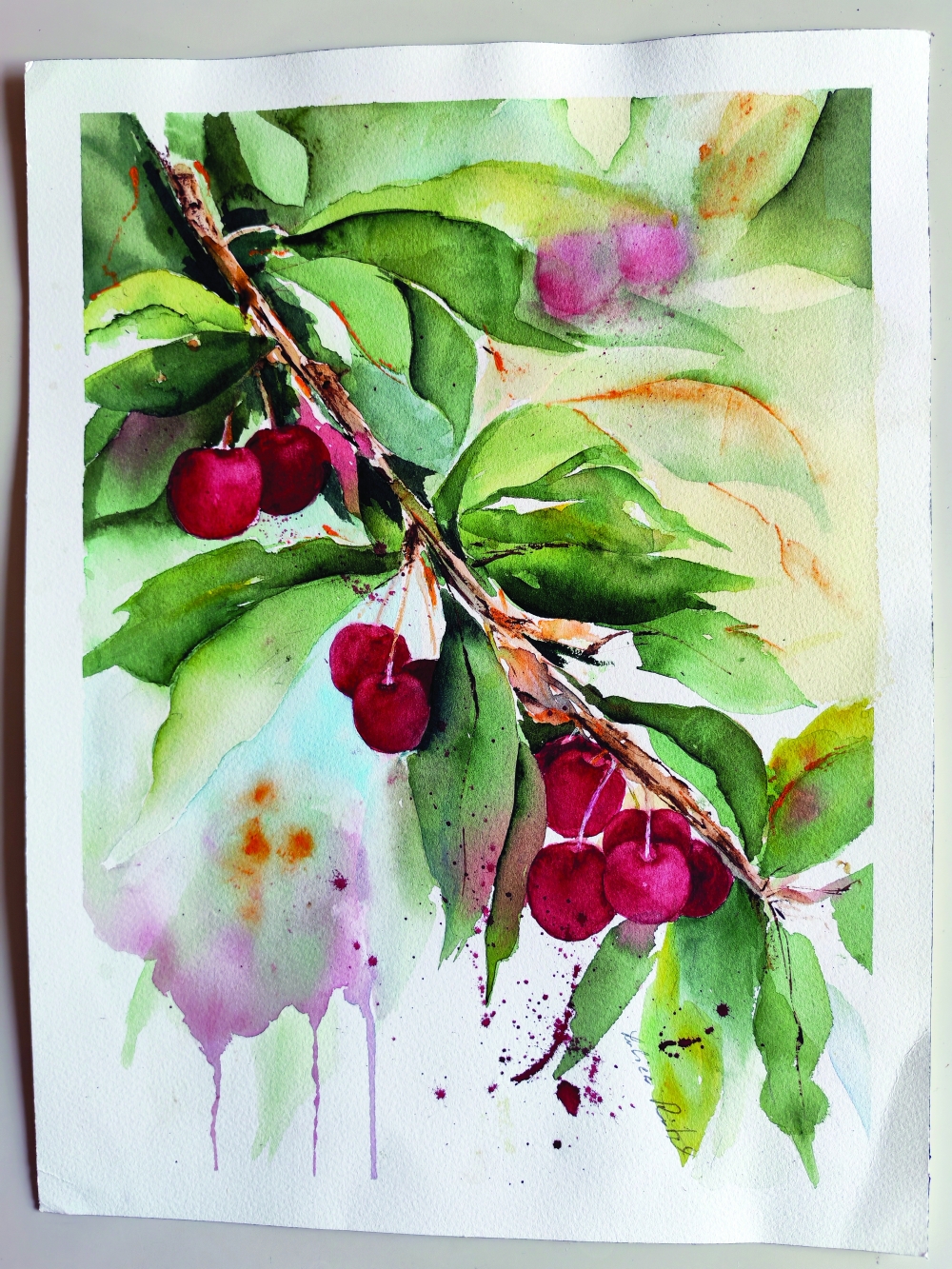
Fresh red cherries hanging from a leafy branch
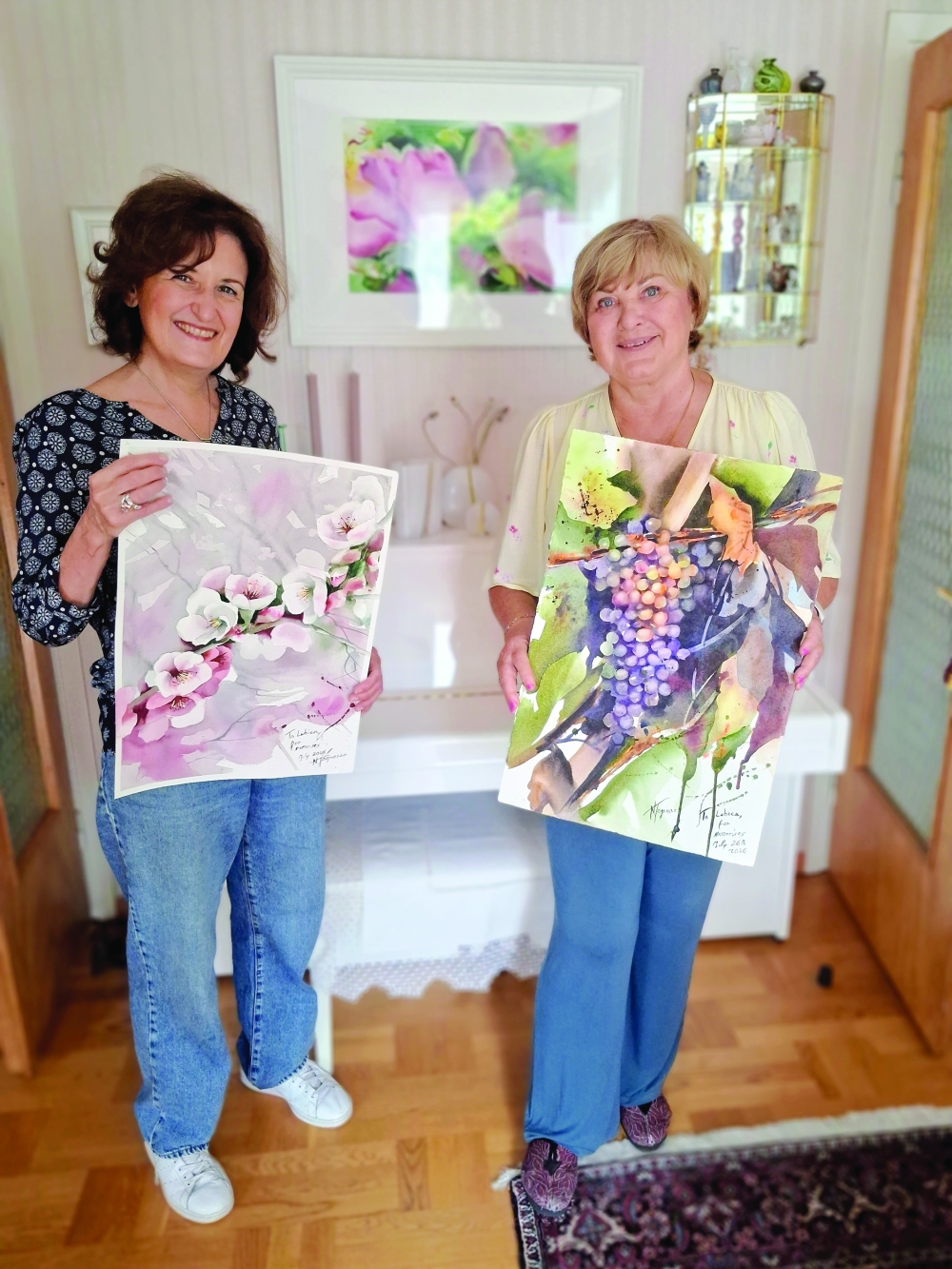
Lubica Ritzl with artist Nadia Tognazzo from Milan
She found a teacher who had studied silk painting at Konstfack in Sweden, taught herself flower motifs and ran a small studio for women in her situation. Back in Sweden, that grew into oil, acrylic and finally watercolour — unforgiving but thrilling, she says: “you can’t make mistakes, but it’s exciting with surprises”. She now teaches at home each spring and autumn, exhibiting every December.
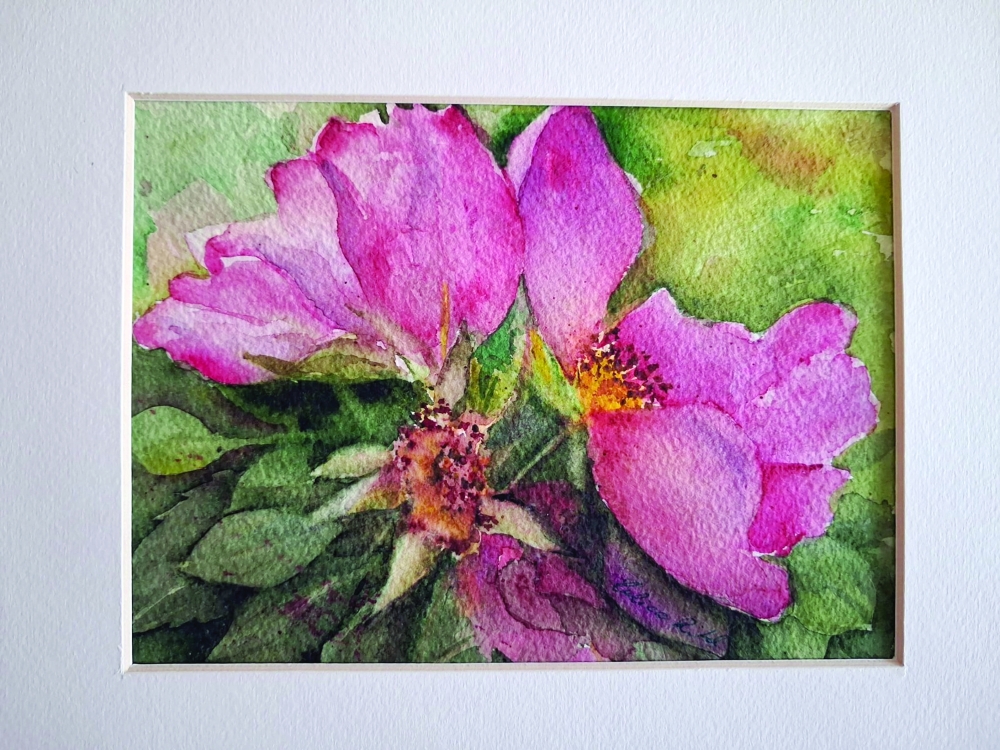
Lubica’s work of pink wild roses in watercolour
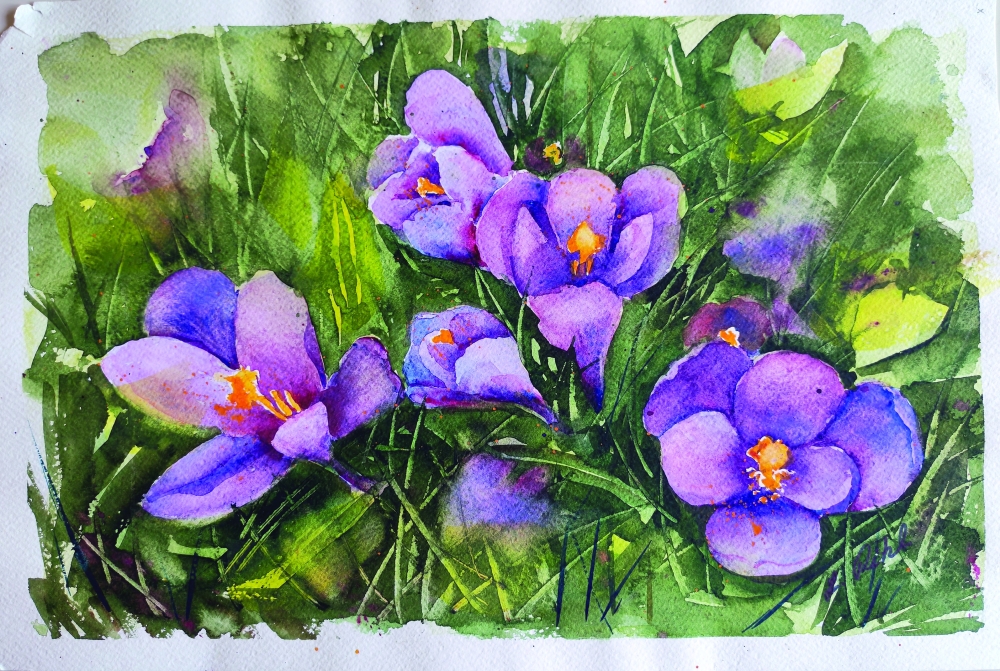
Purple crocuses blooming among fresh green grass
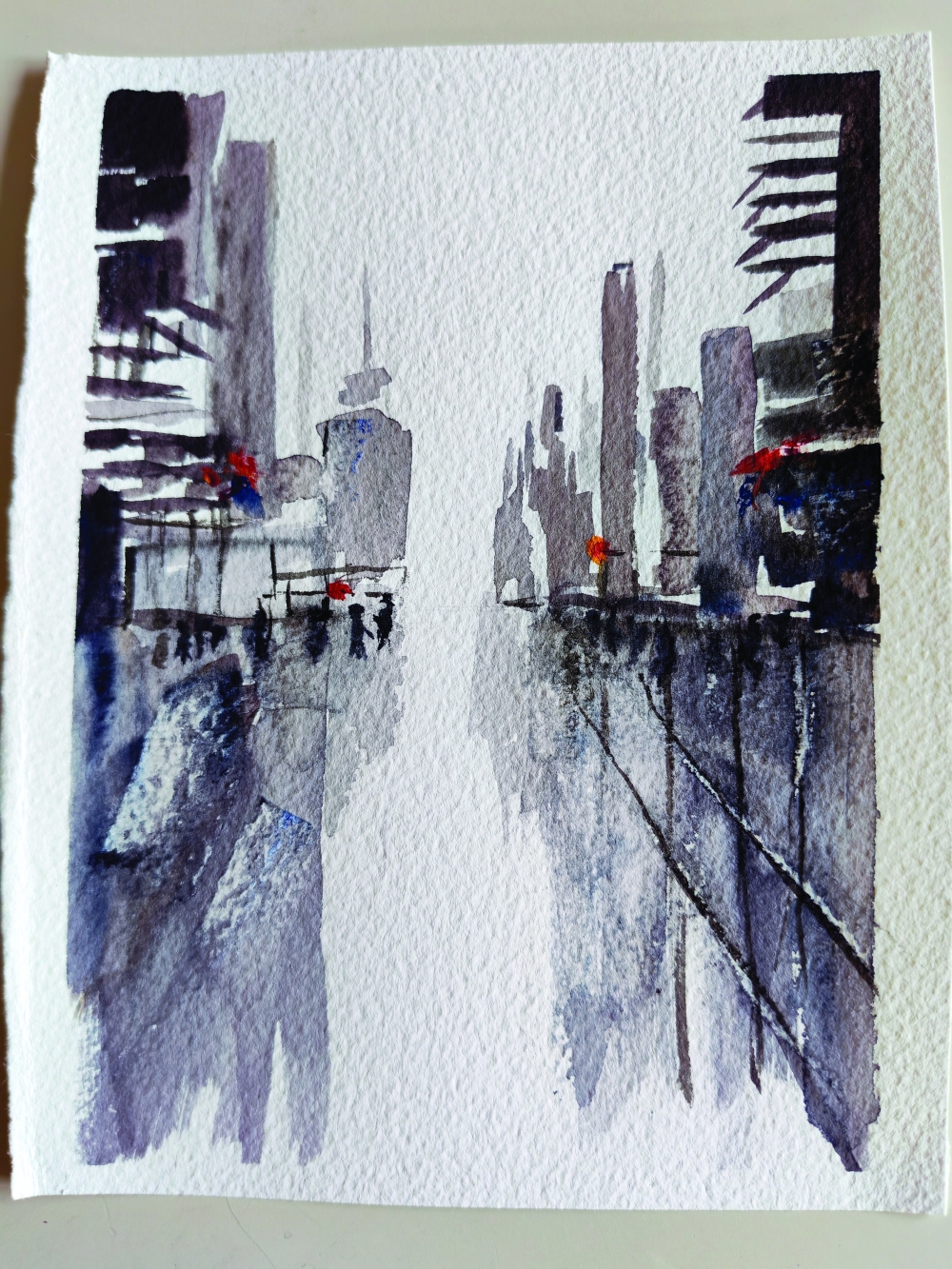
Rainy city street with red accents and distant figures
Nature is where Sweden and Salalah meet for Lubica. Scandinavia’s seasonal shifts — flowers pushing through melting snow, long midnight-sun days — taught her to look closely at colour, an attention she carries to Dhofar, where the khareef turns the hills around Salalah into a mist-cooled green landscape found nowhere else on the Arabian Peninsula.
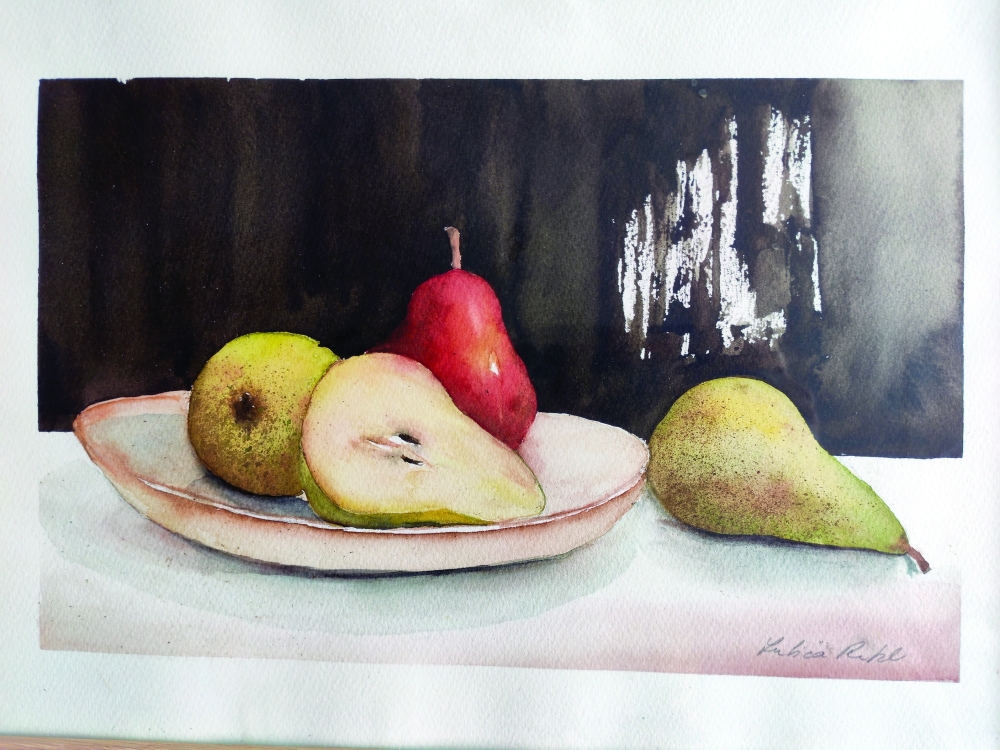
Ripe pears on a simple plate, one sliced open
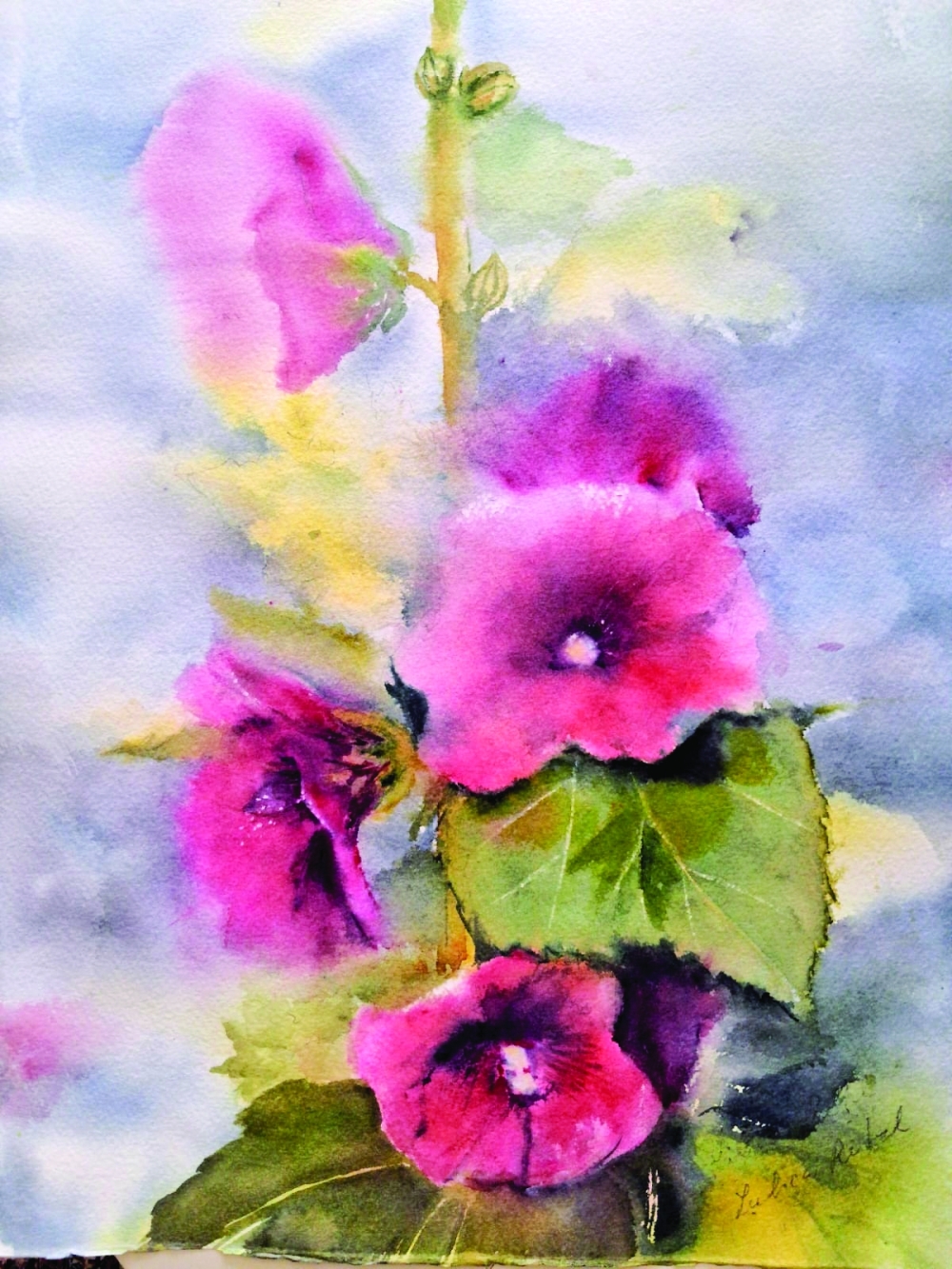
Soft pink and deep magenta hollyhocks captured in delicate watercolour washes
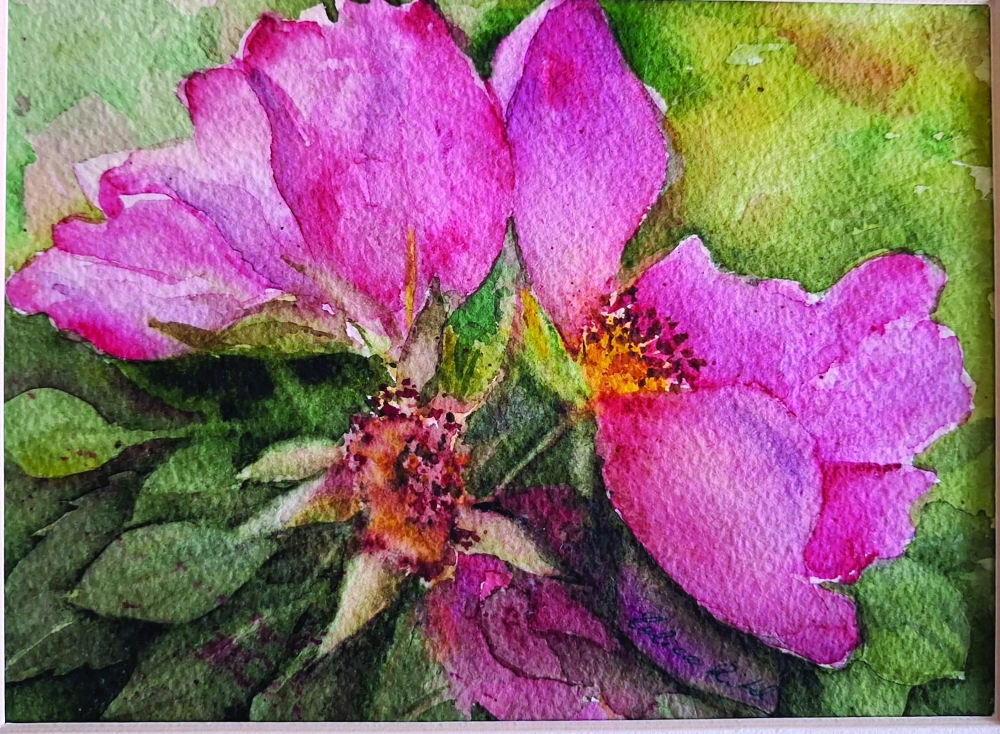
Soft pink roses in full bloom against lush green leaves
Salalah’s meaning deepened, rather than faded, after loss. Thirteen years ago, Antal died, following a final family holiday in Salalah with their daughters, sons-in-law and grandchildren — days she remembers as the most treasured of his life. Returning alone was, she says, the only option she could imagine and she found flowers waiting for her each time she arrived — a small welcome that has stayed with her since. She wears a silk flower on every visit and at dawn walks the beach picking flowers the way her husband once did. “It became a ritual for me”, she says. “It means so much to me”.
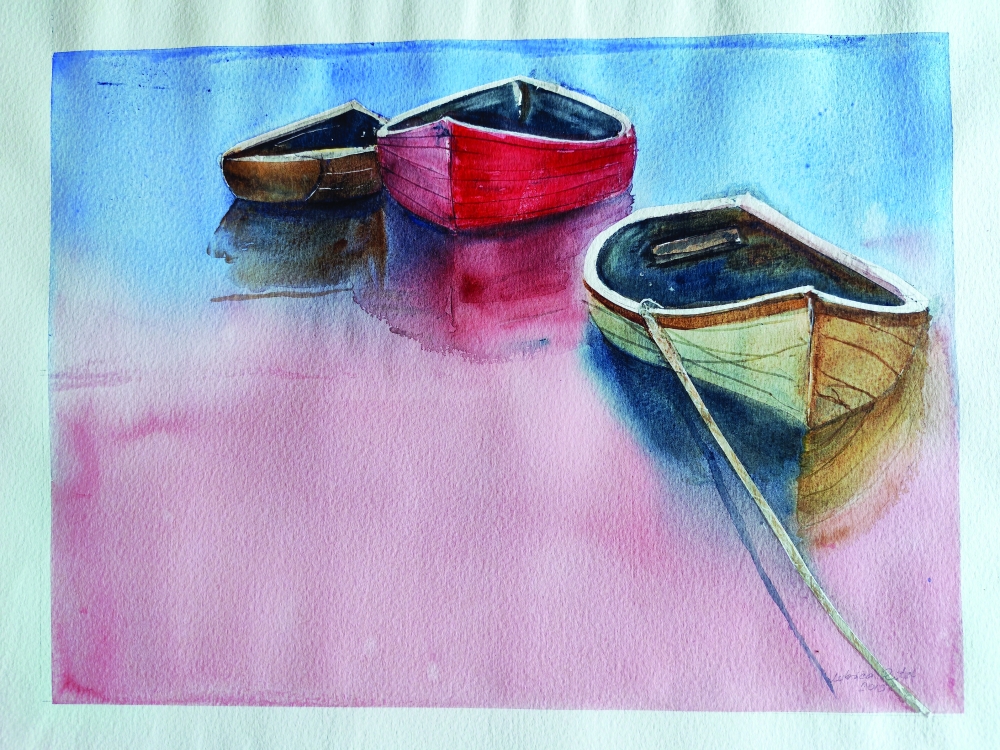
Three boats resting quietly on calm, reflective water
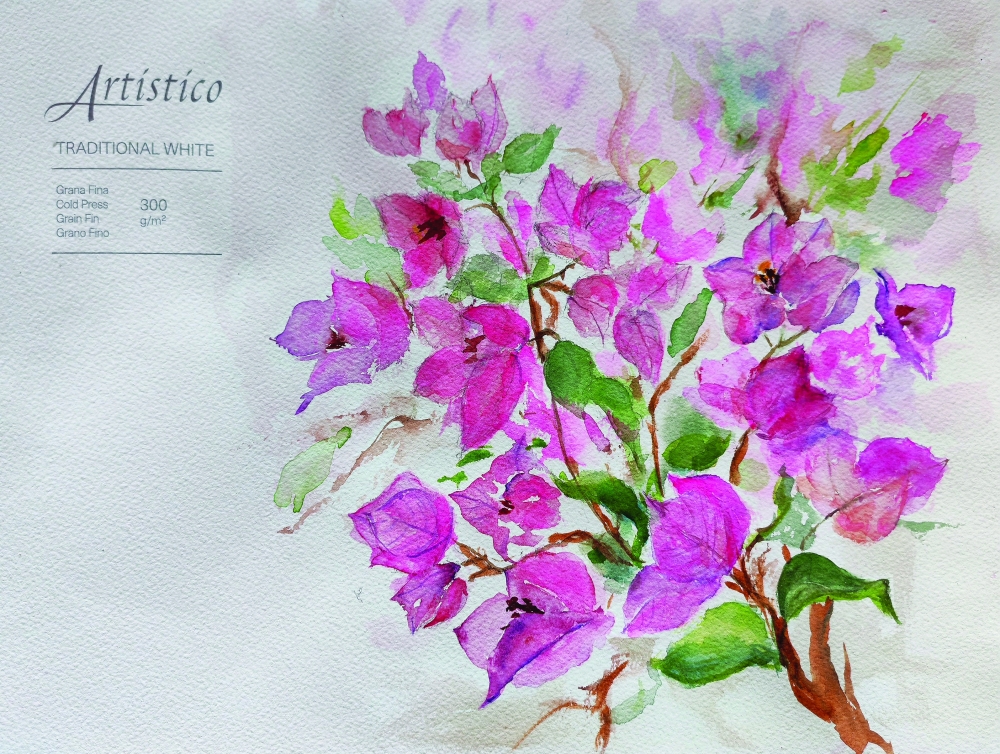
Vibrant pink bougainvillea in full bloom
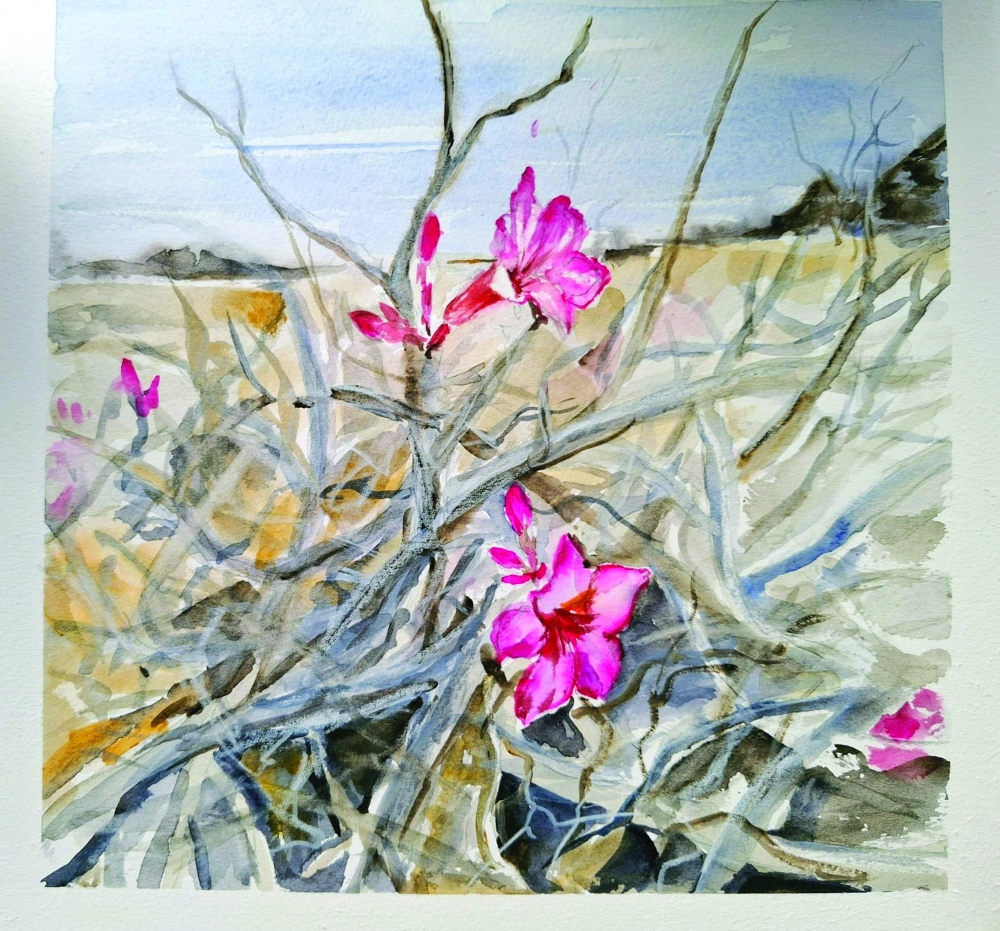
‘Desert Roses of Dhofar’
Lubica now hopes to bring daughters Christina and Annika; and grandchildren Måns, Rasmus and Vera, deeper into the Salalah she has loved across more than 40 years of visiting Oman — its beaches, wadis and shawarma at Baalbek, her favourite Lebanese restaurant. She still paints on site, giving finished watercolours as gifts to friends made along the coast. “Nature has done everything”, she says. “It’s just painting”.
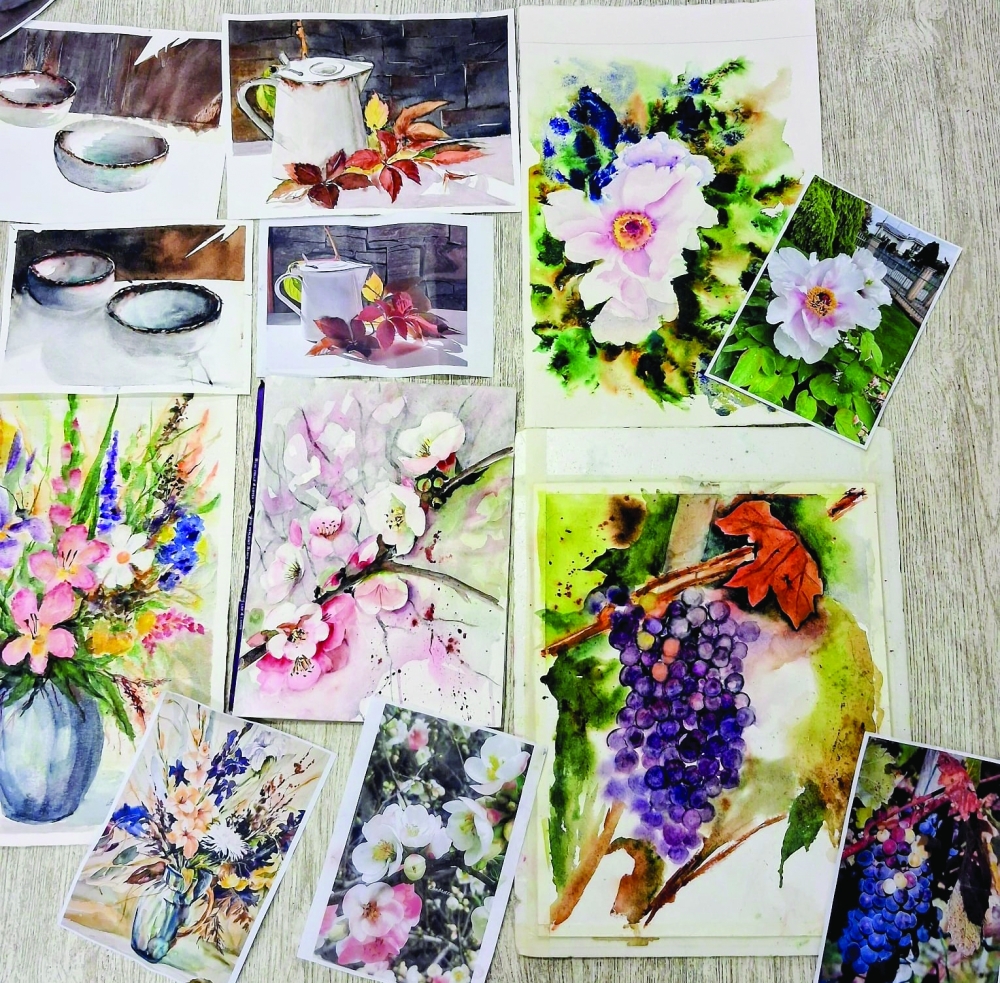
Lubica’s collection of watercolour still lifes and floral studies with Nadia
Among the artists who have shaped her technique is Nadia Tognazzo, an Italian watercolourist from Milan who has taught her at retreats in Dalarna, central Sweden. Their sessions centred on flowers, fruit and still life, using a ‘negative technique’ that plays light against shadow for energy — demanding, Tognazzo notes, alongside her interest in landscapes and cityscapes.
For Lubica, that discipline and the flower-filled coast of Dhofar are two halves of one pursuit. “Beauty is in the eye of the beholder”, she says — between Stockholm and Salalah, two decades proving it, one watercolour and one winter at a time.