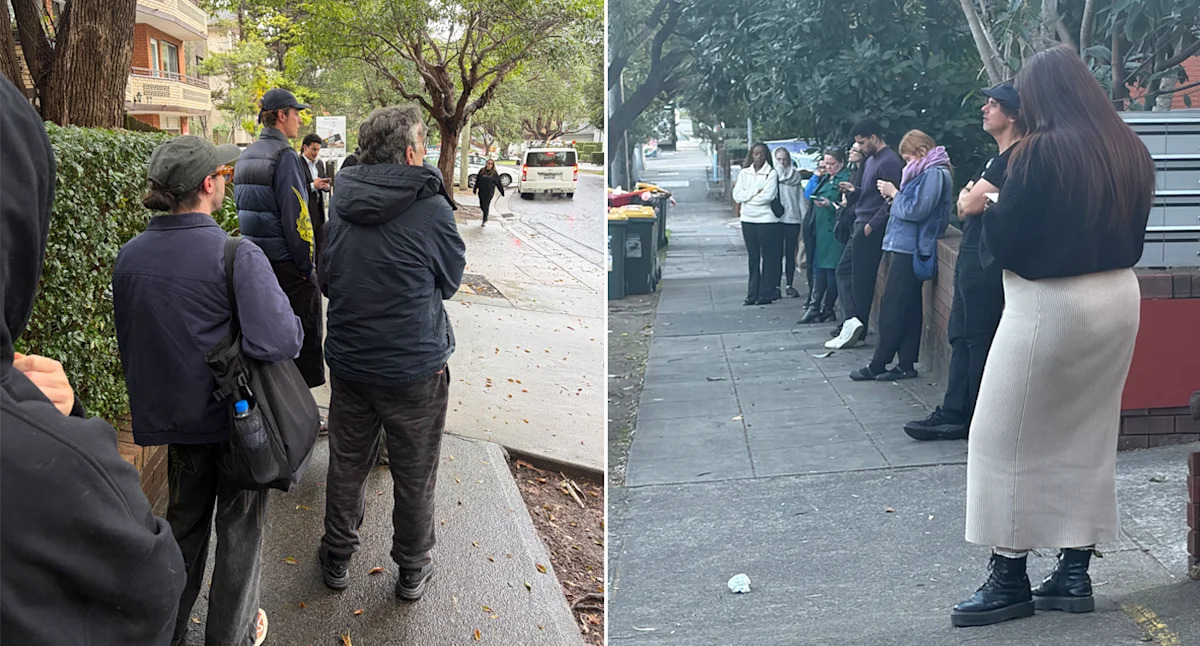
A government minister has sought to throw cold water on predictions that renters in major capital cities could be in for a big hike in their rent following tax changes handed down in the budget. With the phasing out of negative gearing on established investment properties, landlords face a different equation to make the math work.
According to economists at one of the country’s biggest banks, that means rents will need to increase around 25 to 30 per cent over the next two years. But senior government member Andrew Charlton has dismissed the prediction this morning.
“It just doesn’t seem realistic to me,” he said.
“The tax changes only came in a few months ago, so 99 per cent of the properties that people will be in at the moment are grandfathered … so the idea that you would have a big change in the properties that people are currently renting when an overwhelming majority of them are in grandfathered arrangements, just doesn’t seem to make sense.”
RELATED
Charlton was asked on ABC radio if he was still confident in the modelling from Treasury about the impact the government’s CGT and negative gearing changes would have on the housing market, given prices had already fallen by more than projected.
The government’s Cabinet Secretary and Assistant Minister for Technology backed the Treasury modelling, saying he still had confidence in the government’s expectations.
He also argued the new, inflation-based CGT discount will “in some cases be more generous” for property investors.
“The idea that that will flow through to some massive impact on rents, I think is overstating the case by a huge margin.”
The budget papers projected that rents would increase by around $2 per week for a household paying the current median rent in the wake of the tax changes.
 Andrew Charlton said the NAB prediction doesn’t stack up. · Facebook/Getty NAB issues grim prediction for renters
It comes after NAB threw the cat amongst the pigeons in a note to clients on Monday, with bank economists arguing something will have to change for property investors.
“In our view, the changes to the tax settings for investors in existing dwellings imply that gross rental yields will need to rise in order to compensate for the loss of tax benefits,” the bank’s Head of Australian Economics, Gareth Spence, said.
“For investment properties in Sydney and Melbourne, a rise in the rental yield of 1 percentage point from about 3.5 per cent to around 4.5 per cent implies an increase in rents of 25-30 per cent, assuming the current level of house prices is unchanged.”
Sydney and Melbourne are tipped to see the biggest falls in dwelling prices in this downturn, so that will do a big part of the heavy lifting when it comes to improving the yield for future landlords – something the bank economist also noted.
“In any case, the bigger picture is that the equation for housing investors has changed substantially and gross rental yields will need to adjust such that residential housing offers relatively attractive risk-adjusted after-tax returns for investors when compared to comparable investment opportunities in real assets or elsewhere,” Spence said.
Sydney’s overall vacancy rate has fallen to 1.8 per cent, according to the latest July survey from the Real Estate Institute of NSW, while Melbourne also sits around the same level.
According to data from property giant Cotality, every capital city currently records a vacancy rate below 2.0 per cent, meaning landlords do have leverage to raise rents.
“With vacancy rates compressed so tightly, tenants are left with very little leverage,” Cotality Australia’s Head of Research Gerard Burg said last month.
However housing economist Cameron Kusher has questioned whether most renters would actually have the capacity to pay an extra 25 to 30 per cent in rent to make the NAB prediction come to pass.
” I agree rents are likely to rise but what renter has the capacity to pay 30 per cent more for rent than they already are when real wage growth is stagnant and inflation has been elevated for years?” he said.
Get the latest Yahoo Finance news – follow us on Facebook, LinkedIn and Instagram.