I have a 2019 [Hyundai] Ioniq PHEV. I want to buy an electric vehicle. I want to buy European. I want a saloon rather than an SUV. I’m not sure the €3,500 grant makes up for the loss in value of a new car after six months so a 241, 242 or 251 reg car is probably what I’m after. What should I buy? What changes do I need to make to my home charger to upgrade from 2019 Ioniq PHEV to the new EV? – DK, Co Galway
Well, you’re absolutely right to think that the €3,500 grant from the Sustainable Energy Authority of Ireland (SEAI) doesn’t do enough to defray the steep first year deprecation that most new cars suffer, and which electric cars seem to suffer in particular.
While the plummet in EV values that we saw in 2023 and 2024 has ended, and in some cases used electric car values have actually started to firm up, it’s also true that many second-hand EVs are still undervalued, so you can get some cracking bargains on the used-car market.
However, you are backing yourself into a corner slightly by wanting a saloon, and not an SUV. You’re absolutely right to go for a saloon. Lower-slung cars are inherently more efficient, and they’re almost always better to drive than something bulkier and taller. But Irish buyers favour SUVs to an overwhelming degree, which means that there are fewer saloons on the second-hand market, so you’re limiting your choice a touch. Let’s put a pin in that and come back to it.
When it comes to electric saloons, there’s really no beating a Hyundai Ioniq 6. Not everyone loves the styling, which is fair enough, but you can’t argue against its exceptional aerodynamic slipperiness which gives you a genuine 500km one-charge range in mixed conditions. Plus, it’s roomy and well-made inside, and good to drive.
You can pick one up for about €30,000 if you shop around and if you buy carefully, you should still have some of Hyundai’s five-year unlimited mileage warranty left to play with.
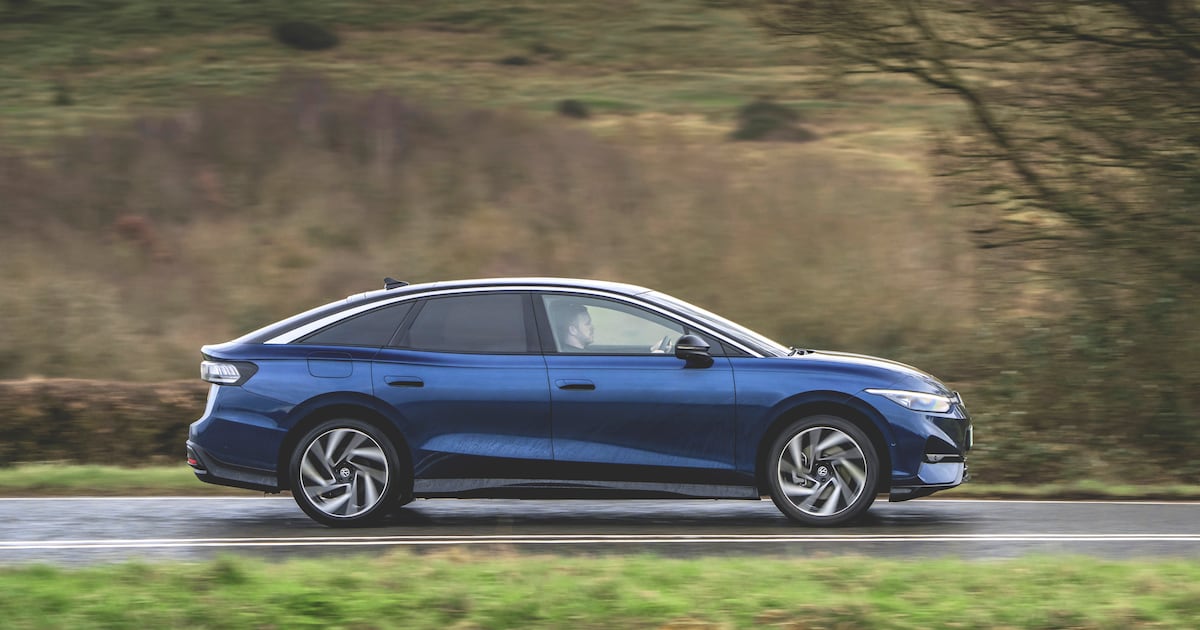
Another great electric saloon choice is the Volkswagen ID.7. It’s bigger and a bit bulkier than the Hyundai, but it’s also more practical due to a fastback rear hatch (or you could track down one of the excellent estate versions). Your one-charge range will probably be slightly less than 500km, but it’s still an efficient car.
The ID.7 tends to be a bit pricier than the Ioniq 6, but we have seen some 241 plates on sale for about €37,000, which is a lot of car for the money.
Then there is the Polestar 2, a great buy especially if you can track down one of the updated post-2024 cars (the blanked-off grille is the visual giveaway).
These switched from front-wheel drive to rear-wheel drive and got a better battery into the bargain, making this neat, compact, sporty four-door almost as efficient as the benchmark Hyundai, but with a more engaging driving experience. It makes this an EV that’s properly fun to drive. It is a bit cramped in the back, though. Prices for the facelifted model are in the same ballpark as the VW ID.7.
We’ll mention the Tesla Model 3. Aside from the obvious image issues, it is an impressive car (with caveats over interior layout and quality) and the battery efficiency and charging set-up is hard to beat. Prices are under €20,000 for the oldest versions now, but for a 241 version you’re looking at more like €38,000 for a Long Range variant.
If you fancied something a bit newer, there’s the Kia EV4. Most of the models available on the second-hand market are the five-door hatchback version, but there is the longer, sleeker Fastback saloon, which has some oddball but rather likable looks and which is hugely efficient. You might have to find €40,000 for one, though, and there’s nothing older than a 2025 version available.
I said we’d put a pin in the SUV thing, but there are some quite low-slung electric SUVs out there which are good to drive and hugely efficient. The best of the bunch is probably the Renault Scenic, which is much lower to the ground than it looks at first, and can top 600km on a full charge if you’re careful, plus it has an excellent interior. You’ll pay about €30,000 for a 2024 model.
When it comes to your charger, you may not need to make any updates – as long as it uses a Type 2 connector, and outputs up to 7.4kW of charging power, you should be good to go, but of course check with the charger’s manufacturer before making any final decisions.