
Bad customer reviews can have a big impact on small companies, says Pierce Murray, who runs the Dublin-based removals service QuickVan. This can be to the advantage of consumers but it can also leave companies exposed to unfair criticism or even extortion.
Murray says his business has been targeted by several fake reviews, some of which are clearly designed to extract money from him.
“They’ll say things like: ‘I spoke to him over the phone and he was very rude to me – one star review.’ It’s very hard to say to Google that that call didn’t take place. In one case, I got a WhatsApp message from a lad in India or Pakistan who had a screenshot of a review and said he could remove it for €100.”
Murray says scammers are “very smart at what they do”.
“Reviews are a big part of our industry. Word of mouth would have a big, big effect. These reviews are quite vicious.”
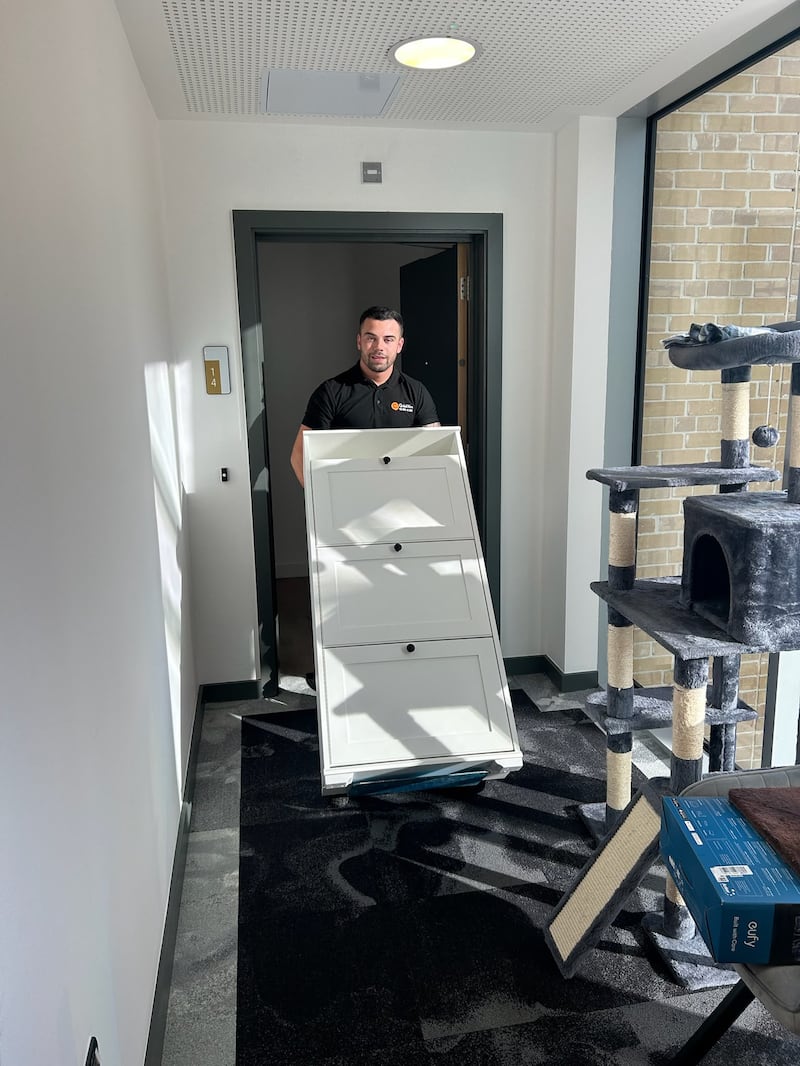 Pierce Murray at work with his QuickVan service
Online reviews can determine whether a business thrives or dives, according to digital marketing expert Cian Murphy.
Google, Tripadvisor, Trustpilot, Yelp and Amazon all host reviews under business profiles.
“You could have a waiter or a waitress who’s having a bad day and the restaurant gets a bad review,” says Murphy.
“That’s not a big deal – generally the positive reviews will overtake that one bad review. But we had a case where a wedding photographer, an excellent guy whose reviews were all fantastic, got one negative review because he forgot to log a booking. That one negative review was all it took for brides to look elsewhere.”
[ Looking to move abroad? Here’s what you need to knowOpens in new window ]
Rating systems are in place to help prospective clients and shoppers make quick, informed decisions on whether to trust a business or a service.
In the case of Murphy’s wedding photographer, he received a negative review due to an unfortunate slip-up on his part. It was a genuine review.
But the power of the review means that bad actors and malicious competitors can just as easily pose as legitimate customers and cause significant damage.
Headlines were grabbed in July by the case of a Kerry-based physiotherapist and his former client. Edmond O’Grady, from Tralee, admitted to a professional conduct committee that he had left a one-star Google review of a client’s business – after telling a previous committee he would not do so.
 Eddie O’Grady admitted a breach of a previous undertaking given to a previous inquiry. Photograph: Colin Keegan/Collins
Donal O’Reilly, of Bannside Osteopathy, Banbridge, Co Down, had originally given an unfavourable review regarding an appointment he had with O’Grady in 2023.
O’Grady retaliated by leaving the first one-star review of Bannside Osteopathy. At an original hearing, O’Grady committed to not doing so again – but went on to leave another similarly bad review last year.
“It was foolish, a moment of frustration … I need to move on from that,” O’Grady told the committee second time around.
It raises the question of whether online reviews have any merit at all. After all, friends and family can leave favourable reviews of businesses that have nothing to with their level of competency or service, while competitors can leave bitter, misleading words.
According to Murphy, this is a moot point. There is simply no getting around online reviews and it is critical for businesses big and small that they maintain a good reputation online.
Many Irish businesses have used search engine optimisation (SEO) firms to ensure their profiles rank as highly as possible on the likes of Google. This comes with risks attached, says Murphy.
He points to one friend in Cork who used a foreign SEO agency, which was offering cheaper rates, to boost his business.
“He stopped using the company because he wasn’t seeing results and once he did that he got 10 negative reviews within the space of an hour,” says the digital marketer.
“He was then contacted by the same agency to say we can get rid of the bad reviews for €3,000.”
Murphy’s advice was not to pay the agency as it would probably happen again.
Back at QuickVan, Murray says he considered paying the scammers who targeted his company to have a bad review removed. But he decided against it for fear that it would be repeated.
“I’ve been stuck with a couple of them,” he says.
Google, and other search engines, have processes for dealing with malicious or spam reviews. In the case above, Google removed all the negative reviews once they were reported. This can be a lengthy process, however.
The tech giant notes that it “doesn’t get involved in conflict between businesses and customers” and that negative reviews can “highlight areas for improvement”. Proving that a review is not genuine can be a difficult endeavour.
This is not just of concern to the businesses involved. Consumers can also be left wondering whether reviews are to be trusted.
Under current legislation, businesses are prohibited from posting fake reviews or paying others for this sort of promotion.
The Competition and Consumer Protection Commission (CCPC) says businesses are required to take “reasonable steps” to verify reviews before promoting them as being genuine.
In its advice to consumers, the commission says good or bad reviews should not be taken simply at face-value and that further research should be carried out.
“Look for patterns that don’t feel right, such as lots of five-star ratings with no detail, reviewers who have only ever posted one review, or feedback that sounds generic or overly positive,” says a CCPC spokesperson.
“If something feels off, take it as a warning sign and look for more evidence before trusting the trader. Don’t just go by the reviews on the website itself.”
[ Scammers cost Irish adults €760m last year – surveyOpens in new window ]
At the same time, this model of reviewing and ranking is changing with the advent of artificial intelligence.
The increased use of AI modes in search engines means the presentation of results has altered significantly. Previously, a search request for a nearby business or service would throw up links to various websites or Google business profiles.
Similar to what happened with links to news articles, however, the user now sees an AI-generated summary at the top of the page. The AI mode will have gone to the bother of assessing reviews and ratings and summarising a small number of what it believes are the most appropriate matches.
“The only way they will get mentioned in AI mode is if they are reputable companies which have favourable reviews,” says Murphy.
“The AI mode is trying to pick the businesses with the best reviews possible. They don’t want to put someone up there with one star.”
If AI searches are now excluding businesses that don’t meet exacting criteria – or the requirements of a particular algorithm – that creates the risk that many could effectively disappear from view online.
Lest they be forgotten, the old-fashioned internet forums are still a place where consumers, well-intentioned or otherwise, can share views on their experiences.
Daniel Yeromka runs the server provider business HostZealot. He says the company struggled with online commentary last year after a fake review was published on a forum by a customer HostZealot had removed from its platform. He says the customer was removed after complaints about phishing from a third party.
“Within 24 hours of shutting down the server, negative reviews about HostZealot started appearing in forums where people compare hosting providers,” says Yeromka.
“The reviews didn’t mention phishing or abuse complaints. In fact, they painted a different story – that we had stolen a server from a paying customer without warning.”
Yeromka says it was difficult to rebut the fake review without revealing confidential information. The company eventually published a post about its processes for removing customers who breach the rules.
“The fake reviews finally faded into the background,” he says. “And the fact that we got to explain how we handle abuse cases, it was a win in a way.”