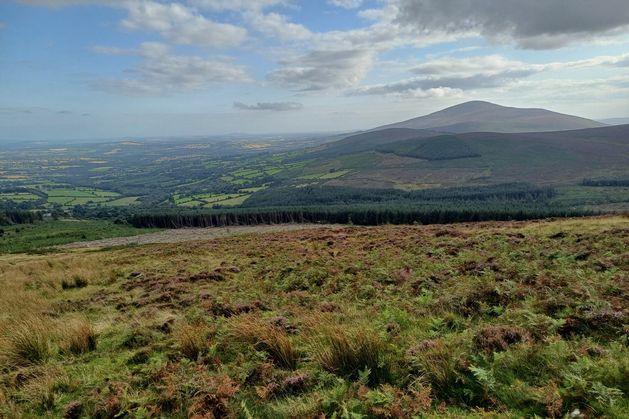
The Bunclody-native, and long-time county councillor, is speaking as she begins her descent of Black Rock Mountain the third highest peak in The Blackstairs Mountains. Straddling counties Wexford and Carlow, the Blackstairs are wild, untamed and, according to Councillor Murphy, woefully underutilised.
She has brought us up to see the mountains, see their unspoiled beauty, as part of her ongoing efforts to see them become more utilised, enjoyed by more people, both local and international.
“It’s in the programme for government that we should create more national parks, and The Blackstairs Mountains would be perfect for this,” she says as we begin our ascent. “They have been ignored for a long time, particularly by Co Wexford; we have beautiful beaches, beautiful coastlines, but we tend to forget we have mountains.
“In the tourism strategy for Wexford, which was recently launched, they were talking about not sending tourists to places where it’s already packed, and yet our beaches were highlighted – they’re already packed. The Blackstairs weren’t even mentioned in that strategy,
“If we got this identified as a national park we could help preserve the mountains, preserve the landscape, the wildlife, and we could also look after the farmers who are the ones currently caring for the land here. They could be paid extra to look after it.”
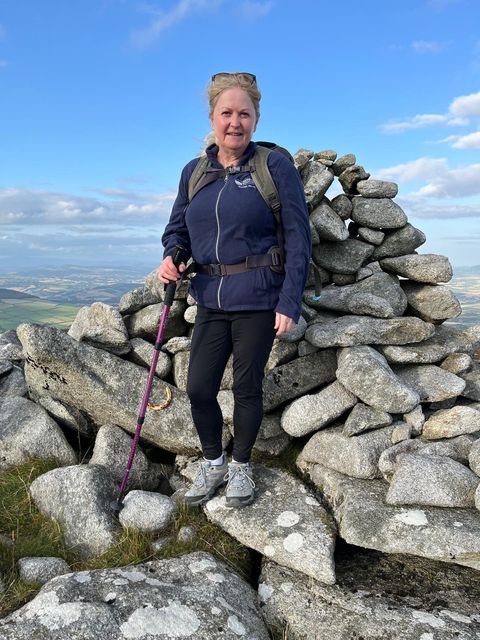
Councillor Barbara-Anne Murphy at the cairn atop Black Rock.
During the course of our walk to the top of Black Rock we encounter zero people, approximately 50 sheep, a couple of deer, and an inestimable amount of bugs and insects. We walk on a Friday evening in the middle of summer, with clear skies and views which take in not just the surrounding peaks, but also landmarks from counties Kilkenny, Waterford, and possibly even Tipperary.
And yet despite them being on their doorstep, many people in Wexford are blissfully unaware of the Blackstairs’ presence.
“During Covid-19 I came up here regularly and I started taking photos of the mountains and putting them on social media,” says Cllr Murphy. “And yet people in Bunclody, which is only a few miles away, didn’t know where the photos had been taken. Not only had they never been up here, they didn’t even know the mountains existed.”
But what would turning the mountains into a national park entail? Would it mean a visitor centre with tacky memorabilia, sheep plushies, and I heart Wexford badges?
“I don’t think it would entail car parks and visitor centres, it would be more about accessibility. about creating gateway towns and villages into it,” says Cllr Murphy. “”There’s no need to build a car park into the side of the mountain; for most of the trails you can walk a certain distance to get to them. Any investment would have to be strategic rather than any massive amount, the mountains are already here, you don’t need to spend money.
“From a tourism point of view the Blackstairs Mountains are a gem, and we could work in conjunction on this with Carlow County Council to make this a place people really want to visit. The type of tourists we’re getting from Europe, this is what they want – they don’t come to Ireland for the weather.”
Currently many of those tourists head to the places they’ve heard of, to the counties which promote their wildness, their scenery, and their ‘stunning vistas’. But rather than emulate those counties, follow the lead of Kerry, Clare, Galway, and our western cousins, Cllr Murphy is looking east for inspiration.
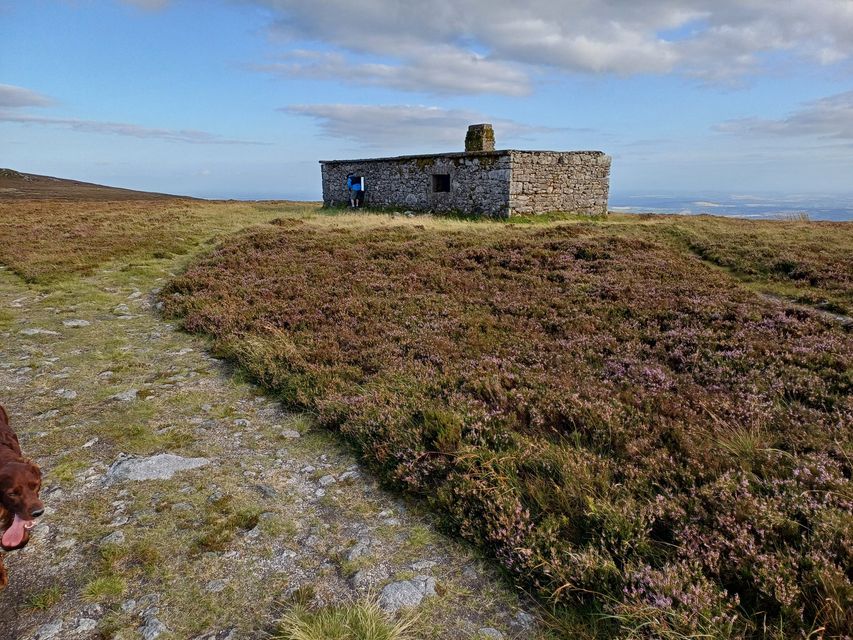
An old concrete shed still stands near the peak of Black Rock.
“I’d like to see us emulate The Peak District in the UK, turn these mountains into that kind of attraction. We’re not capitalising on what we have here, the two counties (Wexford and Carlow) need to work together on this. I have spoken to some of our colleagues in Carlow, to try and get them on board.”
However, any tourism strategy would take into account the activities of those who have been on this land for generations past, those who have quietly tended to it and preserved it for centuries.
“We should be doing what’s right for this area, and to allow farming to continue,” says Cllr Murphy. “It could be a national park but it wouldn’t be a no-farming zone, it would include the kind of farming which has been going on here for many, many generations.”
As we near the peak of Black Rock we encounter the first man-built structure on the walk. Long-since abandoned this draughty, concrete shed is a reminder that, in simpler times, many farmers, including Cllr Murphy’s ancestors, resided at the top of these peaks, eked out a living cutting turf and grazing sheep.
Those farmers have since moved down into more hospitable terrain, but segments of the turf are still visible, chunks of it still jut out from the sides of the Black Rock as we approach its peak. Also populating this part of the climb are native berries, fraughen, a wild blueberry which tastes almost exactly like the packaged version you pick up in your local supermarket.
Fortunately, we have bags of Tayto and Twixes to accompany the fraughen, ensuring we complete our ascent without succumbing to starvation or malnutrition.
And up there, approximately 600m from sea-level, we find the burial place of those who once ruled this land, the kings and lords of Leinster who saw fit to rest for eternity in the high lands. While the identity of those beneath the cairn at the top of Black Rock is not known, it can be assumed that they were men and women of importance.
The suggestion that perhaps one day, in the distant future, Cllr Murphy could be buried up here with them, is laughed off, but she remains deadly serious about the prospect of these mountains eventually becoming a designated national park.
“We have the hotel that the Byrne family have opened in the golf club to accommodate visitors and there are other active pursuits for tourists in the area like kayaking on the Slaney; this is a massive opportunity for Wexford and one we need to take advantage of.”
Funded by the Local Democracy Reporting Scheme.