

Credit: Far Out / Album Cover / Electric Wizard
Sun 6 September 2026 12:00, UK
With its slogan on the sleeve of “Legalise Drugs And Murder”, and its cover, a blurred sketch of a devilish figure smoking from a bong, the doom/stoner metal legends Electric Wizard reaffirmed their provocative, tongue-in-cheek stature that defined their third album, 2000’s Dopethrone.
Named after two Black Sabbath songs, ‘Electric Funeral’ and ‘The Wizard’, Electric Wizard originated in Dorset, England, in 1988. Forming from the ashes of bands past, vocalist and guitarist Jus Oborn, bassist Tim Bagshaw and drummer Mark Greening fused American-born sludge metal with the distortion of stoner metal and an overall Sabbath-induced doom that pervaded the senses.
Their eponymous debut album came in 1995 and was followed up two years later by Come My Fanatics…, the latter of which heard their kaleidoscopic sound emerge with a refined heaviness. A two-song EP, Supercoven, was released in 1998, and it bolstered the new direction that the band had taken. These two with 2000’s Dopethrone would form Electric Wizard’s “trilogy of terror”, as Oborn described to Metal Hammer.
In the new millennium, the band seemed to finally find their groove, but that did not mean that there were no underlying tensions that fueled the anger-driven undercurrent of its sound. As Oborn explained, the dynamic in the studio was fraught with creative disagreements: Bagshaw and Greening had wanted to bring in other sonic influences to the band’s sound that Oborn disagreed with, leading him to be placed at the middle of the recording process.
Meanwhile, outside of the studio, each member’s personal issues informed the antagonism heard across Dopethrone. During the three years between Come My Fanatics… and Dopethrone, as Oborn recalled to Kerrang!, he had endured a collapsed eardrum after a concert and was arrested for setting fire to a car parked outside of a police station, while Bagshaw had attempted to steal a crucifix from a church, falling through a window and gashing his arm, and Greening had broken his collarbone in a motorcycle accident, and had been arrested for robbing a liquor store.
“We weren’t very nice people, to be honest,” Oborn reflected on that time, “We were feeding off that shit at the time. It made us feel like we were more of a heavy metal band”.
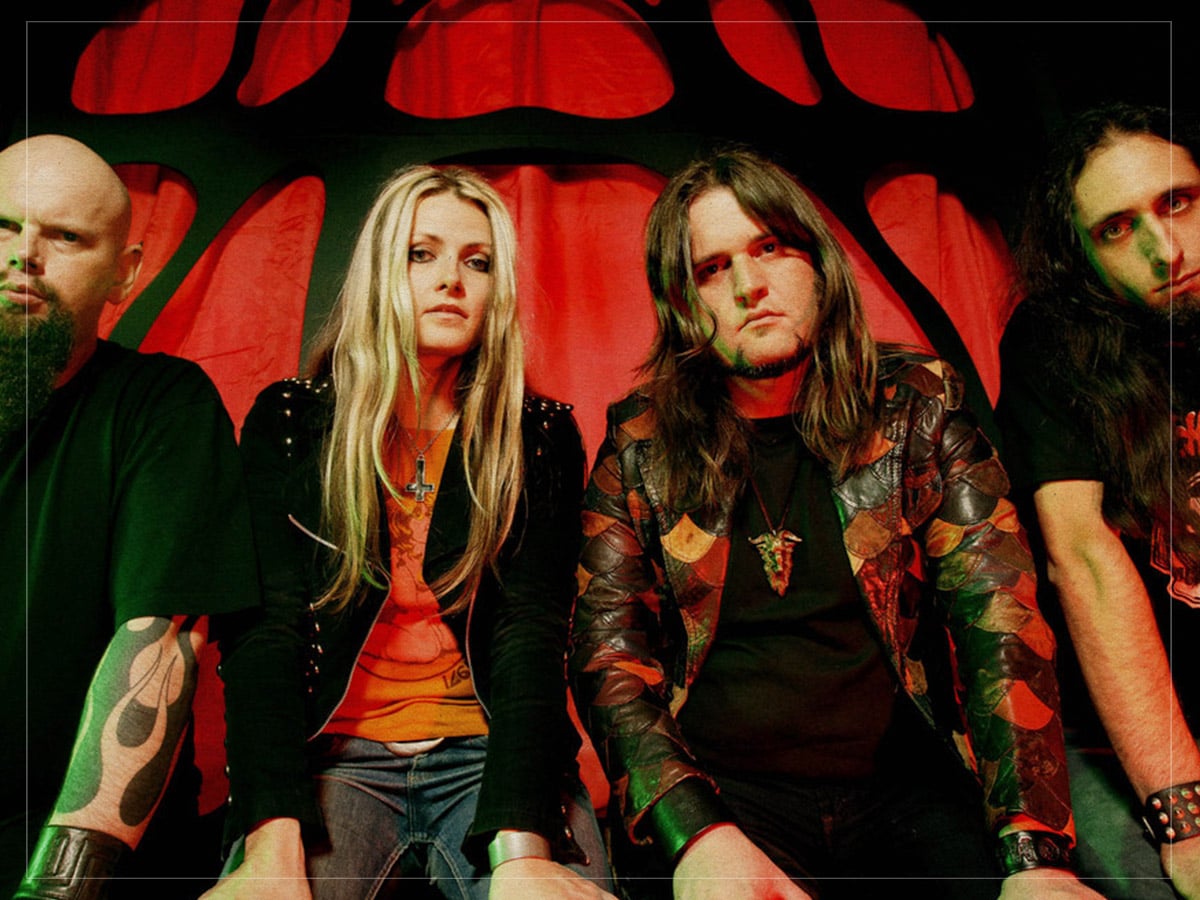 Credit: Far Out / Electric Wizard
Bringing their baggage into the studio coincided with their preexisting drug use, about which the guitarist spoke openly, noting, “Did we do drugs in the studio? Of course. As far as the three of us were concerned, what was the point of being in a band if you couldn’t indulge? That’s one of the perks. What could be better than three or four bongs before you start recording? For us, it was absolutely essential.”
Otherwise refusing conformity to pressures from their label in following timeframes and expectations, the trio entered the studio with only three songs prepared: ‘Dopethrone’, ‘Funeralopolis’ and ‘We Hate You.’ The title track was inspired by a literal “dope throne”, that is, a story of someone who “had a sofa completely made out of dope,” as Oborn described.
The band member wrote all of the lyrics across Dopethrone, heavily inspired by a mixture of hallucinogenic drugs and the writings of fantastical horror icon HP Lovecraft, as he recalled, “I’d sit there, out of my brain, reading his stuff and extrapolating on what he’d written. It was so amazing. The irony was that he wrote while straight, influencing someone like me, who certainly was not.”
The entirety of Dopethrone was recorded in just three days, a shocking feat in itself, but especially so when considering how expansive the album’s hour and 15 minutes feel when listening. Oborn’s hazed vocals throughout, fuzzed and seething, while each riff is soaked with a foreboding tone, and the drums punctuate with distinct force. The album’s sound, at large, was primarily born from jamming in the studio, driven by the stories and fantasies that Oborn was devouring, the indulgence of substances and sheer impulse.
Consciously or otherwise, Electric Wizard managed to create in three days what is still regarded, nearly 26 years later, as a timeless classic, one definitive of their genre. After years of chaos and upheaval, personally and as a unit, the band resurfaced with a rejuvenated malice, introducing an extremity of their sound that bottled exactly where they were as a group, and, as Oborn described, “This is where Electric Wizard should be”.
