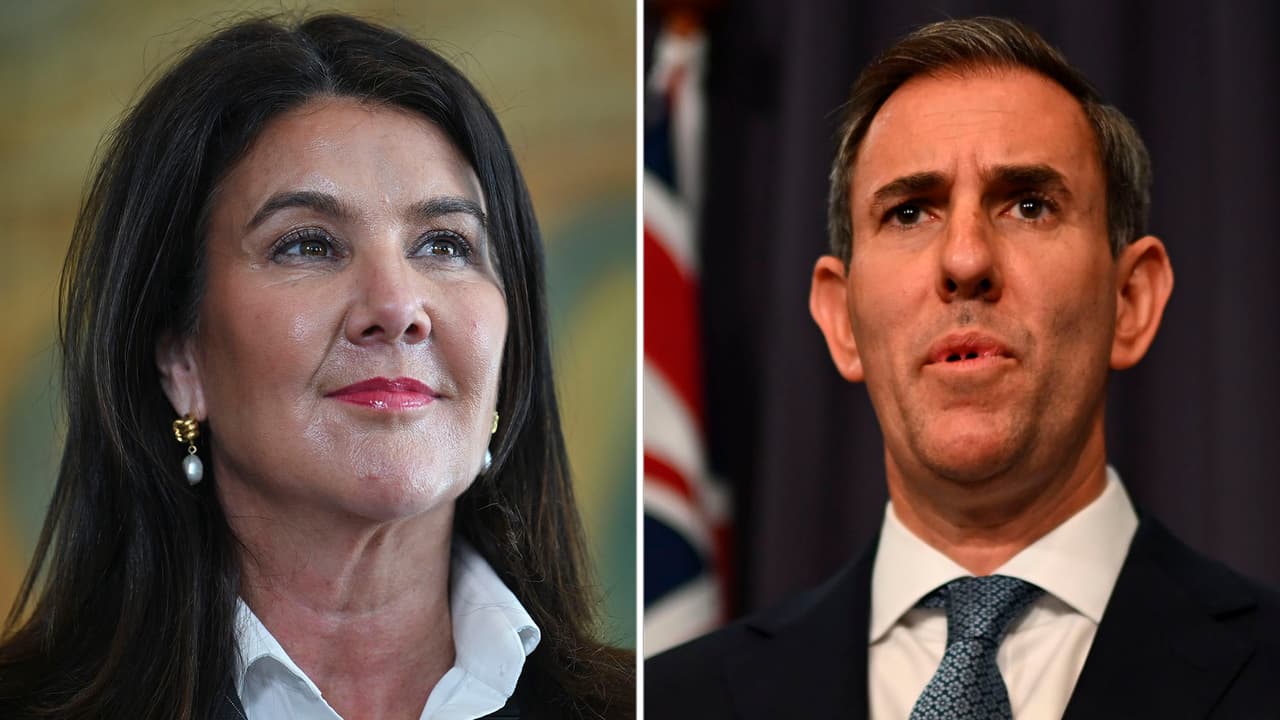
Deputy Liberal leader Jane Hume says a jump in inflation will “make it that much harder for Australians to get ahead” in a scathing attack on the Albanese government.
The Australian economy was at a “very serious moment”, Treasurer Jim Chalmers acknowledged as he again laid blame for a jump in inflation on the war in the Middle East.
Inflation rose higher than expected on Wednesday, from 4.3 per cent to 4.9 per cent.
The figure raises the risk of another interest rate rise from the RBA when it convenes again next month.
Speaking to News24, Senator Hume laid blame for the rise – that was an even higher increase than economists had expected – at Labor’s feet.
“This is going to make it that much harder for Australians to get ahead,” she said.
“The government has, for now nearly five years, been saying that inflation is too high and yet has blamed everybody other than their own economic model for keeping it that way.
“Headline inflation has now been above 4 per cent for 15 months in a row … that’s really frightening.”
The rate is well above the RBA’s target of 2-3 per cent. It has raised interest rates five times this year to try to bring inflation under control. The board meets for the final time for 2026 on December 7-8.
Chalmers responds to inflation data, blames war again
Mr Chalmers addressed the jump in inflation in a statement on Wednesday, stating the increase had been expected.
“This is another unwelcome but unsurprising reminder of the pressure Australians are under,” Mr Chalmers said.
“We saw global oil prices spike in October and this was the biggest influence on these numbers.
“We had an inflation challenge in our economy before the conflict in the Middle East but the war is making it worse.
“We will respond with substantial savings and we have already announced additional cost of living help this week.”
Later, Mr Chalmers told the media it was “a very serious moment for our economy” but defended the government’s decisions.
“We have been making hard decisions for 4.5 years,” he said.
Mr Chalmers said there were “net saves” in the December budget update, the May budget and in the forthcoming mid-year budget update.
“That is quite unusual,” he said.
He reiterated earlier claims that the “worst of the inflation was in 2022” in the midst of the Covid pandemic.
“I think if you are prepared to accept and acknowledge the global factors in 2022, it is important you accept and acknowledge global factors in 2026,” he said.
“People shouldn’t pretend unfortunately as I have seen in recent weeks and months that there are no global factors at play here. Of course there are.
“Budgets are not the primary determinant of prices in our economy. We can continue to play a helpful role and that is what we intend to do.”
Mr Chalmers is due to hand down the mid-year budget update just before Christmas. He has already flagged spending cuts and some cost-of-living measures.
However, he reiterated on Wednesday “there is no amount of responsible cost-of-living relief for budget savings which will make this inflation challenge go away overnight”.
“We will do what we responsibly can to hand down a budget update next month which has substantial savings, which takes into consideration all of the risks and challenges in our economy but primarily, inflation,” Mr Chalmers said.
Liberals blames government spending
Senator Hume said Australians were “potentially looking down the barrel of tough economic times ahead”, and that, in tandem with lagging productivity, the inflation rate was “Labor’s economic model coming to fruition”.
However, when pressed on the Coalition’s role in driving inflation, namely not supporting the Labor’s spending cuts, Senator Hume again attacked Labor.
“I’m not sure how much more explicit we can be with the government,” she said.
“We want to see them wind back their spending ambitions. This is the highest spending government in more than 40 years outside of a pandemic.”
Senator Hume reiterated that the government had proposed $1bn in “sensible, very unshakeable cuts the government can make tomorrow”.
“We will support them to do that,” she said.
“Pressure has got to be removed from the budget. You have to start pulling those fiscal levers.
“Otherwise the Reserve Bank is going to have to keep pulling the monetary policy levers. “