Nobel Prize in Physics
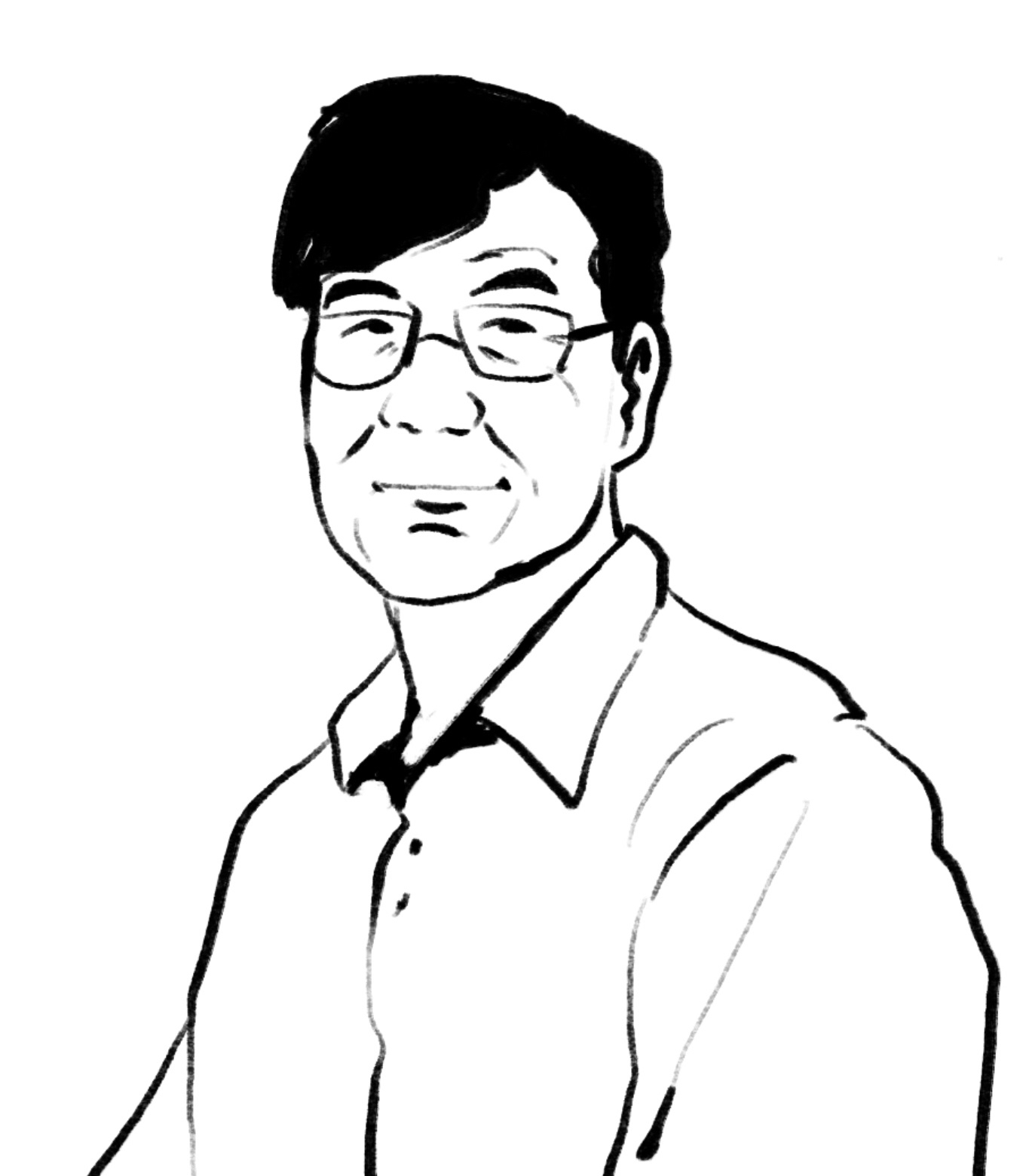 Shimon Sakaguchi, one of the researchers awarded the 2025 Nobel Prize in Medicine or Physiology. Jenna El-Attar/ Guest Artist
If you throw a tennis ball against the wall, you would expect it to bounce back. Yet, if the tennis ball follows the rules of quantum mechanics, there would be a chance that it phases through the wall.
This property, known as quantum mechanical tunneling, is usually only seen on the microscopic level. So, is it possible that this tunneling property could be observed on a larger, macroscopic level? This year’s Nobel Prize in Physics was awarded to John Clarke, Michel H. Devoret, and John M. Martinis, who conducted a series of experiments from 1984 to 1985 at the University of California, Berkeley that successfully demonstrated that quantum tunneling can be observed on large scales.
The Nobel laureates set up an experiment putting together two superconductors separated by an insulating material, forming what’s called a Josephson Junction. Then, they applied a current to the system. Initially, they observed a zero voltage, as expected. So, if the voltage did increase, it would mean that some of these electrons must have escaped out of the system by chance. After numerous rounds of experimenting, the research team was finally able to observe this rise in voltage.
Their finding was significant for quantum mechanics because, instead of combining several microscopic components to cause a macroscopic effect, this experiment created a macroscopic effect — a measurable voltage — from a macroscopic state for the first time. The circuits from these experiments are able to act as artificial atoms with cables and sockets that enable precision quantum experiments and quantum simulations. Their work delivers both a deeper theoretical understanding of macroscopic quantum states and a practical foundation for technologies like quantum computers used across modern physics labs.
Nobel Prize in Chemistry
If you’ve ever taken a chemistry course in high school or in college, you might have used some balls and sticks representing atoms and bonds to build molecular structures. In 1974, Richard Robson, a professor at the University of Melbourne at the time, found that the position of holes on the balls automatically led these models to have accurate forms and structures. So, Robson had an idea — by utilizing the way atoms can link together, could it be possible to design a new type of molecular structure? Now, in 2025, this idea from a college classroom has become a Nobel Prize-winning chemical technique.
Robson tested this idea and was able to successfully form a crystalline structure that resembled diamonds. However, the crystal contained many large cavities and tended to fall apart, so many chemists thought it was useless. However, Susumu Kitagawa and Omar M. Yaghi, the other two laureates of the 2025 Nobel Prize in Chemistry, saw great potential in Robson’s work.
Kitagawa continued Robson’s work and achieved his first breakthrough in 1997 when his research group created three-dimensional metal-organic frameworks (MOFs) that could absorb and release water and gases such as methane, nitrogen, and oxygen without changing shape.
Even though Kitagawa’s constructions were both stable and functional, research funders were still skeptical. However, a couple of years later, across the Pacific Ocean, Yaghi proved the value of MOFs with MOF-5. Just a couple of grams of MOF-5 could hold and absorb an area as big as a football field. Soon, researchers were able to develop MOFs that could change shape when filled with water or methane and return to their original form when emptied. In 2002 and 2003, Yaghi showed that it was possible to give MOFs different properties and produced 16 variants of MOF-5.
Since then, researchers have accomplished many things that would have been impossible without MOFs. For example, Yaghi’s research group used MOFs to harvest water from desert air in Arizona. Furthermore, many companies are now investing in the mass production and commercialization of MOF material for purposes like capturing and breaking down harmful gases — turning the “useless” into one of chemistry’s most powerful tools for a sustainable future.
Nobel Prize in Medicine or Physiology
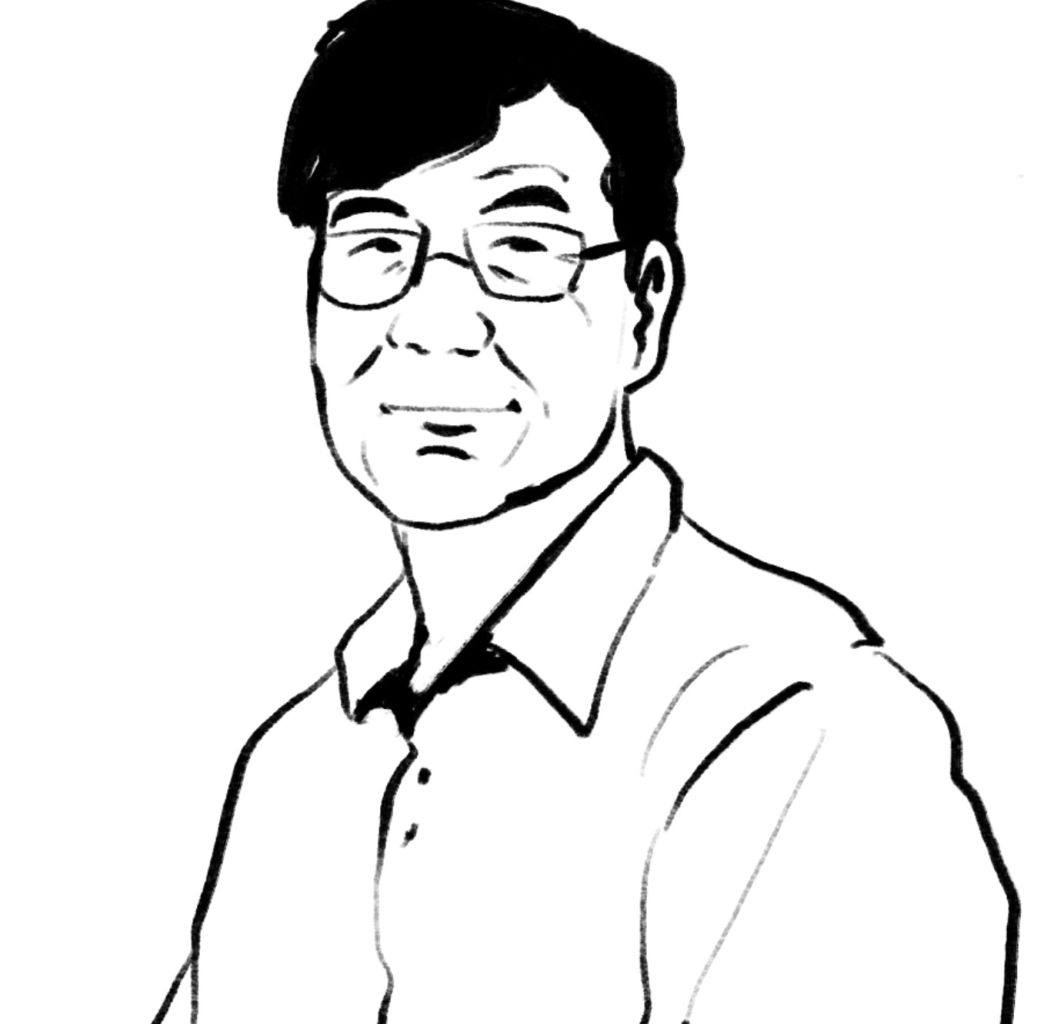
The Nobel Prize laureates, Mary E. Brunkow, Fred Ramsdell, and Shimon Sakaguchi, were awarded for their research on how the immune system distinguishes harmful pathogens from healthy human cells.
For a long time, scientists believed that they understood the answer to this question: central immune tolerance, a process through which immune cells mature. The thymus — a specialized organ of the immune system — can be seen as a strict “boot camp” for immune cells. Mainly, two types of immune cells are developed in the thymus, one of them being T-cells. T-cells learn to recognize the body’s system but are destroyed if they might attack it. Only functional T-cells are released to protect the body.
There are two major types of T-cells: killer T-cells and helper T-cells. They patrol the body and can summon other immune cells if a pathogen is discovered. Some researchers suspected that there might be a third type of T-cell called a suppressor T-cell. Yet, the research field was abandoned when evidence suggested that such cells are non-existent. Only one researcher continued to explore the possibility that suppressor T-cells might exist: Shimon Sakaguchi, who worked at the Aichi Cancer Center Research Institute in Nagoya, Japan.
Sakaguchi kept researching because of a contradictory experiment he observed. When the researchers removed the thymus from newborn mice, they expected the mice to have weak immune systems. Instead, the mice developed severe autoimmune diseases. This made Sakaguchi think there must be a third type of T-cell in the thymus that helps keep the immune system in balance by calming down other T-cells.
Researchers Mary E. Brunkow and Fred Ramsdell performed a similar study in the 1990s, studying a mouse disease called scurfy. After comparing genes from healthy and scurfy mice, they found the problem was caused by the last gene they tested, Foxp3. They also suspected that a rare human autoimmune disease called IPEX was linked to the same gene. Very soon, they found the human equivalent of the Foxp3 gene.
Two years after the discovery of the gene, Sakaguchi proved that the FOXP3 gene controls the development of a new type of T-cell: regulatory T-cells. Regulatory T-cells prevent other T cells from attacking our own cells if they falsely recognize endogenous fragments (e.g., DNA segments) as an antigen. This is a process called peripheral tolerance.
The discovery of regulatory T-cells has since led to the development of potential new treatments. For instance, researchers were able to isolate regulatory T-cells from patients, proliferate or modify cells with antibodies, and then return them to the patients. Such treatments can guard a transplanted organ from being attacked by the host’s immune system by calming the T-cells.