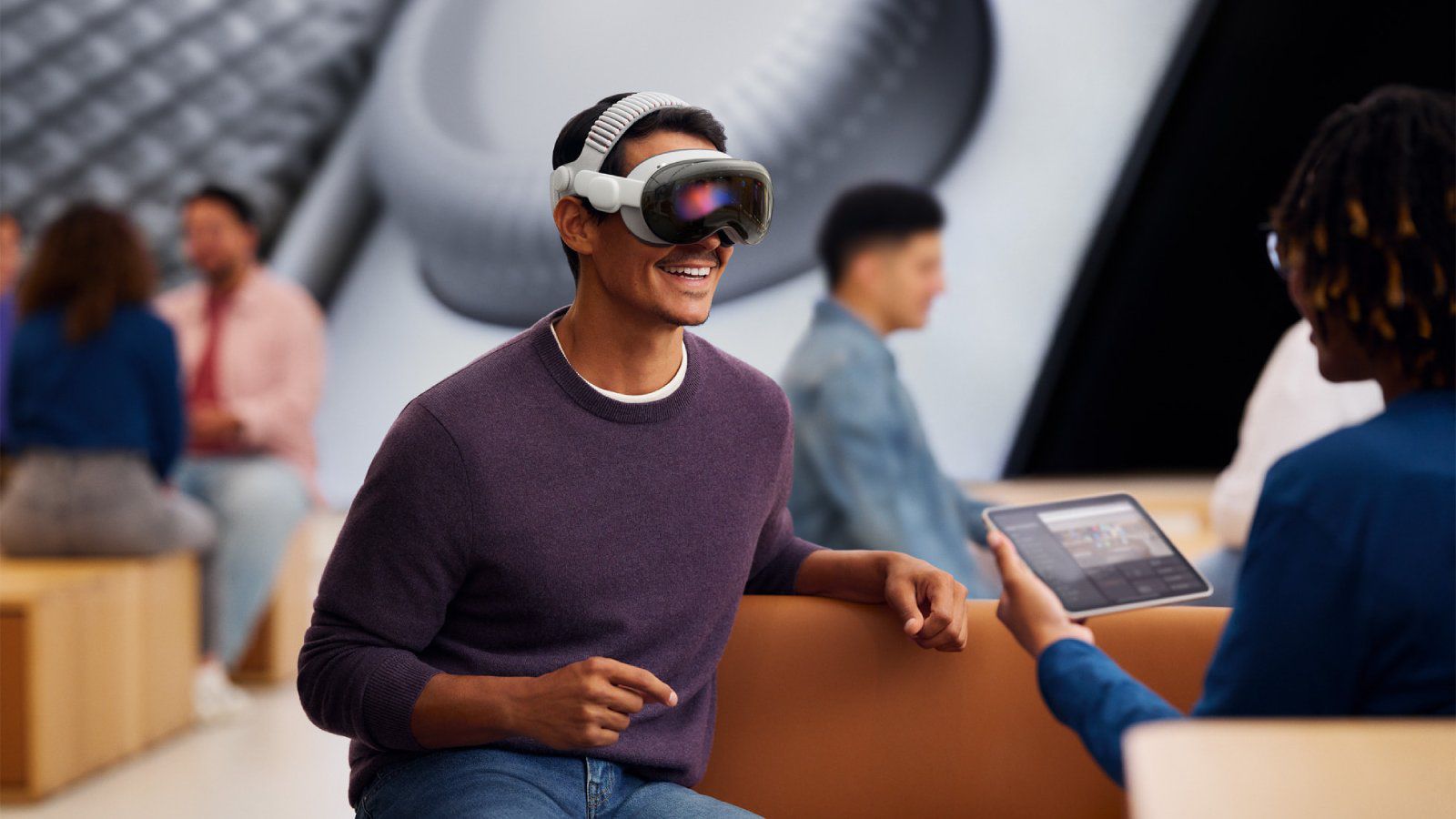
Apple recently refreshed its Vision Pro headset with the M5 chip, but how different is it from the original version? This guide lists all of the differences between the two models.
While the latest model sees no hardware changes beyond the chip and the headband, the M5 chip unlocks a series of new capabilities for the Vision Pro, such as a higher refresh rate, more rendered pixels, and longer battery life.
The M5 Vision Pro isn’t classified as a second-generation model, which reveals how incremental Apple sees the update over the original M2 version. Nevertheless, it refines the headset in specific ways. All of the differences between the two models are as follows:
Apple Vision Pro (2025)
The new chip is dramatically more powerful and efficient, making the device tangibly faster at tasks that push multiple subsystems at once, such as creating spatial photos or loading widget-heavy environments. Latency is reduced and overall responsiveness improves enough to feel noticeable in daily use. While there aren’t many workflows that can take full advantage of the M5 chip’s capabilities, it provides considerable performance headroom and strengthens the headset’s technical foundation for future versions of visionOS and third-party apps.
That said, the upgrade is still bound by the same cameras, sensors, and displays as the M2 model. The new 120 Hz refresh rate and 10% increase in rendered pixels subtly enhance motion smoothness and realism, but they don’t transform the experience. Battery life is also slightly better, yet none of these shifts make the M2 version feel obsolete. The software remains identical across both models, and since the new Dual Knit Band is available separately, comfort is also not a differentiator.
For current owners, the decision to upgrade hinges on use-case. Developers, designers, or professionals who push the headset to its limits will appreciate the added headroom and smoother responsiveness. For everyone else—especially those who primarily use the Vision Pro for watching TV and movies, Mac Virtual Display, browsing, or light productivity—the M2 version still delivers the same fundamental experience.
The M2 model’s secondary-market prices also change the equation. With no trade-in program and units now listed on eBay at substantially lower prices, the original Vision Pro has become a far more accessible entry point into Apple’s spatial computing experience. That makes the M5 model the better option for new buyers who want the most longevity and headroom, but the M2 model remains better value for those entering the platform for the first time or waiting for a larger generational leap.