If explosions are part of manoeuvres and not just flight-testing
this ‘could trigger a response from Russia and other countries’ a Kremlin spokesperson said
President Donald Trump last week ordered the US military to immediately restart the process for testing nuclear weapons. But he did not make clear if he meant flight-testing of nuclear-capable missiles or a resumption of tests involving nuclear explosions – something neither the US nor Russia has done for more than three decades.
“If it is the latter, then this will create negative dynamics and trigger steps from other states, including Russia, in response,” Russian foreign ministry spokeswoman Maria Zakharova told reporters.
“For now, we note that the signals emanating from Washington, which are causing justified concern in all corners of the world, remain contradictory, and, of course, the real state of affairs must be clarified.”
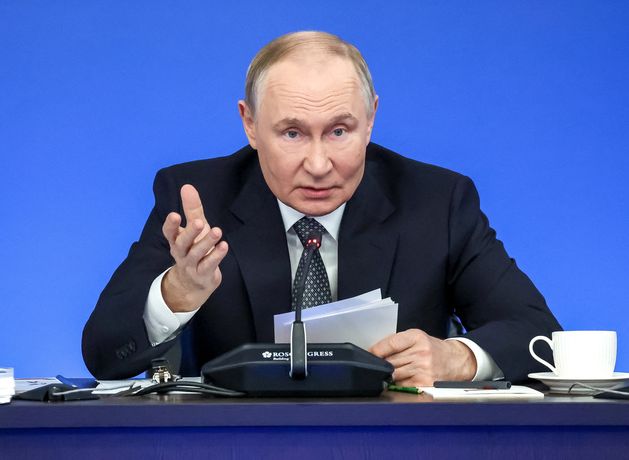
Citing the lack of clarity around US plans, Russian president Vladimir Putin on Wednesday instructed top officials to prepare proposals for Russia to carry out its own potential nuclear test in response to any US test.
Russia and the US possess the world’s largest nuclear arsenals. The last remaining treaty between them that limits the number of strategic nuclear warheads on both sides is due to expire in three months, potentially fuelling an arms race that is already in progress.
Putin has proposed that both sides continue to observe the treaty limits for another year, but Mr Trump has yet to respond formally to the idea.
The Kremlin yesterday dismissed speculation that foreign minister Sergei Lavrov had fallen out of favour with Putin after efforts to organise a summit between the Russian leader and Mr Trump were put on ice last month.
Mr Lavrov (75), a veteran Soviet-era diplomat was absent from a big Kremlin meeting last week that he would typically attend, and Putin chose someone else to attend a G20 summit in South Africa later this month, a role Mr Lavrov has filled in the past.
For two weeks in a row the foreign ministry has also not disclosed Mr Lavrov’s travel plans and speaking engagements for the following week.
The developments have fuelled speculation that Mr Lavrov, who has served as foreign minister for more than two decades, may have fallen from Putin’s good graces due to the collapse of plans for the summit in Budapest.
Asked yesterday if Mr Lavrov was in trouble with Putin, Kremlin spokesman Dmitry Peskov dismissed the idea.
“I will give you a brief answer: there is nothing true in these reports,” Mr Peskov told reporters.
Asked to confirm that Mr Lavrov would continue to work in his current role, Mr Peskov added: “Absolutely. Lavrov is working as foreign minister, of course.”
Mr Lavrov spoke by phone to US secretary of state Marco Rubio on October 20 to discuss the possible summit, days after it was announced by Mr Trump following a phone call with Putin.
The next day, Mr Trump said that he did not want to hold a meeting that would be “a waste of time”. He later said he had cancelled the summit because it “just didn’t feel right”.
Mr Trump has sought a rapprochement with Moscow and held a summit in Alaska with Putin in August. But he has backed calls for an immediate ceasefire in Ukraine with forces at their present positions, while Moscow has said it wants Kyiv to yield more territory.
Reuters and other media reported that Washington called off the new summit after Lavrov’s ministry sent a message indicating Moscow was not prepared to yield on hardline demands over Ukraine. The Financial Times cited a source as suggesting that Lavrov’s conversation with Rubio had put Washington off.
“Lavrov is clearly tired and seems to think he has better things to do than engage with the US, whatever Putin may want,” the FT cited the source as saying.
Ms Zakharova suggested yesterday that the FT article had been published to stoke speculation that was unhelpful to Moscow and part of what she called a hybrid war against Russia.
Putin has made it clear that, aside from the Ukraine issue, he believes a rapprochement between Moscow and Washington is in Russia’s national interest and important for global security, as the two countries possess vast nuclear arsenals.